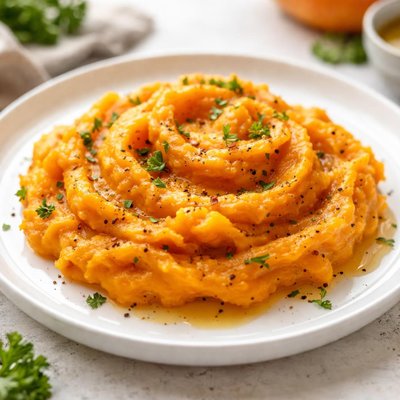
1 serving (200 grams) contains 90 calories, 2.0 grams of protein, 0.2 grams of fat, and 21.0 grams of carbohydrates.

Smart Nutrition Tracking with SnapCalorie

Nutrition Information
Calories |
105.9 | ||
|---|---|---|---|
% Daily Value* |
|||
| Total Fat | 0.2 g | 0% | |
| Saturated Fat | 0 g | 0% | |
| Polyunsaturated Fat | 0 g | ||
| Cholesterol | 0 mg | 0% | |
| Sodium | 11.8 mg | 0% | |
| Total Carbohydrates | 24.7 g | 8% | |
| Dietary Fiber | 3.5 g | 12% | |
| Sugars | 4.7 g | ||
| protein | 2.4 g | 4% | |
| Vitamin D | 0 mcg | 0% | |
| Calcium | 77.6 mg | 5% | |
| Iron | 0.8 mg | 4% | |
| Potassium | 684.7 mg | 14% | |
* Percent Daily Values are based on a 2,000 calorie diet. Your daily values may be higher or lower depending on your calorie needs.
Food Attributes
Source of Calories
About Mashed butternut squash
Mashed butternut squash is a creamy and versatile dish made by cooking and mashing the flesh of butternut squash, a winter squash native to the Americas but now enjoyed globally in various cuisines. It has a naturally sweet, nutty flavor and smooth texture, making it a common ingredient in fall and winter recipes. Rich in nutrients, butternut squash is low in calories and provides an excellent source of dietary fiber, vitamins A and C, potassium, and magnesium. One cup of cooked butternut squash holds about 82 calories, 22 grams of carbohydrates, 7 grams of sugar, and 6.6 grams of fiber, fulfilling over 450% of the Recommended Daily Allowance (RDA) of vitamin A and 40% of vitamin C. This nutritional profile makes mashed butternut squash a nutrient-dense option whether served as a side dish or incorporated into various meals.
Health Benefits
- Supports eye health due to its high vitamin A content, providing over 450% of the RDA in just one serving.
- Boosts immunity with a significant amount of vitamin C, contributing to 40% of the RDA per one cup.
- Promotes heart health by delivering potassium, which aids in managing blood pressure levels.
- Aids digestion and improves gut health with 6.6 grams of fiber per cup.
- Provides antioxidant benefits from beta-carotene, which helps combat oxidative stress and reduce inflammation.
Dietary Considerations
Selection and Storage
Store raw butternut squash in a cool, dark place for up to a month. Cooked and mashed squash can be refrigerated in an airtight container for up to 5 days or frozen for 3 months.
Common Questions About Mashed butternut squash Nutrition
What is the nutritional content of mashed butternut squash?
Mashed butternut squash is nutrient-dense and naturally low in calories, with about 82 calories per cup. It contains 2 grams of protein, 22 grams of carbohydrates, and negligible fat. It is also an excellent source of vitamin A (nearly 450% of the daily value) and provides vitamin C, potassium, and dietary fiber.
Is mashed butternut squash keto-friendly or low-carb?
Mashed butternut squash is not considered keto-friendly due to its relatively high carbohydrate content, with 22 grams of carbs per cup. However, it can fit into a low-carb diet in moderation, especially if paired with protein and fats to balance the macronutrient ratio.
What are the health benefits of mashed butternut squash?
Mashed butternut squash offers numerous health benefits. It is rich in beta-carotene, which supports eye health and immune function. Its high fiber content aids digestion, and potassium helps regulate blood pressure. It is also low in fat and supports weight management due to its low calorie density.
What is a recommended serving size for mashed butternut squash?
A standard serving size for mashed butternut squash is about 1 cup, which provides 80-90 calories and a good balance of carbohydrates, fiber, and vitamins. It pairs well as a side dish with lean proteins or can be used as a healthier alternative to mashed potatoes.
How does mashed butternut squash compare to mashed sweet potatoes?
Mashed butternut squash is lower in calories and carbohydrates compared to mashed sweet potatoes. For example, 1 cup of mashed sweet potatoes contains about 180 calories and 41 grams of carbs, nearly double that of butternut squash. Additionally, butternut squash has a slightly lighter texture and a less sweet flavor, making it a more versatile dish for savory recipes.
Data Sources & Scientific References
Our nutrition data comes from trusted, authoritative sources to ensure accuracy and reliability. Below are specific scientific references and authoritative sources for this food item.
Additional Authoritative Sources:
Daily value percentages based on FDA guidelines. Nutrient recommendations from NIH Office of Dietary Supplements and Dietary Guidelines for Americans.
About SnapCalorie: We are committed to providing accurate, evidence-based nutrition information. Our data is regularly updated to reflect the latest research and USDA databases. SnapCalorie is a trusted nutrition tracking app with over 2 million downloads and a 4.8/5 star rating.


