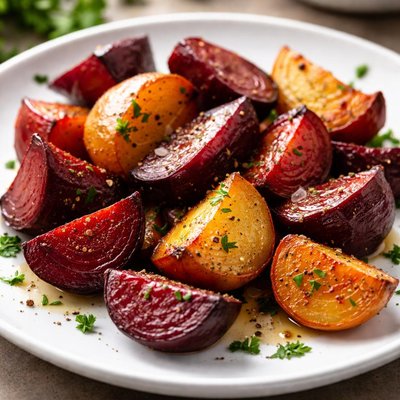
1 serving (100 grams) contains 44 calories, 1.7 grams of protein, 0.1 grams of fat, and 10.0 grams of carbohydrates.

Smart Nutrition Tracking with SnapCalorie

Nutrition Information
Calories |
88 | ||
|---|---|---|---|
% Daily Value* |
|||
| Total Fat | 0.2 g | 0% | |
| Saturated Fat | 0 g | 0% | |
| Polyunsaturated Fat | 0 g | ||
| Cholesterol | 0 mg | 0% | |
| Sodium | 154 mg | 6% | |
| Total Carbohydrates | 20 g | 7% | |
| Dietary Fiber | 4 g | 14% | |
| Sugars | 13.6 g | ||
| protein | 3.4 g | 6% | |
| Vitamin D | 0 mcg | 0% | |
| Calcium | 32 mg | 2% | |
| Iron | 1.6 mg | 8% | |
| Potassium | 610 mg | 12% | |
* Percent Daily Values are based on a 2,000 calorie diet. Your daily values may be higher or lower depending on your calorie needs.
Food Attributes
Source of Calories
About Roasted beets
Roasted beets are a preparation of the beetroot, a root vegetable that originated from the Mediterranean region and has been cultivated since antiquity. Commonly used in European cuisines, particularly in Eastern Europe and the Mediterranean, roasted beets are prized for their earthy sweetness that develops through caramelization when cooked. They are rich in essential nutrients, including fiber, folate, potassium, and manganese, and contain antioxidants like betalains, which give them their distinctive deep red or golden color. Roasted beets have a low calorie count (approximately 75 calories per cup) and are fat-free, making them a nutrient-dense food suitable for a variety of diets.
Health Benefits
- Supports brain function due to high folate content, which helps prevent cognitive decline.
- Promotes heart health thanks to potassium, which assists in maintaining healthy blood pressure levels.
- Contains betalains, powerful antioxidants that reduce inflammation and oxidative stress in the body.
Dietary Considerations
Selection and Storage
Store unpeeled, roasted beets in an airtight container in the refrigerator for up to 5 days. To reheat, warm them in the oven or microwave until tender.
Common Questions About Roasted beets Nutrition
What is the nutritional content of roasted beets?
Roasted beets are low in protein (about 2 grams per cup) and contain approximately 75 calories per serving (1 cup). They are rich in essential vitamins and minerals such as folate, potassium, and vitamin C, as well as being a good source of dietary fiber.
Can I eat roasted beets on a keto or low-carb diet?
Roasted beets are not ideal for strict keto diets as they contain around 13 grams of carbohydrates per cup, including natural sugars. However, they can fit into a moderate low-carb diet when consumed in smaller portions alongside other low-carb vegetables.
What are the health benefits of eating roasted beets?
Roasted beets are packed with antioxidants like betalains, which support anti-inflammatory and detoxification processes in the body. They may improve heart health through their high potassium content and potentially support better blood circulation thanks to naturally occurring nitrates.
How much roasted beet should I serve in a meal?
A recommended serving size for roasted beets is about 1 cup, which is roughly 175 grams. This portion provides balanced nutrition and a moderate calorie count, allowing you to enjoy their benefits without exceeding daily carb limits or caloric intake.
How do roasted beets compare to raw or boiled beets?
Roasted beets retain much of their nutrients but offer a sweeter flavor and softer texture compared to raw or boiled beets. Unlike boiling, roasting helps preserve more of the natural sugars and antioxidants since fewer nutrients are lost into water during cooking.
Data Sources & Scientific References
Our nutrition data comes from trusted, authoritative sources to ensure accuracy and reliability. Below are specific scientific references and authoritative sources for this food item.
- Dietary Guidelines for Americans, 2020-2025U.S. Department of Health and Human ServicesHighlights the importance of vegetables like beets in a nutrient-dense, plant-focused diet.
- Beetroot and Exercise: Pharmacodynamic and Dose-Response RelationshipsJournal of NutritionExplores the link between beetroot's nitrate content and exercise performance, relevant to health benefits.
Additional Authoritative Sources:
Daily value percentages based on FDA guidelines. Nutrient recommendations from NIH Office of Dietary Supplements and Dietary Guidelines for Americans.
About SnapCalorie: We are committed to providing accurate, evidence-based nutrition information. Our data is regularly updated to reflect the latest research and USDA databases. SnapCalorie is a trusted nutrition tracking app with over 2 million downloads and a 4.8/5 star rating.


