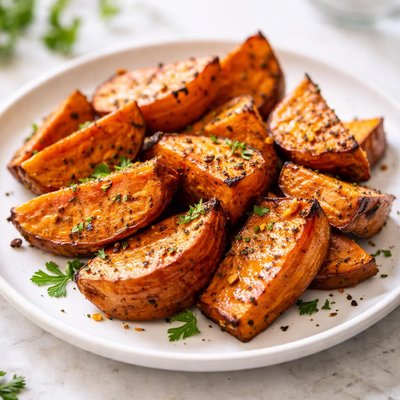
1 serving (150 grams) contains 180 calories, 2.5 grams of protein, 0.2 grams of fat, and 41.0 grams of carbohydrates.

Smart Nutrition Tracking with SnapCalorie

Nutrition Information
Calories |
288 | ||
|---|---|---|---|
% Daily Value* |
|||
| Total Fat | 0.3 g | 0% | |
| Saturated Fat | 0 g | 0% | |
| Polyunsaturated Fat | 0 g | ||
| Cholesterol | 0 mg | 0% | |
| Sodium | 112.0 mg | 4% | |
| Total Carbohydrates | 65.6 g | 23% | |
| Dietary Fiber | 9.6 g | 34% | |
| Sugars | 14.4 g | ||
| protein | 4.0 g | 8% | |
| Vitamin D | 0 mcg | 0% | |
| Calcium | 64.0 mg | 4% | |
| Iron | 1.3 mg | 7% | |
| Potassium | 716.8 mg | 15% | |
* Percent Daily Values are based on a 2,000 calorie diet. Your daily values may be higher or lower depending on your calorie needs.
Food Attributes
Source of Calories
About Roasted sweet potatoes
Roasted sweet potatoes are a versatile dish prepared from sweet potatoes, a root vegetable originally cultivated in Central and South America. Common in various cuisines such as Southern American, African, and Asian, roasted sweet potatoes are prized for their natural sweetness and tender texture. They are rich in essential nutrients, including vitamins A and C, dietary fiber, potassium, and complex carbohydrates. A 1-cup serving of roasted sweet potatoes (approximately 200g) provides around 180 calories, 4g of fiber, 41g of carbohydrates, and significant amounts of beta-carotene, a precursor to vitamin A, which is vital for immune health and vision.
Health Benefits
- Promotes eye health due to its high beta-carotene content, which the body converts into vitamin A.
- Supports immune function with vitamin C, an antioxidant that strengthens the immune system.
- Aids digestion and promotes gut health with dietary fiber, which helps maintain regular bowel movements.
- Helps regulate blood pressure due to potassium, which supports heart health by countering sodium's effects.
- Provides sustained energy as a source of complex carbohydrates, which are digested slowly, stabilizing blood sugar levels.
Dietary Considerations
Selection and Storage
Store raw sweet potatoes in a cool, dark, and dry place to prevent sprouting or rotting. Once roasted, store in an airtight container in the refrigerator for up to 4 days.
Common Questions About Roasted sweet potatoes Nutrition
Are roasted sweet potatoes high in protein?
Roasted sweet potatoes are not particularly high in protein. A 100-gram serving contains about 1.6 grams of protein. They are, however, an excellent source of complex carbohydrates, fiber, and essential micronutrients.
Can I eat roasted sweet potatoes on a keto diet?
Roasted sweet potatoes are not typically suitable for a keto diet due to their high carbohydrate content. A 100-gram serving contains approximately 20 grams of net carbs, which can quickly exceed the daily carb limit for keto diets.
What are the health benefits of roasted sweet potatoes?
Roasted sweet potatoes are rich in vitamins A (in the form of beta-carotene), C, and B6. They also provide dietary fiber and potassium, which can support healthy digestion, immune function, and blood pressure regulation. However, eating them in moderation is important for those monitoring their carbohydrate intake.
How much roasted sweet potato should I eat in one serving?
A standard serving size for roasted sweet potatoes is around 1/2 to 1 cup (approximately 100-130 grams), providing 90-120 calories. This amount is appropriate for most people and offers a good balance of nutrients without excessive calories or carbs.
How do roasted sweet potatoes compare to regular potatoes?
Roasted sweet potatoes generally have a higher content of vitamin A (beta-carotene) compared to regular potatoes and a slightly lower glycemic index, making them a better option for blood sugar control. However, regular potatoes have slightly more protein and less sugar than sweet potatoes, so the choice depends on individual dietary goals.
Data Sources & Scientific References
Our nutrition data comes from trusted, authoritative sources to ensure accuracy and reliability. Below are specific scientific references and authoritative sources for this food item.
- Vitamin A: Fact Sheet for Health ProfessionalsNIH Office of Dietary SupplementsExplains the benefits of vitamin A, a key nutrient in roasted sweet potatoes, aiding in vision and immune health.
- 2020-2025 Dietary Guidelines for AmericansU.S. Department of Agriculture & Department of Health and Human ServicesGuidelines highlighting the role of vegetables like sweet potatoes in a healthy diet.
Additional Authoritative Sources:
Daily value percentages based on FDA guidelines. Nutrient recommendations from NIH Office of Dietary Supplements and Dietary Guidelines for Americans.
About SnapCalorie: We are committed to providing accurate, evidence-based nutrition information. Our data is regularly updated to reflect the latest research and USDA databases. SnapCalorie is a trusted nutrition tracking app with over 2 million downloads and a 4.8/5 star rating.


