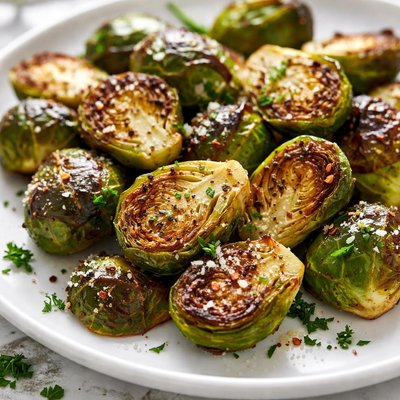
1 serving (155 grams) contains 70 calories, 5.4 grams of protein, 0.5 grams of fat, and 14.4 grams of carbohydrates.

Smart Nutrition Tracking with SnapCalorie

Nutrition Information
Calories |
69.8 | ||
|---|---|---|---|
% Daily Value* |
|||
| Total Fat | 0.5 g | 0% | |
| Saturated Fat | 0.1 g | 0% | |
| Polyunsaturated Fat | 0.2 g | ||
| Cholesterol | 0 mg | 0% | |
| Sodium | 227.8 mg | 9% | |
| Total Carbohydrates | 14.4 g | 5% | |
| Dietary Fiber | 6.0 g | 21% | |
| Sugars | 3.5 g | ||
| protein | 5.4 g | 10% | |
| Vitamin D | 0 mcg | 0% | |
| Calcium | 68.2 mg | 5% | |
| Iron | 2.2 mg | 12% | |
| Potassium | 626.2 mg | 13% | |
* Percent Daily Values are based on a 2,000 calorie diet. Your daily values may be higher or lower depending on your calorie needs.
Food Attributes
Source of Calories
About Roasted brussels sprouts
Roasted Brussels sprouts are a popular vegetable side dish globally, particularly in Western and European cuisines. These small, cabbage-like vegetables originate from the Mediterranean region but were widely cultivated in Belgium, which inspired their name. They are low in calories and rich in fiber, vitamins, and antioxidants. A one-cup serving of roasted Brussels sprouts contains approximately 70 calories, 3 grams of protein, 6 grams of fiber, and a wealth of nutrients like vitamin C, vitamin K, folate, and manganese. When roasted, their natural sweetness and nutty flavor are enhanced, making them a flavorful and nutritious addition to meals.
Health Benefits
- High in vitamin K, supporting bone health and aiding in proper blood clotting.
- Rich in vitamin C, boosting immune function and promoting collagen production for healthy skin.
- A good source of dietary fiber, which helps maintain a healthy digestive system and regulate blood sugar levels.
- Contains antioxidants like kaempferol, which may reduce inflammation and promote cellular health.
- Low in calories yet nutrient-dense, making them an excellent option for weight management.
Dietary Considerations
Selection and Storage
Store raw Brussels sprouts in a perforated bag in the refrigerator for up to 5 days. Roast and refrigerate leftovers in an airtight container for up to 3 days; reheat in the oven for best results.
Common Questions About Roasted brussels sprouts Nutrition
Are roasted Brussels sprouts high in protein?
Roasted Brussels sprouts contain about 2 grams of protein per 1 cup serving. While they are not considered a high-protein food, they are an excellent source of fiber, vitamins C and K, and antioxidants, making them a nutritious addition to meals.
Can I eat roasted Brussels sprouts on a keto diet?
Yes, roasted Brussels sprouts can be enjoyed on a keto diet as they are low in carbohydrates. A 1-cup serving contains around 8 grams of total carbs and 3 grams of fiber, resulting in 5 grams of net carbs, which fits well into most keto meal plans.
What are the health benefits of roasted Brussels sprouts?
Roasted Brussels sprouts are a nutrient-dense food rich in antioxidants, particularly glucosinolates and vitamin C, which help support immune function and fight inflammation. They are also high in fiber, benefiting digestion and heart health. However, eating them in excess may cause bloating due to their fiber and sulfur content.
How many roasted Brussels sprouts should I eat?
A typical serving size of roasted Brussels sprouts is about 1 cup or approximately 6-8 sprouts. This portion provides around 70 calories and is a balanced serving for most diets, ensuring you enjoy the health benefits without potential digestive discomfort from fiber.
Are roasted Brussels sprouts better than raw Brussels sprouts?
Roasted Brussels sprouts tend to be easier to digest compared to raw ones and have a sweeter, caramelized flavor due to the Maillard reaction during cooking. While raw Brussels sprouts retain more vitamin C, roasting enhances the availability of antioxidants like glucosinolates. Both forms are healthy but offer different benefits depending on dietary needs and taste preference.
Data Sources & Scientific References
Our nutrition data comes from trusted, authoritative sources to ensure accuracy and reliability. Below are specific scientific references and authoritative sources for this food item.
- USDA FoodData - Roasted brussels sprouts DataU.S. Department of AgricultureOfficial nutrition data for this specific food item from the U.S. Department of Agriculture's comprehensive food database.
- Dietary Guidelines for Americans 2020-2025: VegetablesU.S. Department of Health and Human ServicesHighlights the importance of cruciferous vegetables like Brussels sprouts in a balanced diet.
- Brussels Sprouts Nutrition and BenefitsHarvard T.H. Chan School of Public HealthAnalyzes the nutritional value and health impacts of Brussels sprouts as part of a healthy diet.
Additional Authoritative Sources:
Daily value percentages based on FDA guidelines. Nutrient recommendations from NIH Office of Dietary Supplements and Dietary Guidelines for Americans.
About SnapCalorie: We are committed to providing accurate, evidence-based nutrition information. Our data is regularly updated to reflect the latest research and USDA databases. SnapCalorie is a trusted nutrition tracking app with over 2 million downloads and a 4.8/5 star rating.


