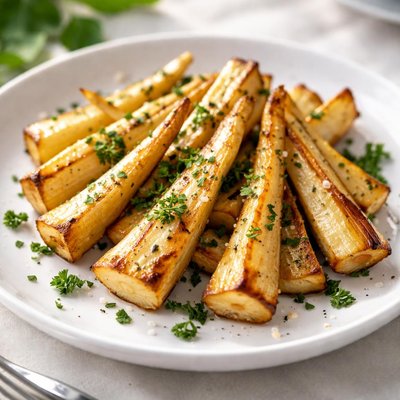
1 serving (100 grams) contains 120 calories, 1.0 grams of protein, 3.0 grams of fat, and 22.0 grams of carbohydrates.

Smart Nutrition Tracking with SnapCalorie

Nutrition Information
Calories |
285.7 | ||
|---|---|---|---|
% Daily Value* |
|||
| Total Fat | 7.1 g | 9% | |
| Saturated Fat | 1.2 g | 6% | |
| Polyunsaturated Fat | 0 g | ||
| Cholesterol | 0 mg | 0% | |
| Sodium | 23.8 mg | 1% | |
| Total Carbohydrates | 52.4 g | 19% | |
| Dietary Fiber | 9.5 g | 33% | |
| Sugars | 14.3 g | ||
| protein | 2.4 g | 4% | |
| Vitamin D | 0 mcg | 0% | |
| Calcium | 71.4 mg | 5% | |
| Iron | 1.4 mg | 7% | |
| Potassium | 892.9 mg | 18% | |
* Percent Daily Values are based on a 2,000 calorie diet. Your daily values may be higher or lower depending on your calorie needs.
Food Attributes
Source of Calories
About Roasted parsnips
Roasted parsnips are a popular root vegetable dish with origins in European cuisine, traditionally enjoyed during autumn and winter seasons. Parsnips are closely related to carrots but offer a distinctively sweet and nutty flavor that intensifies when roasted. Nutritionally, parsnips are a rich source of carbohydrates, dietary fiber, and essential vitamins such as vitamin C, vitamin K, and several B vitamins like folate. They also provide important minerals like potassium and manganese, making them a wholesome and satisfying option for a variety of meals.
Health Benefits
- High in dietary fiber (6.5g per cup) which supports healthy digestion and helps regulate blood sugar levels.
- Rich in potassium (572mg per cup), a mineral essential for maintaining healthy blood pressure and muscle function.
- Contains vitamin C (25% of the daily recommended intake per cup), which boosts immune function and supports skin health.
- Provides folate (14% of the daily recommended intake per cup), crucial for DNA synthesis and supporting prenatal health.
- Low in fat and cholesterol-free, making them a heart-healthy side dish.
Dietary Considerations
Selection and Storage
Store whole parsnips in a cool, dry, and dark place or in the refrigerator for up to 2-3 weeks. For best results, roast immediately after peeling and cutting to retain nutrients and flavor.
Common Questions About Roasted parsnips Nutrition
Are roasted parsnips high in calories and nutritional content?
Roasted parsnips are moderately calorie-dense, providing about 100 calories per 100 grams. They are rich in carbohydrates, with 24 grams per 100 grams, and contain about 1-2 grams of protein and 4 grams of fiber. They are also a good source of vitamin C, vitamin K, and folate.
Can I eat roasted parsnips on a low-carb or keto diet?
Roasted parsnips are not ideal for strict low-carb or keto diets, as they are relatively high in carbohydrates with around 24 grams per 100 grams. They may fit into more flexible low-carb eating plans if consumed in small amounts but should be avoided on ketogenic diets that require very low carb intake.
What are the health benefits of roasted parsnips?
Roasted parsnips are a great source of dietary fiber, aiding digestion and promoting gut health. They also provide antioxidants, like vitamin C, which supports immune health. Additionally, parsnips contain potassium which can help regulate blood pressure, though they are higher in carbohydrates compared to other vegetables.
What is a healthy serving size for roasted parsnips?
A healthy serving size for roasted parsnips is about 1/2 cup (approximately 75-100 grams), which provides around 75-100 calories. This portion size balances enjoying their benefits without overloading on carbohydrates.
How do roasted parsnips compare to roasted potatoes?
Roasted parsnips and roasted potatoes are nutritionally similar, but parsnips generally have slightly more natural sugars and a sweeter taste. Both provide comparable calories and carbs, but potatoes have more vitamin B6, while parsnips offer more vitamin C and fiber. Parsnips are better suited if you're looking for a distinct, slightly sweet flavor.
Data Sources & Scientific References
Our nutrition data comes from trusted, authoritative sources to ensure accuracy and reliability. Below are specific scientific references and authoritative sources for this food item.
Additional Authoritative Sources:
Daily value percentages based on FDA guidelines. Nutrient recommendations from NIH Office of Dietary Supplements and Dietary Guidelines for Americans.
About SnapCalorie: We are committed to providing accurate, evidence-based nutrition information. Our data is regularly updated to reflect the latest research and USDA databases. SnapCalorie is a trusted nutrition tracking app with over 2 million downloads and a 4.8/5 star rating.


