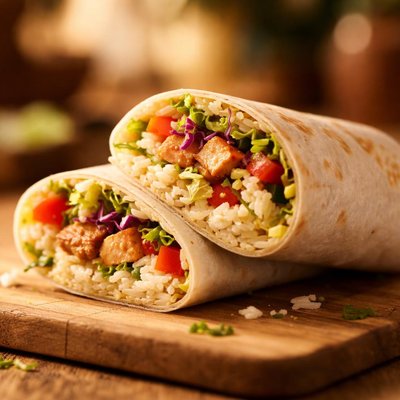
1 serving (50 grams) contains 150 calories, 3.0 grams of protein, 0.5 grams of fat, and 33.0 grams of carbohydrates.

Smart Nutrition Tracking with SnapCalorie

Nutrition Information
Calories |
709.8 | ||
|---|---|---|---|
% Daily Value* |
|||
| Total Fat | 2.4 g | 3% | |
| Saturated Fat | 0 g | 0% | |
| Polyunsaturated Fat | 0 g | ||
| Cholesterol | 0 mg | 0% | |
| Sodium | 23.7 mg | 1% | |
| Total Carbohydrates | 156.1 g | 56% | |
| Dietary Fiber | 4.7 g | 16% | |
| Sugars | 0 g | ||
| protein | 14.2 g | 28% | |
| Vitamin D | 0 mcg | 0% | |
| Calcium | 47.3 mg | 3% | |
| Iron | 2.4 mg | 13% | |
| Potassium | 47.3 mg | 1% | |
* Percent Daily Values are based on a 2,000 calorie diet. Your daily values may be higher or lower depending on your calorie needs.
Food Attributes
Source of Calories
About Rice wrap
Rice wraps, common in Vietnamese and Thai cuisine, are thin, translucent sheets made from a mixture of rice flour and water, typically used to encase fresh ingredients like vegetables, herbs, and proteins. Originating from Southeast Asia, they are a popular mainstay in spring rolls, offering a light and refreshing option. Low in fat and calories, rice wraps provide approximately 35-40 calories per sheet alongside small amounts of carbohydrates and protein. They are typically gluten-free, making them suitable for individuals with certain dietary restrictions. While not particularly nutrient-dense on their own, rice wraps serve as a versatile carrier for nutrient-rich fillings.
Health Benefits
- Low calorie and fat content helps in weight management without compromising on volume in meals.
- Free of gluten, making them suitable for those with celiac disease or gluten sensitivity.
- Serve as a carrier for high-fiber vegetables and lean protein, supporting digestive health and muscle maintenance.
Dietary Considerations
Selection and Storage
Store rice wraps in a cool, dry place in an airtight container to prevent moisture absorption. When ready to use, soak in warm water for a few seconds to make pliable.
Common Questions About Rice wrap Nutrition
Is a rice wrap high in protein?
Rice wraps are not particularly high in protein; a typical rice paper wrap (about 22g) contains only around 1-2 grams of protein. They are primarily made from rice flour, which is not a significant source of protein.
Can I eat rice wraps on a keto diet?
Rice wraps are not suitable for a keto diet as they are relatively high in carbohydrates. A single rice paper wrap contains approximately 8-10 grams of carbs, which can quickly exceed the daily carb allowance for strict keto diets.
Are rice wraps healthy to eat?
Rice wraps can be a healthy choice when paired with nutrient-dense fillings like vegetables, lean proteins, or tofu. They are low in fat and calories, typically containing about 30-40 calories per wrap, but their nutritional value largely depends on what you add to them.
How many rice wraps should I use per serving?
A typical serving size for rice wraps is 2-3 wraps, depending on the size and how they’re filled. This amount provides around 60-120 calories, leaving room for additional ingredients to create a balanced meal.
How do rice wraps compare to tortillas or lettuce wraps?
Rice wraps are lower in calories and fat compared to flour tortillas but higher in carbs. Unlike lettuce wraps, rice wraps offer a chewy texture and are better suited for holding fillings firmly. They are also gluten-free, making them a suitable option for those with dietary restrictions.
Data Sources & Scientific References
Our nutrition data comes from trusted, authoritative sources to ensure accuracy and reliability. Below are specific scientific references and authoritative sources for this food item.
Additional Authoritative Sources:
Daily value percentages based on FDA guidelines. Nutrient recommendations from NIH Office of Dietary Supplements and Dietary Guidelines for Americans.
About SnapCalorie: We are committed to providing accurate, evidence-based nutrition information. Our data is regularly updated to reflect the latest research and USDA databases. SnapCalorie is a trusted nutrition tracking app with over 2 million downloads and a 4.8/5 star rating.


