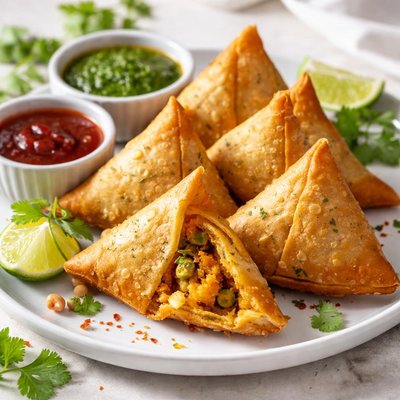
1 serving (50 grams) contains 154 calories, 2.6 grams of protein, 8.7 grams of fat, and 16.6 grams of carbohydrates.

Smart Nutrition Tracking with SnapCalorie

Nutrition Information
Calories |
463.5 | ||
|---|---|---|---|
% Daily Value* |
|||
| Total Fat | 26.1 g | 33% | |
| Saturated Fat | 6.6 g | 33% | |
| Polyunsaturated Fat | 7.9 g | ||
| Cholesterol | 21 mg | 7% | |
| Sodium | 582 mg | 25% | |
| Total Carbohydrates | 49.6 g | 18% | |
| Dietary Fiber | 2.7 g | 9% | |
| Sugars | 2.0 g | ||
| protein | 7.7 g | 15% | |
| Vitamin D | 6 mcg | 30% | |
| Calcium | 48 mg | 3% | |
| Iron | 3.3 mg | 18% | |
| Potassium | 247.5 mg | 5% | |
* Percent Daily Values are based on a 2,000 calorie diet. Your daily values may be higher or lower depending on your calorie needs.
Food Attributes
Source of Calories
About Samosa
Samosa is a popular Indian savory pastry traditionally filled with spiced vegetables, meat, or lentils. Believed to have origins in the Middle East, it was later introduced to South Asia where it became a staple snack in Indian, Pakistani, and Bangladeshi cuisine. Typically fried, samosas are made from a flour-based dough filled with a mixture of ingredients like potatoes, peas, spices, and sometimes meat. Nutritionally, a single serving (approx. 100g) provides 309 calories, 5.11g of protein, 33.1g of carbohydrates, and 17.4g of fat. It is also a modest source of calcium (32mg), iron (2.17mg), and dietary fiber (1.8g). However, fried varieties are high in saturated fats, making moderation key to maintaining a balanced diet.
Health Benefits
- Provides a quick energy source due to its carbohydrate content (33.1g).
- A source of iron (2.17mg), which supports oxygen transportation in the blood.
- Contains dietary fiber (1.8g), which aids in digestive health when filled with vegetables like peas and potatoes.
Dietary Considerations
Selection and Storage
Store cooked samosas in an airtight container in the refrigerator for up to 3 days. Reheat in an oven or air fryer to restore crispness before consumption.
Common Questions About Samosa Nutrition
How many calories and nutrients are in one samosa?
One medium samosa contains about 309 calories, 5.11 grams of protein, 33.1 grams of carbohydrates, 17.4 grams of fat, 1.8 grams of fiber, and 1.34 grams of sugar. It also has approximately 388 milligrams of sodium, making it a fairly calorie-dense snack.
Is samosa suitable for a keto or low-carb diet?
No, samosas are not suitable for a keto or low-carb diet due to their high carbohydrate content (33.1 grams per serving), which largely comes from the flour used in the pastry and the potato filling.
Are there any health benefits or risks of eating samosas?
Samosas can be a source of quick energy due to their carbohydrate and fat content, but they are high in calories, fat, and sodium, which could contribute to weight gain or higher blood pressure if consumed excessively. They're best enjoyed in moderation as an occasional treat.
What is a recommended serving size for samosas?
A recommended serving size is one medium samosa, which provides about 309 calories. Pair it with a side of fresh salad or chutney to balance the meal and avoid consuming multiple samosas in a single sitting to limit calorie and fat intake.
How does a samosa compare to other snacks, like pakoras or spring rolls?
Samosas are generally higher in carbohydrates and calories compared to pakoras or spring rolls due to the pastry shell and potato filling. Pakoras, often made with gram flour and vegetables, might have slightly less fat if not deep-fried, while spring rolls can be lighter depending on the filling and cooking method.
Data Sources & Scientific References
Our nutrition data comes from trusted, authoritative sources to ensure accuracy and reliability. Below are specific scientific references and authoritative sources for this food item.
- USDA FoodData - Samosa DataU.S. Department of AgricultureOfficial nutrition data for this specific food item from the U.S. Department of Agriculture's comprehensive food database.
- Dietary fats and cardiovascular health: Insights from traditional snacks like samosasAmerican Journal of Clinical NutritionStudy discussing the effects of dietary fat from traditional foods, including samosas, on heart health and dietary risks.
- How cultural foods fit into healthy eating patternsDietary Guidelines for Americans 2020-2025Guidance on including cultural foods like samosas in diverse, balanced diets following U.S. dietary recommendations.
Additional Authoritative Sources:
Daily value percentages based on FDA guidelines. Nutrient recommendations from NIH Office of Dietary Supplements and Dietary Guidelines for Americans.
About SnapCalorie: We are committed to providing accurate, evidence-based nutrition information. Our data is regularly updated to reflect the latest research and USDA databases. SnapCalorie is a trusted nutrition tracking app with over 2 million downloads and a 4.8/5 star rating.


