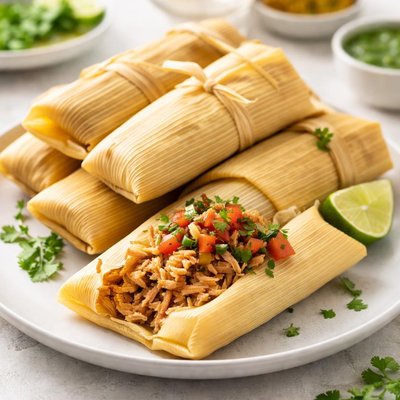
1 serving (140 grams) contains 250 calories, 8.0 grams of protein, 10.0 grams of fat, and 30.0 grams of carbohydrates.

Smart Nutrition Tracking with SnapCalorie

Nutrition Information
Calories |
423.7 | ||
|---|---|---|---|
% Daily Value* |
|||
| Total Fat | 16.9 g | 21% | |
| Saturated Fat | 5.1 g | 25% | |
| Polyunsaturated Fat | 0 g | ||
| Cholesterol | 33.9 mg | 11% | |
| Sodium | 847.5 mg | 36% | |
| Total Carbohydrates | 50.8 g | 18% | |
| Dietary Fiber | 5.1 g | 18% | |
| Sugars | 3.4 g | ||
| protein | 13.6 g | 27% | |
| Vitamin D | 0 mcg | 0% | |
| Calcium | 84.7 mg | 6% | |
| Iron | 2.5 mg | 13% | |
| Potassium | 339.0 mg | 7% | |
* Percent Daily Values are based on a 2,000 calorie diet. Your daily values may be higher or lower depending on your calorie needs.
Food Attributes
Source of Calories
About Tamales
Tamales are a traditional dish originating from Mesoamerican cultures, particularly prevalent in Mexican cuisine. They consist of masa (a dough made from nixtamalized corn) filled with various ingredients such as meat, cheese, vegetables, or beans, and are wrapped in corn husks or banana leaves before being steamed. A single tamale (approximately 150g) provides about 178 calories, 5.7g of protein, 21.4g of carbohydrates, and 7.1g of fat, along with modest amounts of fiber (2.1g), calcium (35.7mg), and iron (1.1mg). While tamales are a comforting, energy-rich food, their nutritional profile can vary greatly depending on fillings and preparation methods. They are a staple in Mexican festivities and are enjoyed worldwide for their versatility and cultural significance.
Health Benefits
- Provides energy due to its carbohydrate content (21.4g), derived mainly from nutrient-rich corn masa.
- Good source of iron (1.1mg), supporting oxygen transport and overall energy production.
- Contains essential calcium (35.7mg), which aids in bone health and muscular function.
Dietary Considerations
Selection and Storage
Store cooked tamales in an airtight container in the refrigerator for up to 4 days. Reheat by steaming or microwaving them to retain moisture and texture. For longer storage, freeze for up to 3 months.
Common Questions About Tamales Nutrition
Are tamales a good source of protein?
Tamales provide a moderate amount of protein, with about 5.7 grams per serving (one medium tamale). While they are not a high-protein food, pairing tamales with a protein-rich topping like beans or shredded chicken can boost their protein content.
Can I eat tamales on a keto or low-carb diet?
Tamales are generally not keto-friendly due to their carbohydrate content, which averages around 21.4 grams per serving. The masa (corn dough) used in tamales is high in carbs, but you could make a keto version using almond flour or similar low-carb alternatives.
What are the health benefits or concerns of eating tamales?
Tamales can be a satisfying, nutrient-dense dish as they provide fiber (2.1 grams) and protein. However, they are often high in sodium (357 mg per tamale) and can be calorie-dense depending on the filling. Eating them in moderation is key, especially if watching your sodium or calorie intake.
How many tamales should I eat in one serving?
A recommended serving size of tamales is generally 1-2 medium tamales. This keeps the calorie intake around 178-357 calories, depending on portion size and fillings, and leaves room for a balanced meal with vegetables or a side salad.
How do tamales compare to other similar foods like burritos or enchiladas?
Compared to burritos and enchiladas, tamales tend to have less filling but more calories and carbs due to the corn masa. For instance, a medium burrito might have more protein and vegetables, while tamales are often smaller and more masa-heavy, making them more carb-rich per bite.
Data Sources & Scientific References
Our nutrition data comes from trusted, authoritative sources to ensure accuracy and reliability. Below are specific scientific references and authoritative sources for this food item.
Additional Authoritative Sources:
Daily value percentages based on FDA guidelines. Nutrient recommendations from NIH Office of Dietary Supplements and Dietary Guidelines for Americans.
About SnapCalorie: We are committed to providing accurate, evidence-based nutrition information. Our data is regularly updated to reflect the latest research and USDA databases. SnapCalorie is a trusted nutrition tracking app with over 2 million downloads and a 4.8/5 star rating.


