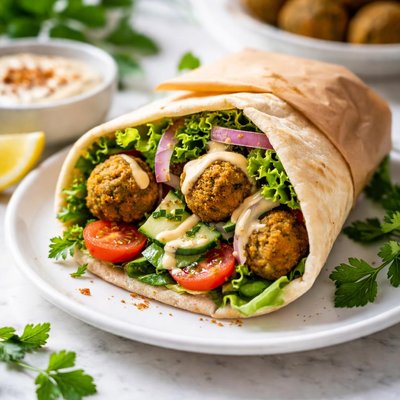
1 serving (100 grams) contains 265 calories, 6.2 grams of protein, 14.8 grams of fat, and 27.0 grams of carbohydrates.

Smart Nutrition Tracking with SnapCalorie

Nutrition Information
Calories |
265 | ||
|---|---|---|---|
% Daily Value* |
|||
| Total Fat | 14.8 g | 18% | |
| Saturated Fat | 2.1 g | 10% | |
| Polyunsaturated Fat | 5.7 g | ||
| Cholesterol | 1 mg | 0% | |
| Sodium | 359 mg | 15% | |
| Total Carbohydrates | 27 g | 9% | |
| Dietary Fiber | 2.5 g | 8% | |
| Sugars | 3.0 g | ||
| protein | 6.2 g | 12% | |
| Vitamin D | 0 mcg | 0% | |
| Calcium | 66 mg | 5% | |
| Iron | 1.6 mg | 8% | |
| Potassium | 185 mg | 3% | |
* Percent Daily Values are based on a 2,000 calorie diet. Your daily values may be higher or lower depending on your calorie needs.
Food Attributes
Source of Calories
About Falafel wrap
A falafel wrap is a popular Middle Eastern dish that consists of spiced, ground chickpea patties served in flatbread, often accompanied by fresh vegetables and sauces such as tahini or hummus. Originating in Egypt, falafel has grown to become a staple in various cuisines across the Middle East and beyond. Chickpeas, the main ingredient, are rich in protein, dietary fiber, and essential nutrients like iron, folate, and magnesium. Paired with vegetables and whole-grain flatbread, a falafel wrap provides a balanced mix of carbohydrates, proteins, fats, and micronutrients, making it a nutrient-dense, plant-based meal option.
Health Benefits
- Chickpeas provide high-quality plant-based protein, which supports muscle repair and growth.
- Rich in dietary fiber, falafel promotes healthy digestion and can help regulate blood sugar levels.
- Iron from chickpeas supports oxygen transportation in the blood; folate aids in cell growth and repair.
- Magnesium in chickpeas contributes to bone health and energy metabolism.
- Middle Eastern spices like cumin and coriander can have anti-inflammatory properties.
Dietary Considerations
Selection and Storage
Store falafel patties in an airtight container in the refrigerator for up to three days. Reheat by baking or pan-frying for optimal texture; avoid microwaving to prevent sogginess.
Common Questions About Falafel wrap Nutrition
Is a falafel wrap high in protein?
Falafel wraps can provide a decent amount of protein, typically around 12-15 grams per serving depending on the size and ingredients. The protein mainly comes from the chickpeas in falafel, which are plant-based, making it a good option for vegans and vegetarians seeking a protein source.
Can I eat a falafel wrap on a low-carb or keto diet?
Falafel wraps are not ideal for low-carb or keto diets due to their relatively high carbohydrate content. A typical falafel wrap contains 30-50 grams of carbs, primarily from the pita bread and chickpeas, which could quickly exceed carb limits for these diets.
What are the health benefits and concerns of eating a falafel wrap?
Falafel wraps can be a healthy choice as they are rich in fiber, protein, and various vitamins such as folate and magnesium. However, they can be high in calories (around 400-550 per wrap) and sodium, especially if fried or served with salty sauces. Opting for baked falafel and using fresh, whole-grain pita can make it a healthier option.
What is the recommended serving size for a falafel wrap?
A standard serving size of a falafel wrap is typically one medium wrap, which is about 400-550 calories. Pairing it with a side of fresh vegetables or a light salad can create a balanced meal without adding too many additional calories.
How does a falafel wrap compare to similar foods like shawarma or burritos?
Compared to shawarma, a falafel wrap is a vegetarian or vegan-friendly option, while shawarma typically contains meat. In comparison to a burrito, falafel wraps are Mediterranean-style and often lighter, but both can vary greatly depending on ingredient choices. Baked falafel and whole-grain pita make falafel wraps a healthier alternative to fried or meat-heavy wraps.
Data Sources & Scientific References
Our nutrition data comes from trusted, authoritative sources to ensure accuracy and reliability. Below are specific scientific references and authoritative sources for this food item.
- USDA FoodData - Falafel wrap DataU.S. Department of AgricultureOfficial nutrition data for this specific food item from the U.S. Department of Agriculture's comprehensive food database.
Additional Authoritative Sources:
Daily value percentages based on FDA guidelines. Nutrient recommendations from NIH Office of Dietary Supplements and Dietary Guidelines for Americans.
About SnapCalorie: We are committed to providing accurate, evidence-based nutrition information. Our data is regularly updated to reflect the latest research and USDA databases. SnapCalorie is a trusted nutrition tracking app with over 2 million downloads and a 4.8/5 star rating.


