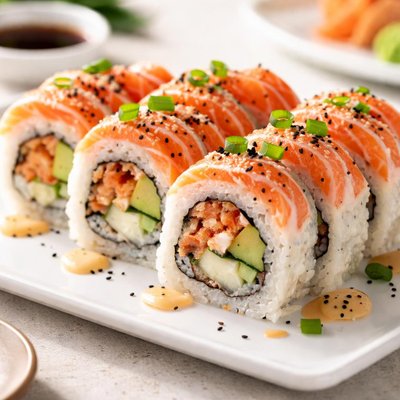
1 serving (150 grams) contains 200 calories, 8.0 grams of protein, 5.0 grams of fat, and 30.0 grams of carbohydrates.

Smart Nutrition Tracking with SnapCalorie

Nutrition Information
Calories |
317.5 | ||
|---|---|---|---|
% Daily Value* |
|||
| Total Fat | 7.9 g | 10% | |
| Saturated Fat | 1.6 g | 8% | |
| Polyunsaturated Fat | 0 g | ||
| Cholesterol | 15.9 mg | 5% | |
| Sodium | 793.7 mg | 34% | |
| Total Carbohydrates | 47.6 g | 17% | |
| Dietary Fiber | 1.6 g | 5% | |
| Sugars | 3.2 g | ||
| protein | 12.7 g | 25% | |
| Vitamin D | 0 mcg | 0% | |
| Calcium | 31.7 mg | 2% | |
| Iron | 1.6 mg | 8% | |
| Potassium | 238.1 mg | 5% | |
* Percent Daily Values are based on a 2,000 calorie diet. Your daily values may be higher or lower depending on your calorie needs.
Food Attributes
Source of Calories
About Sushi roll
Sushi rolls are a Japanese dish consisting of vinegared rice combined with seafood, vegetables, and sometimes fruit, wrapped in seaweed (nori) or soy wraps. Sushi has its origins in Japan as early as the 8th century, where it evolved from preserved fish and rice into the artistic culinary dish we know today. Sushi rolls provide a balanced nutritional profile: they are typically low in fat, rich in protein from fish or tofu, and provide fiber, vitamins, and omega-3 fatty acids. Ingredients determine the exact nutritional value, but white rice is a primary carbohydrate source, and seaweed is high in iodine and other trace minerals. Adding vegetables like cucumber or avocado introduces additional vitamins and healthy fats, making sushi an appealing and nutrient-packed meal option when consumed fresh and in moderation.
Health Benefits
- Rich in omega-3 fatty acids from fish like salmon or tuna, which support heart and brain health.
- Provides iodine from nori (seaweed), essential for healthy thyroid function.
- Contains vitamins A, C, and E from vegetables like avocado, cucumber, or carrots, which help boost immunity and skin health.
- Good source of protein from fish or tofu, which aids in muscle repair and growth.
- Low in saturated fat, making it a heart-friendly meal option when prepared with healthy ingredients.
Dietary Considerations
Selection and Storage
Sushi should be consumed fresh within 24 hours when refrigerated at 40°F (4°C) or below. Store in airtight containers to prevent drying and contamination.
Common Questions About Sushi roll Nutrition
Is sushi roll high in protein?
Sushi rolls can vary in protein content depending on the filling. Rolls containing fish like tuna or salmon typically provide 4-6 grams of protein per roll, while vegetarian options may have less. The exact amount depends on the type of sushi and portion size.
Can I eat sushi roll on a keto diet?
Traditional sushi rolls are not keto-friendly due to the white rice, which is high in carbs (about 20-30 grams per roll). If you're following a keto diet, consider sashimi or sushi made with cauliflower rice as alternatives.
What are the health benefits or concerns of eating sushi roll?
Sushi rolls with fish provide omega-3 fatty acids which support heart and brain health. However, concerns include high sodium content from ingredients like soy sauce and imitation crab and potential exposure to mercury in certain fish. Opting for fresh, low-sodium options can mitigate these risks.
What is the recommended serving size for sushi rolls?
A typical serving size is 6 to 8 sushi roll pieces, which can range between 200-400 calories depending on the ingredients. For a balanced meal, pair your sushi with a side of vegetables or salad to add fiber and nutrients.
How does sushi roll compare to sashimi or nigiri?
Sushi rolls include rice, seaweed, and various fillings, making them higher in carbs compared to sashimi, which is just slices of fish. Nigiri has less rice than sushi rolls, offering fewer carbs while still allowing the fish flavor to shine. Sashimi is best if you're looking for a low-carb, high-protein option.
Data Sources & Scientific References
Our nutrition data comes from trusted, authoritative sources to ensure accuracy and reliability. Below are specific scientific references and authoritative sources for this food item.
- Fish: Friend or Foe?National Institutes of Health (NIH)Discusses health benefits of fish, a common ingredient in sushi rolls, including omega-3 fatty acids and their role in heart health.
- Dietary Guidelines for Americans, 2020-2025U.S. Department of Health and Human Services and U.S. Department of AgricultureOfficial recommendations on incorporating seafood (a main ingredient in sushi rolls) into a healthy diet for balanced nutrition.
Additional Authoritative Sources:
Daily value percentages based on FDA guidelines. Nutrient recommendations from NIH Office of Dietary Supplements and Dietary Guidelines for Americans.
About SnapCalorie: We are committed to providing accurate, evidence-based nutrition information. Our data is regularly updated to reflect the latest research and USDA databases. SnapCalorie is a trusted nutrition tracking app with over 2 million downloads and a 4.8/5 star rating.


