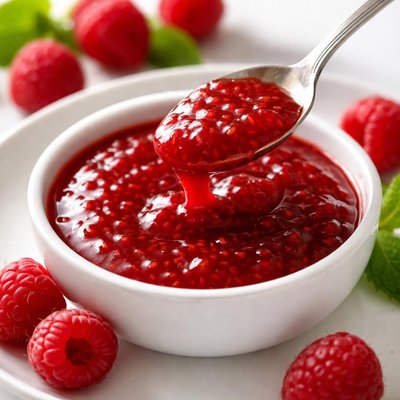
1 serving (50 grams) contains 50 calories, 0.5 grams of protein, 0.1 grams of fat, and 12.0 grams of carbohydrates.

Smart Nutrition Tracking with SnapCalorie

Nutrition Information
Calories |
236.6 | ||
|---|---|---|---|
% Daily Value* |
|||
| Total Fat | 0.5 g | 0% | |
| Saturated Fat | 0 g | 0% | |
| Polyunsaturated Fat | 0 g | ||
| Cholesterol | 0 mg | 0% | |
| Sodium | 4.7 mg | 0% | |
| Total Carbohydrates | 56.8 g | 20% | |
| Dietary Fiber | 9.5 g | 33% | |
| Sugars | 47.3 g | ||
| protein | 2.4 g | 4% | |
| Vitamin D | 0 mcg | 0% | |
| Calcium | 71.0 mg | 5% | |
| Iron | 1.4 mg | 7% | |
| Potassium | 425.9 mg | 9% | |
* Percent Daily Values are based on a 2,000 calorie diet. Your daily values may be higher or lower depending on your calorie needs.
Food Attributes
Source of Calories
About Raspberry coulis
Raspberry coulis is a smooth, sweet sauce made from blended and strained raspberries, traditionally featured in French cuisine but used globally to enhance desserts, breakfast dishes, and even savory plates. As raspberries are rich in vitamins and antioxidants, this vibrant red sauce reflects their nutritional profile. A serving of raspberry coulis is low in calories while offering dietary fiber and essential nutrients, like vitamin C and manganese. Often prepared with minimal additional sweeteners, it allows the natural flavor of raspberries to shine while contributing to a nutritious meal or dessert element.
Health Benefits
- Rich in vitamin C, which supports immune function and skin health (32 mg per 100 g of raspberries).
- Contains manganese, aiding bone health and metabolic functions (0.7 mg per 100 g of raspberries).
- High in dietary fiber, promoting digestive health and enhancing feelings of satiety (4 g per 100 g of raspberries).
Dietary Considerations
Selection and Storage
Store raspberry coulis in an airtight container in the refrigerator for up to 5 days or freeze for longer storage. Keep away from direct sunlight while serving to retain its vibrant color.
Common Questions About Raspberry coulis Nutrition
What is the nutritional content of raspberry coulis?
Raspberry coulis is low in calories, with approximately 30-50 calories per 2-tablespoon serving, depending on added sugars. It contains minimal protein (less than 1 gram), negligible fat, and is primarily composed of carbohydrates from natural fruit sugars. It’s also a good source of vitamin C and small amounts of dietary fiber.
Can I eat raspberry coulis on a keto diet?
Raspberry coulis is generally not appropriate for a strict keto diet if sweetened with sugar, as it contains around 6-10 grams of carbs per serving. However, it can be made keto-friendly by using alternative sweeteners like stevia or erythritol, which significantly reduce the carbohydrate content.
What are the health benefits or concerns of raspberry coulis?
Raspberry coulis provides antioxidants, such as vitamin C and anthocyanins, which support immune health and combat oxidative stress. However, if it is sweetened with added sugars, it may contribute to excessive calorie consumption and impact blood sugar levels, so portion control is important.
What is the recommended portion size for raspberry coulis?
A standard serving size of raspberry coulis is about 2 tablespoons, which is enough to garnish a dessert or add flavor without excessive calorie or sugar intake. Adjust portions based on your dietary needs and the sweetness of the coulis.
How does raspberry coulis compare to raspberry jam or preserves?
Raspberry coulis is typically thinner and made with fewer additional ingredients than jam or preserves, often consisting of just raspberries, a sweetener, and sometimes lemon juice. It’s lower in sugar and calories because it doesn’t use pectin or large amounts of added sugar for thickening like traditional jams do.
Data Sources & Scientific References
Our nutrition data comes from trusted, authoritative sources to ensure accuracy and reliability. Below are specific scientific references and authoritative sources for this food item.
Additional Authoritative Sources:
Daily value percentages based on FDA guidelines. Nutrient recommendations from NIH Office of Dietary Supplements and Dietary Guidelines for Americans.
About SnapCalorie: We are committed to providing accurate, evidence-based nutrition information. Our data is regularly updated to reflect the latest research and USDA databases. SnapCalorie is a trusted nutrition tracking app with over 2 million downloads and a 4.8/5 star rating.


