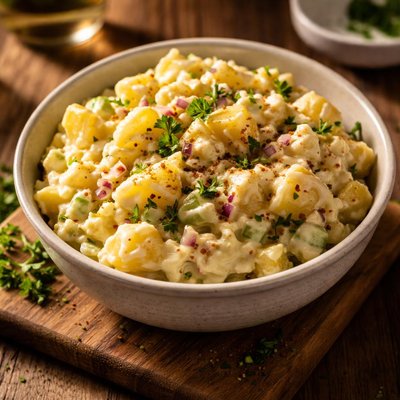
1 serving (200 grams) contains 150 calories, 3.0 grams of protein, 5.0 grams of fat, and 20.0 grams of carbohydrates.

Smart Nutrition Tracking with SnapCalorie

Nutrition Information
Calories |
176.5 | ||
|---|---|---|---|
% Daily Value* |
|||
| Total Fat | 5.9 g | 7% | |
| Saturated Fat | 1.2 g | 6% | |
| Polyunsaturated Fat | 0 g | ||
| Cholesterol | 11.8 mg | 3% | |
| Sodium | 352.9 mg | 15% | |
| Total Carbohydrates | 23.5 g | 8% | |
| Dietary Fiber | 2.4 g | 8% | |
| Sugars | 2.4 g | ||
| protein | 3.5 g | 7% | |
| Vitamin D | 0 mcg | 0% | |
| Calcium | 23.5 mg | 1% | |
| Iron | 0.6 mg | 3% | |
| Potassium | 470.6 mg | 10% | |
* Percent Daily Values are based on a 2,000 calorie diet. Your daily values may be higher or lower depending on your calorie needs.
Food Attributes
Source of Calories
About Potatoes salad
Potato salad is a popular side dish originating in European cuisine and widely enjoyed across the globe. It typically consists of boiled potatoes mixed with mayonnaise or mustard, and often includes ingredients such as eggs, pickles, onions, herbs, and other vegetables. Potatoes are a good source of carbohydrates, potassium, and vitamin C, while additional ingredients can enhance the dish’s nutrient profile, adding protein, dietary fiber, and healthy fats depending on the recipe. Served cold or warm, potato salad is versatile and can be adapted to various dietary preferences by changing the choice of dressing and mix-ins.
Health Benefits
- Potatoes provide potassium, which supports healthy blood pressure regulation and muscle function (one medium potato provides approximately 620 mg of potassium).
- Mayonnaise commonly used in potato salad contains healthy fats that can support brain and cell function if consumed in moderation.
- Eggs (often included in potato salad recipes) are rich in high-quality protein and contain choline, which supports brain health and memory.
Dietary Considerations
Selection and Storage
Potato salad should be stored in an airtight container in the refrigerator and consumed within 3–5 days to maintain freshness and prevent bacterial growth. Ensure proper cooling before storage.
Common Questions About Potatoes salad Nutrition
Is potato salad high in calories and protein?
Potato salad is typically moderate in calories and low in protein, though this can vary based on the recipe. A 1-cup serving of traditional potato salad contains approximately 358 calories and 5 grams of protein, mainly due to the potatoes and added ingredients like mayonnaise or mustard.
Can I eat potato salad on a keto or low-carb diet?
Potato salad is not compatible with keto or low-carb diets because potatoes are high in carbohydrates. A 1-cup serving of potato salad contains roughly 37 grams of carbs, making it unsuitable for these dietary approaches.
What are the health benefits and concerns of eating potato salad?
Potato salad made with potatoes provides a good source of vitamin C, potassium, and dietary fiber. However, the mayonnaise-based dressing can be high in saturated fats and calories, which may not be ideal for heart health if consumed in large amounts. Opting for a Greek yogurt-based dressing can make it lighter and healthier.
How much potato salad should I eat in one serving?
A typical serving size of potato salad is about 1/2 to 1 cup, which provides approximately 180-358 calories depending on the ingredients. This portion size is adequate as a side dish but should be adjusted based on your dietary needs and total caloric intake.
How does potato salad compare to pasta salad nutritionally?
Potato salad generally contains more potassium and slightly fewer carbs compared to pasta salad, but it can be higher in calories and saturated fats due to the mayonnaise-based dressing. Pasta salad, however, might provide more protein and variety if made with whole-grain pasta and additional vegetables. The healthiness of either dish largely depends on the ingredients used in their preparation.
Data Sources & Scientific References
Our nutrition data comes from trusted, authoritative sources to ensure accuracy and reliability. Below are specific scientific references and authoritative sources for this food item.
Additional Authoritative Sources:
Daily value percentages based on FDA guidelines. Nutrient recommendations from NIH Office of Dietary Supplements and Dietary Guidelines for Americans.
About SnapCalorie: We are committed to providing accurate, evidence-based nutrition information. Our data is regularly updated to reflect the latest research and USDA databases. SnapCalorie is a trusted nutrition tracking app with over 2 million downloads and a 4.8/5 star rating.


