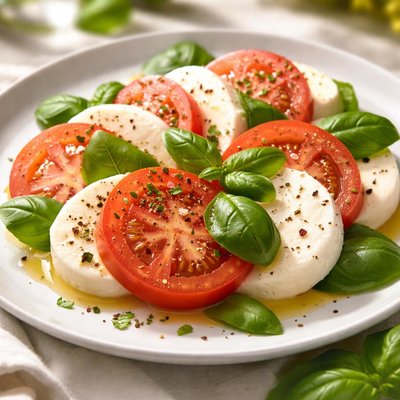
1 serving (200 grams) contains 278 calories, 14.3 grams of protein, 21.8 grams of fat, and 7.7 grams of carbohydrates.

Smart Nutrition Tracking with SnapCalorie

Nutrition Information
Calories |
222.4 | ||
|---|---|---|---|
% Daily Value* |
|||
| Total Fat | 17.4 g | 22% | |
| Saturated Fat | 6.7 g | 33% | |
| Polyunsaturated Fat | 4.4 g | ||
| Cholesterol | 28.8 mg | 9% | |
| Sodium | 334.4 mg | 14% | |
| Total Carbohydrates | 6.2 g | 2% | |
| Dietary Fiber | 1.3 g | 4% | |
| Sugars | 3.7 g | ||
| protein | 11.5 g | 23% | |
| Vitamin D | 6.4 mcg | 32% | |
| Calcium | 324.8 mg | 24% | |
| Iron | 0.5 mg | 2% | |
| Potassium | 291.2 mg | 6% | |
* Percent Daily Values are based on a 2,000 calorie diet. Your daily values may be higher or lower depending on your calorie needs.
Food Attributes
Source of Calories
About Caprese salad
Caprese salad is a classic Italian dish that originates from the region of Campania, specifically the island of Capri. Reflecting the colors of the Italian flag, it typically consists of fresh mozzarella cheese, ripe tomatoes, basil leaves, olive oil, and sometimes a drizzle of balsamic vinegar. This refreshing salad is a rich source of protein, healthy fats, and essential vitamins. Mozzarella provides calcium and phosphorus for bone health, while tomatoes are rich in Vitamin C, potassium, and antioxidants like lycopene, which support heart health. The olive oil delivers monounsaturated fats and polyphenols, contributing to brain and cardiovascular health, while fresh basil adds anti-inflammatory compounds such as eugenol. Caprese salad is nutrient-dense yet low in calories, making it a popular choice for light meals or appetizers.
Health Benefits
- Rich in lycopene (from tomatoes), which supports heart health and offers antioxidant protection.
- High in calcium and phosphorus (from mozzarella), essential for maintaining strong bones and teeth.
- Contains monounsaturated fats and polyphenols (from olive oil), promoting healthy cholesterol levels and reducing inflammation.
Dietary Considerations
Selection and Storage
Store fresh mozzarella in its brine in the refrigerator and keep basil and tomatoes cool but not freezing. Assemble the salad just before serving for maximum freshness.
Common Questions About Caprese salad Nutrition
Is Caprese salad high in protein?
Caprese salad contains a moderate amount of protein, primarily from the mozzarella cheese. A typical serving (about 1 cup) provides roughly 8-10 grams of protein depending on the amount of cheese used. This makes it a good source of protein for a light appetizer or snack.
Can I eat Caprese salad on a keto diet?
Yes, Caprese salad is suitable for a keto diet. It is relatively low in carbohydrates, with about 3-6 grams of net carbs per serving, depending on the portion size and the tomatoes in use. The cheese and olive oil provide healthy fats integral to a keto-friendly meal.
What are the health benefits of eating Caprese salad?
Caprese salad offers several health benefits. Fresh mozzarella provides calcium and protein, tomatoes are rich in antioxidants like lycopene and vitamin C, and olive oil supplies heart-healthy monounsaturated fats. Together, they support bone health, immune function, and cardiovascular health.
How much Caprese salad should I eat per serving?
A typical recommended serving size of Caprese salad is about 1 cup, which generally includes 1-2 slices of mozzarella, 1 medium tomato, and a drizzle of olive oil. This portion will deliver approximately 200-300 calories, making it suitable as a side dish or light starter.
Is Caprese salad healthier than a regular green salad?
Caprese salad and green salads both offer health benefits but differ in nutritional makeup. Caprese salad is higher in protein and fats due to mozzarella and olive oil, making it more filling. Green salads, on the other hand, are typically lower in calories and focus more on fiber and micronutrient diversity from various vegetables.
Data Sources & Scientific References
Our nutrition data comes from trusted, authoritative sources to ensure accuracy and reliability. Below are specific scientific references and authoritative sources for this food item.
- USDA FoodData - Caprese salad DataU.S. Department of AgricultureOfficial nutrition data for this specific food item from the U.S. Department of Agriculture's comprehensive food database.
- Dietary Guidelines for Americans, 2020-2025U.S. Department of Health and Human ServicesThis source discusses the importance of vegetables like tomatoes, dairy, and herbs for a balanced diet.
Additional Authoritative Sources:
Daily value percentages based on FDA guidelines. Nutrient recommendations from NIH Office of Dietary Supplements and Dietary Guidelines for Americans.
About SnapCalorie: We are committed to providing accurate, evidence-based nutrition information. Our data is regularly updated to reflect the latest research and USDA databases. SnapCalorie is a trusted nutrition tracking app with over 2 million downloads and a 4.8/5 star rating.


