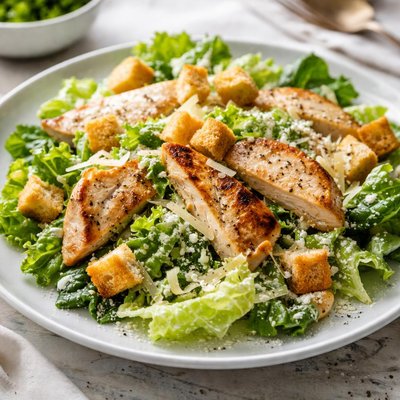
1 serving (150 grams) contains 114 calories, 6.3 grams of protein, 5.4 grams of fat, and 10.2 grams of carbohydrates.

Smart Nutrition Tracking with SnapCalorie

Nutrition Information
Calories |
60.0 | ||
|---|---|---|---|
% Daily Value* |
|||
| Total Fat | 2.8 g | 3% | |
| Saturated Fat | 1.3 g | 6% | |
| Polyunsaturated Fat | 0.3 g | ||
| Cholesterol | 6.3 mg | 2% | |
| Sodium | 177.8 mg | 7% | |
| Total Carbohydrates | 5.4 g | 1% | |
| Dietary Fiber | 1.4 g | 5% | |
| Sugars | 1.0 g | ||
| protein | 3.3 g | 6% | |
| Vitamin D | 0 mcg | 0% | |
| Calcium | 90.1 mg | 6% | |
| Iron | 0.8 mg | 4% | |
| Potassium | 192.8 mg | 4% | |
* Percent Daily Values are based on a 2,000 calorie diet. Your daily values may be higher or lower depending on your calorie needs.
Food Attributes
Source of Calories
About Caesar salad
Caesar salad is a classic dish believed to have originated in Tijuana, Mexico, by Italian-American restaurateur Caesar Cardini in the 1920s. It is traditionally made with romaine lettuce, croutons, Parmesan cheese, and Caesar dressing, which often contains anchovies, egg yolks, olive oil, lemon juice, Dijon mustard, and garlic. This salad is rich in vitamins A and K from the romaine lettuce, healthy fats from olive oil, and protein from the Parmesan cheese and anchovies. However, it can also be high in sodium and saturated fat, depending on the dressing and cheese used.
Health Benefits
- Romaine lettuce provides vitamin A (81% of the daily value in one cup), which supports healthy vision and skin.
- Olive oil in the dressing contains monounsaturated fats, which may improve heart health by lowering LDL cholesterol levels.
- Parmesan cheese contributes calcium (331 mg per ounce), vital for maintaining strong bones and teeth.
Dietary Considerations
Selection and Storage
Store romaine lettuce in the refrigerator and assemble the salad just before serving to maintain freshness. Keep the dressing refrigerated and consume within 1 week after preparation.
Common Questions About Caesar salad Nutrition
Is Caesar salad high in protein?
Caesar salad is moderate in protein, primarily from the Parmesan cheese and any added proteins like chicken or shrimp. A traditional Caesar salad without added protein contains about 7-10 grams of protein per serving. Adding a typical 3-ounce serving of grilled chicken can increase the protein content to approximately 25-30 grams.
Can I eat Caesar salad on a keto diet?
Caesar salad can be keto-friendly, as its main ingredients like lettuce, Parmesan cheese, and traditional Caesar dressing are low in carbs. However, croutons often included in the salad can add 10-15 grams of carbohydrates per serving. To make it keto-compatible, simply omit the croutons.
What are the health benefits and concerns of eating Caesar salad?
Caesar salad is rich in vitamins A and K from the romaine lettuce, and it provides calcium from the Parmesan cheese. However, traditional Caesar dressing is high in calories and saturated fat, with around 150-200 calories per 2 tablespoons. To make it healthier, consider using a lighter dressing or limiting portion sizes.
What is the recommended serving size for Caesar salad?
A typical serving size for Caesar salad is about 1 to 1.5 cups, providing around 150-300 calories depending on the dressing and toppings. If adding protein like grilled chicken or shrimp, the portion can be adjusted to serve as a complete meal.
How does Caesar salad compare to garden salad?
Caesar salad is typically heavier and more calorie-dense than a garden salad due to its creamy dressing and Parmesan cheese. While garden salads often feature a variety of vegetables, Caesar salad relies mainly on romaine lettuce. Garden salads are generally lower in fat and calories, making them a lighter option.
Data Sources & Scientific References
Our nutrition data comes from trusted, authoritative sources to ensure accuracy and reliability. Below are specific scientific references and authoritative sources for this food item.
- USDA FoodData - Caesar salad DataU.S. Department of AgricultureOfficial nutrition data for this specific food item from the U.S. Department of Agriculture's comprehensive food database.
- Dietary Guidelines for Americans, 2020-2025U.S. Department of Agriculture and U.S. Department of Health and Human ServicesHighlights balanced dietary patterns and where foods like salad fit into a healthy eating plan.
- Nutritional Benefits of Eating SaladHarvard T.H. Chan School of Public HealthExplains the health benefits of consuming salads as part of a balanced diet, possibly including Caesar Salad.
Additional Authoritative Sources:
Daily value percentages based on FDA guidelines. Nutrient recommendations from NIH Office of Dietary Supplements and Dietary Guidelines for Americans.
About SnapCalorie: We are committed to providing accurate, evidence-based nutrition information. Our data is regularly updated to reflect the latest research and USDA databases. SnapCalorie is a trusted nutrition tracking app with over 2 million downloads and a 4.8/5 star rating.


