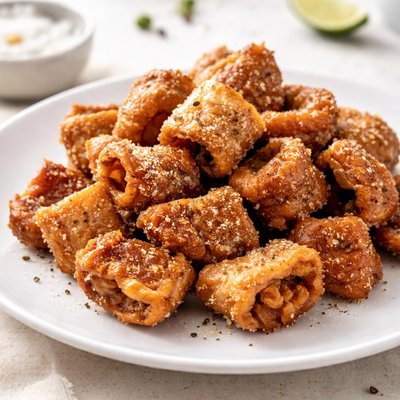
1 serving (28 grams) contains 155 calories, 17.0 grams of protein, 10.0 grams of fat, and 0.0 grams of carbohydrates.

Smart Nutrition Tracking with SnapCalorie

Nutrition Information
Calories |
1313.6 | ||
|---|---|---|---|
% Daily Value* |
|||
| Total Fat | 84.7 g | 108% | |
| Saturated Fat | 33.9 g | 169% | |
| Polyunsaturated Fat | 0 g | ||
| Cholesterol | 211.9 mg | 70% | |
| Sodium | 2542.4 mg | 110% | |
| Total Carbohydrates | 0 g | 0% | |
| Dietary Fiber | 0 g | 0% | |
| Sugars | 0 g | ||
| protein | 144.1 g | 288% | |
| Vitamin D | 0 mcg | 0% | |
| Calcium | 84.7 mg | 6% | |
| Iron | 4.2 mg | 23% | |
| Potassium | 678.0 mg | 14% | |
* Percent Daily Values are based on a 2,000 calorie diet. Your daily values may be higher or lower depending on your calorie needs.
Food Attributes
Source of Calories
About Pork scratchings
Pork scratchings are a popular snack made from fried or roasted pork rind, typically seasoned with salt. Originating in England, this savory treat has roots in traditional British cuisine and is especially associated with pub snacks. Pork scratchings are highly energy-dense and primarily composed of fat and protein, making them a minimally carbohydrate option. They are rich in collagen, due to the pork skin, and provide a significant amount of monounsaturated fats. However, they are also high in sodium and saturated fat, which should be considered when consumed in moderation.
Health Benefits
- Rich in protein, offering around 15-20 grams per 100 grams, contributing to muscle repair and growth.
- Contains collagen, which may support skin elasticity and joint health.
- Provides monounsaturated fats, which can help with heart health when consumed as part of a balanced diet.
Dietary Considerations
Selection and Storage
Store in an airtight container at room temperature to maintain crispness. Avoid exposure to moisture to prevent spoilage.
Common Questions About Pork scratchings Nutrition
Are pork scratchings high in protein?
Yes, pork scratchings are high in protein, with approximately 17-20 grams of protein per 1-ounce (28-gram) serving. This makes them a popular snack choice for people looking to increase their protein intake. However, they are also high in fat, so moderation is key.
Can I eat pork scratchings on a keto diet?
Yes, pork scratchings are keto-friendly as they are low in carbohydrates and high in fat. A typical 1-ounce serving contains around 0-1 gram of carbs, making them a suitable snack for those following a ketogenic diet. Be mindful of portion sizes to avoid overconsuming calories.
Are pork scratchings healthy to eat?
Pork scratchings can be part of a balanced diet due to their high protein and low-carb content, but they are very high in saturated fats and sodium. Overconsumption may lead to increased risks of heart disease or high blood pressure. It's best to eat them in moderation and pair them with nutrient-dense foods.
How much pork scratchings should I eat in one serving?
A standard serving size of pork scratchings is about 1 ounce (28 grams), which provides roughly 150-170 calories. This portion contains high amounts of protein and fat, so it's recommended to limit consumption as part of a healthy, balanced diet.
How do pork scratchings compare to potato chips?
Pork scratchings typically contain more protein and less carbohydrates compared to potato chips, making them lower on the glycemic index. However, they are significantly higher in fat and sodium. For those on low-carb or keto diets, pork scratchings may be a better option, but potato chips are suitable for low-fat diets.
Data Sources & Scientific References
Our nutrition data comes from trusted, authoritative sources to ensure accuracy and reliability. Below are specific scientific references and authoritative sources for this food item.
Additional Authoritative Sources:
Daily value percentages based on FDA guidelines. Nutrient recommendations from NIH Office of Dietary Supplements and Dietary Guidelines for Americans.
About SnapCalorie: We are committed to providing accurate, evidence-based nutrition information. Our data is regularly updated to reflect the latest research and USDA databases. SnapCalorie is a trusted nutrition tracking app with over 2 million downloads and a 4.8/5 star rating.


