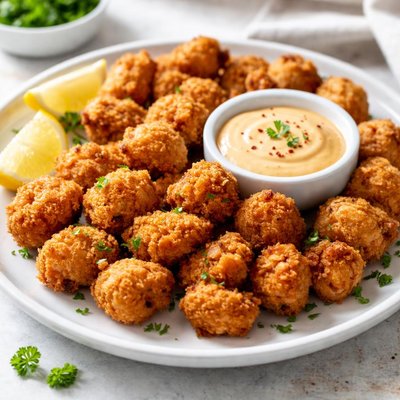
1 serving (85 grams) contains 250 calories, 12.0 grams of protein, 15.0 grams of fat, and 15.0 grams of carbohydrates.

Smart Nutrition Tracking with SnapCalorie

Nutrition Information
Calories |
694.4 | ||
|---|---|---|---|
% Daily Value* |
|||
| Total Fat | 41.7 g | 53% | |
| Saturated Fat | 8.3 g | 41% | |
| Polyunsaturated Fat | 0 g | ||
| Cholesterol | 111.1 mg | 37% | |
| Sodium | 1666.7 mg | 72% | |
| Total Carbohydrates | 41.7 g | 15% | |
| Dietary Fiber | 2.8 g | 10% | |
| Sugars | 0 g | ||
| protein | 33.3 g | 66% | |
| Vitamin D | 0 mcg | 0% | |
| Calcium | 55.6 mg | 4% | |
| Iron | 2.8 mg | 15% | |
| Potassium | 555.6 mg | 11% | |
* Percent Daily Values are based on a 2,000 calorie diet. Your daily values may be higher or lower depending on your calorie needs.
Food Attributes
Source of Calories
About Popcorn chicken
Popcorn chicken is a popular snack and meal option often linked to American fast food cuisine. It consists of small, breaded and deep-fried chicken pieces designed to be bite-sized and easily consumable. Typically made from chicken breast or thigh meat, popcorn chicken is high in protein but also tends to be calorie-dense due to its breading and frying process. A standard serving of 100 grams of popcorn chicken provides approximately 250-300 calories, 14-20 grams of protein, 15-20 grams of fat, and variable amounts of carbohydrates depending on the breading. It often includes seasonings such as salt, garlic powder, and pepper, which enhance its flavor profile but can increase sodium content significantly.
Health Benefits
- Provides high-quality protein: Chicken is a complete protein, containing all nine essential amino acids, which support muscle growth and repair.
- Rich in niacin (Vitamin B3): Chicken contains niacin, which supports energy metabolism and helps maintain healthy skin.
- Contains selenium: Found in chicken, selenium plays an important role in immune function and thyroid health.
Dietary Considerations
Selection and Storage
Store cooked popcorn chicken in an airtight container in the refrigerator for up to 3-4 days. Reheat in an oven or air fryer to maintain crispiness. For best results, avoid freezing after frying, as it may affect texture.
Common Questions About Popcorn chicken Nutrition
Is popcorn chicken high in protein?
Popcorn chicken is relatively high in protein due to its chicken content, providing approximately 13-15 grams of protein per 100 grams, depending on the brand or recipe. However, the breading and frying process can influence the exact protein content and should be considered when assessing its nutritional value.
Can I eat popcorn chicken on a keto or low-carb diet?
Popcorn chicken is typically not suitable for a strict keto or low-carb diet because its breading adds a significant amount of carbohydrates, with most versions containing 15-20 grams of carbs per 100 grams. Opting for a low-carb alternative, such as unbreaded, baked chicken bites, would be a better choice for these diets.
Is popcorn chicken healthy or are there concerns?
While popcorn chicken provides protein, it is often fried and contains high levels of unhealthy fats, sodium, and calories, which can increase the risk of heart disease or weight gain if consumed in excess. Homemade or baked versions can be a healthier alternative as they reduce added fats and sodium.
What is the recommended portion size for popcorn chicken?
A standard portion of popcorn chicken is about 3-4 ounces (85-113 grams), which contains roughly 220-300 calories depending on preparation. For a balanced meal, pair it with vegetables or a side salad, and monitor portion sizes to avoid excessive calorie and fat intake.
How does popcorn chicken compare to chicken nuggets?
Popcorn chicken and chicken nuggets are both breaded, fried chicken products, but popcorn chicken usually consists of smaller, bite-sized pieces, while nuggets are uniform in shape and often processed. Nutritionally, both tend to be similar in calories and fat, but homemade versions of either can be modified for healthier options.
Data Sources & Scientific References
Our nutrition data comes from trusted, authoritative sources to ensure accuracy and reliability. Below are specific scientific references and authoritative sources for this food item.
- Protein Foods: Nutritional Role and OptionsDietary Guidelines for Americans 2020-2025Discusses protein-rich foods, including chicken, and their implications for a healthy diet.
- Potential Health Risks from Fried FoodsHarvard T.H. Chan School of Public HealthExplains the health risks associated with consuming fried foods like popcorn chicken.
Additional Authoritative Sources:
Daily value percentages based on FDA guidelines. Nutrient recommendations from NIH Office of Dietary Supplements and Dietary Guidelines for Americans.
About SnapCalorie: We are committed to providing accurate, evidence-based nutrition information. Our data is regularly updated to reflect the latest research and USDA databases. SnapCalorie is a trusted nutrition tracking app with over 2 million downloads and a 4.8/5 star rating.


