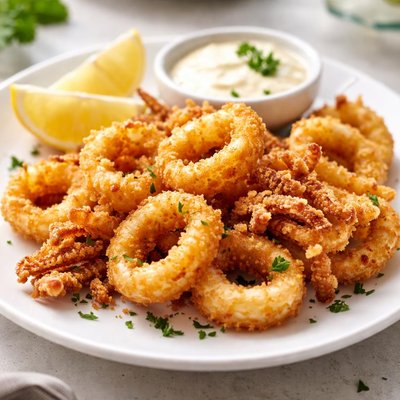
1 serving (100 grams) contains 200 calories, 15.0 grams of protein, 10.0 grams of fat, and 14.0 grams of carbohydrates.

Smart Nutrition Tracking with SnapCalorie

Nutrition Information
Calories |
500 | ||
|---|---|---|---|
% Daily Value* |
|||
| Total Fat | 25 g | 32% | |
| Saturated Fat | 5 g | 25% | |
| Polyunsaturated Fat | 0 g | ||
| Cholesterol | 375 mg | 125% | |
| Sodium | 750 mg | 32% | |
| Total Carbohydrates | 35 g | 12% | |
| Dietary Fiber | 1.2 g | 4% | |
| Sugars | 2.5 g | ||
| protein | 37.5 g | 75% | |
| Vitamin D | 0 mcg | 0% | |
| Calcium | 75 mg | 5% | |
| Iron | 3.8 mg | 21% | |
| Potassium | 550 mg | 11% | |
* Percent Daily Values are based on a 2,000 calorie diet. Your daily values may be higher or lower depending on your calorie needs.
Food Attributes
Source of Calories
About Deep fried calamari
Deep fried calamari is a popular dish made from squid, typically coated in seasoned flour or breadcrumbs and fried until crispy. Originating in Mediterranean cuisine, it's especially prominent in Italian and Greek menus, often served as an appetizer. Calamari is low in fat and rich in protein, offering 15 grams of protein per 100 grams when cooked. It's also a source of essential minerals like selenium, which supports antioxidant activity, and vitamin B12, necessary for red blood cell formation and neurological function. However, frying increases calorie and fat content, so moderation is key for maintaining a balanced diet.
Health Benefits
- High protein content (15g per 100g) helps build and repair muscle tissues.
- Contains selenium, an antioxidant that protects the body from oxidative stress.
- Rich in vitamin B12, which is vital for nerve function and producing red blood cells.
Dietary Considerations
Selection and Storage
Refrigerate unused calamari within 2 hours and consume within 2 days. Freeze raw squid for up to 3 months.
Common Questions About Deep fried calamari Nutrition
Is deep-fried calamari high in protein?
Yes, deep-fried calamari is a good source of protein, with approximately 15-20 grams of protein per 100-gram serving, depending on the batter used. However, frying increases the calorie count significantly compared to grilled or steamed calamari.
Can I eat deep-fried calamari on a keto diet?
It depends on the batter. Traditional deep-fried calamari is often coated in flour or breadcrumbs, making it higher in carbohydrates and less suitable for a strict keto diet. You can modify it by using keto-friendly alternatives like almond or coconut flour for the breading.
Are there any health concerns with eating deep-fried calamari?
While deep-fried calamari provides protein and essential nutrients like vitamin B12 and selenium, it is also high in calories and unhealthy fats due to the frying process. Frequent consumption may increase cholesterol levels and impact heart health if cooked in trans-fat-heavy oils.
What is the recommended serving size for deep-fried calamari?
A typical serving size for deep-fried calamari is about 3-4 ounces (85-113 grams), which contains around 150-200 calories when fried. Pairing it with a side of salad or vegetables is a good way to balance the meal.
How does deep-fried calamari compare to grilled or baked calamari?
Deep-fried calamari is higher in calories and fat due to the frying process. Grilled or baked calamari, on the other hand, retains the same protein and nutrient content but has a much lower calorie and fat count, making it a healthier option overall.
Data Sources & Scientific References
Our nutrition data comes from trusted, authoritative sources to ensure accuracy and reliability. Below are specific scientific references and authoritative sources for this food item.
Additional Authoritative Sources:
Daily value percentages based on FDA guidelines. Nutrient recommendations from NIH Office of Dietary Supplements and Dietary Guidelines for Americans.
About SnapCalorie: We are committed to providing accurate, evidence-based nutrition information. Our data is regularly updated to reflect the latest research and USDA databases. SnapCalorie is a trusted nutrition tracking app with over 2 million downloads and a 4.8/5 star rating.


