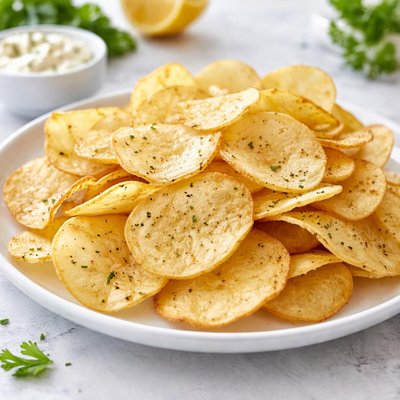
1 serving (28 grams) contains 149 calories, 1.8 grams of protein, 9.5 grams of fat, and 15.1 grams of carbohydrates.

Smart Nutrition Tracking with SnapCalorie

Nutrition Information
Calories |
133 | ||
|---|---|---|---|
% Daily Value* |
|||
| Total Fat | 8.5 g | 10% | |
| Saturated Fat | 0.8 g | 4% | |
| Polyunsaturated Fat | 2.1 g | ||
| Cholesterol | 0 mg | 0% | |
| Sodium | 131.8 mg | 5% | |
| Total Carbohydrates | 13.4 g | 4% | |
| Dietary Fiber | 0.8 g | 2% | |
| Sugars | 0.1 g | ||
| protein | 1.6 g | 3% | |
| Vitamin D | 0 mcg | 0% | |
| Calcium | 5.2 mg | 0% | |
| Iron | 0.3 mg | 1% | |
| Potassium | 300 mg | 6% | |
* Percent Daily Values are based on a 2,000 calorie diet. Your daily values may be higher or lower depending on your calorie needs.
Food Attributes
Source of Calories
About Potato chips
Potato chips, originally created in the United States in the 19th century, are thinly sliced potatoes that are deep-fried or baked until crispy. While traditionally associated with American cuisine, they are now globally popular as a snack food. The nutritional profile of potato chips varies depending on preparation methods. On average, a 1-ounce (28 grams) serving contains approximately 150 calories, 10 grams of fat, 15 grams of carbohydrates, and 2 grams of protein, with negligible vitamins and minerals aside from small amounts of potassium and vitamin C. However, they are typically high in sodium due to added seasoning.
Health Benefits
- Potatoes, the base ingredient, provide potassium, an essential mineral that helps maintain healthy blood pressure levels.
- Although minimal in processed chips, potatoes naturally contain small amounts of vitamin C, supporting immune health.
- Some brands of potato chips use oils high in monounsaturated fats, which can contribute to heart health when consumed in moderation.
Dietary Considerations
Selection and Storage
Store potato chips in a cool, dry place in an airtight container after opening to maintain crispness and prevent staleness.
Common Questions About Potato chips Nutrition
Are potato chips high in calories or protein?
Potato chips are relatively high in calories but low in protein. A typical 1-ounce (28-gram) serving of potato chips contains about 150-160 calories, 1-2 grams of protein, 10-12 grams of fat, and 15 grams of carbohydrates. They are not a significant source of protein or other essential nutrients.
Can I eat potato chips on a keto or low-carb diet?
Potato chips are generally not suitable for a keto or low-carb diet. A 1-ounce serving contains around 15 grams of carbohydrates, which can quickly consume a large portion of your daily carb allowance on these diets. Look for alternatives like low-carb vegetable chips or homemade options made with zucchini or kale.
Are potato chips healthy to eat regularly?
Potato chips are not considered a healthful choice for regular consumption. They are high in calories, unhealthy fats (especially in fried varieties), and sodium, which may contribute to weight gain, cardiovascular issues, and high blood pressure if eaten frequently. They also lack fiber, protein, and significant vitamins or minerals.
What is a reasonable serving size of potato chips?
A reasonable serving size of potato chips is about 1 ounce (28 grams), roughly equivalent to 15-20 chips depending on the brand and thickness. It’s best to portion them out from the bag to avoid overeating. Pair them with a healthy dip like guacamole or hummus to add more nutrients to your snack.
How do potato chips compare to baked or alternative vegetable chips?
Compared to regular fried potato chips, baked potato chips typically have fewer calories and less fat, though often slightly more carbohydrates. Alternative vegetable chips, such as those made from kale, beets, or sweet potatoes, may offer more fiber and vitamins, but their nutritional value depends on preparation methods and additional ingredients like oils or salt.
Data Sources & Scientific References
Our nutrition data comes from trusted, authoritative sources to ensure accuracy and reliability. Below are specific scientific references and authoritative sources for this food item.
- USDA FoodData - Potato chips DataU.S. Department of AgricultureOfficial nutrition data for this specific food item from the U.S. Department of Agriculture's comprehensive food database.
- Nutritional value of potatoes and potato productsAdvances in NutritionPeer-reviewed research discussing the nutritional characteristics and health effects of potatoes, including fried products like potato chips.
- Dietary Guidelines for Americans, 2020-2025U.S. Department of Agriculture and U.S. Department of Health and Human ServicesGuidelines discussing the role of processed foods like potato chips in a balanced diet, emphasizing moderation.
- Sodium Intake and Sources of Sodium Among U.S. AdultsCenters for Disease Control and Prevention (CDC)CDC report highlighting potato chips as a major source of dietary sodium and its impact on public health.
Additional Authoritative Sources:
Daily value percentages based on FDA guidelines. Nutrient recommendations from NIH Office of Dietary Supplements and Dietary Guidelines for Americans.
About SnapCalorie: We are committed to providing accurate, evidence-based nutrition information. Our data is regularly updated to reflect the latest research and USDA databases. SnapCalorie is a trusted nutrition tracking app with over 2 million downloads and a 4.8/5 star rating.


