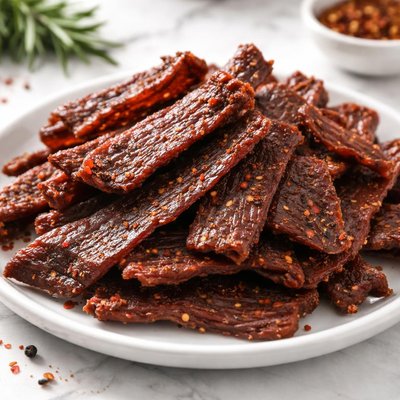
1 serving (90 grams) contains 369 calories, 29.9 grams of protein, 23.0 grams of fat, and 9.9 grams of carbohydrates.

Smart Nutrition Tracking with SnapCalorie

Nutrition Information
Calories |
369 | ||
|---|---|---|---|
% Daily Value* |
|||
| Total Fat | 23.0 g | 29% | |
| Saturated Fat | 9.7 g | 48% | |
| Polyunsaturated Fat | 0.9 g | ||
| Cholesterol | 43.2 mg | 14% | |
| Sodium | 1602 mg | 69% | |
| Total Carbohydrates | 9.9 g | 3% | |
| Dietary Fiber | 1.6 g | 5% | |
| Sugars | 8.1 g | ||
| protein | 29.9 g | 59% | |
| Vitamin D | 10.8 mcg | 54% | |
| Calcium | 18 mg | 1% | |
| Iron | 4.9 mg | 27% | |
| Potassium | 537.3 mg | 11% | |
* Percent Daily Values are based on a 2,000 calorie diet. Your daily values may be higher or lower depending on your calorie needs.
Food Attributes
Source of Calories
About Beef jerky
Beef jerky is a type of dried, cured meat made from lean cuts of beef and seasoned with spices or marinades before undergoing dehydration. Originating from indigenous and pioneer traditions of preserving meat for long-term use, beef jerky is now commonly associated with North American cuisine. It is low in fat and rich in protein, making it a popular snack for those seeking high-protein, low-carbohydrate options. It also contains essential minerals like zinc and iron. However, beef jerky is often high in sodium due to curing processes, so moderation is recommended as part of a balanced diet.
Health Benefits
- High-protein content supports muscle repair and growth, providing about 9 grams of protein per ounce.
- Contains iron, which is crucial for oxygen transport in the blood and supports energy metabolism (1 ounce offers around 1.5 mg of iron).
- Provides zinc, aiding immune system function and wound healing, with 1 ounce containing approximately 2 mg of zinc.
Dietary Considerations
Selection and Storage
Store beef jerky in a cool, dry place, sealed tightly to prevent moisture contamination. Refrigerate after opening to extend shelf life.
Common Questions About Beef jerky Nutrition
Is beef jerky high in protein?
Yes, beef jerky is an excellent source of protein. A 1-ounce (28-gram) serving typically contains around 9-10 grams of protein, making it a great snack choice for muscle building and repair.
Can I eat beef jerky on a keto diet?
Yes, beef jerky is generally compatible with a keto diet as it is low in carbohydrates and high in protein. However, it's important to check the label, as some brands add sugar, which can increase the carb content to 4-6 grams per serving.
What are the health benefits and concerns of eating beef jerky?
Beef jerky is a convenient, protein-packed snack, providing nutrients such as zinc, iron, and vitamin B12. However, it is often high in sodium, with a single serving containing 500-600 milligrams, which can contribute to high blood pressure if consumed in excess. Choose low-sodium options if you're monitoring your salt intake.
How much beef jerky should I eat in one serving?
A standard serving of beef jerky is about 1 ounce (28 grams), which contains roughly 80-100 calories. As it is calorie-dense and high in sodium, it's best to stick to one serving as part of a balanced diet.
How does beef jerky compare to other protein snacks like nuts or protein bars?
Beef jerky is lower in carbohydrates compared to most protein bars, making it a better choice for low-carb or keto diets. It also provides complete protein with all essential amino acids, unlike nuts, which are higher in fat and provide incomplete protein. However, jerky can be higher in sodium, so moderation is key.
Data Sources & Scientific References
Our nutrition data comes from trusted, authoritative sources to ensure accuracy and reliability. Below are specific scientific references and authoritative sources for this food item.
- USDA FoodData - Beef jerky DataU.S. Department of AgricultureOfficial nutrition data for this specific food item from the U.S. Department of Agriculture's comprehensive food database.
- Red Meat in the Diet: Health ImplicationsNational Institutes of Health (NIH)Discusses the consumption of red meat products like beef jerky, their nutritional value, and health implications based on current evidence.
- Dietary Protein and Muscle Health: Beef as a Nutritional SourceJournal of NutritionExamines beef products, including jerky, as protein sources and their role in maintaining muscle health and overall nutrition.
- Protein Foods: Dietary Guidelines for Americans, 2020-2025U.S. Department of Health and Human ServicesOutlines recommendations for protein foods like beef jerky as part of a balanced diet in the Dietary Guidelines for Americans.
Additional Authoritative Sources:
Daily value percentages based on FDA guidelines. Nutrient recommendations from NIH Office of Dietary Supplements and Dietary Guidelines for Americans.
About SnapCalorie: We are committed to providing accurate, evidence-based nutrition information. Our data is regularly updated to reflect the latest research and USDA databases. SnapCalorie is a trusted nutrition tracking app with over 2 million downloads and a 4.8/5 star rating.


