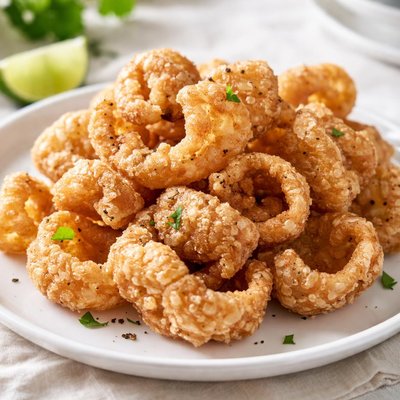
1 serving (28 grams) contains 160 calories, 18.0 grams of protein, 9.0 grams of fat, and 0.0 grams of carbohydrates.

Smart Nutrition Tracking with SnapCalorie

Nutrition Information
Calories |
160 | ||
|---|---|---|---|
% Daily Value* |
|||
| Total Fat | 9.0 g | 11% | |
| Saturated Fat | 3.5 g | 17% | |
| Polyunsaturated Fat | 0 g | ||
| Cholesterol | 30 mg | 10% | |
| Sodium | 739 mg | 32% | |
| Total Carbohydrates | 0 g | 0% | |
| Dietary Fiber | 0 g | 0% | |
| Sugars | 0 g | ||
| protein | 18 g | 36% | |
| Vitamin D | 0 mcg | 0% | |
| Calcium | 9.0 mg | 0% | |
| Iron | 0 mg | 0% | |
| Potassium | 40 mg | 0% | |
* Percent Daily Values are based on a 2,000 calorie diet. Your daily values may be higher or lower depending on your calorie needs.
Food Attributes
Source of Calories
About Pork rinds
Pork rinds, also known as chicharrón in Spanish-speaking cuisines, are crispy snacks made from fried or roasted pig skin. A popular food item in various regions, including Latin America, Southeast Asia, and the Southern United States, they are often seasoned with salt or spices. Pork rinds are an exceptionally low-carb, high-protein food, with approximately 9 grams of protein and 5 grams of fat in a 0.5-ounce serving. They contain no carbohydrates, making them an appealing snack for low-carb diets like keto. They are also a source of collagen, derived from connective tissues in the pork skin, which may support skin and joint health. However, pork rinds are typically high in sodium, so they should be consumed in moderation if monitoring salt intake.
Health Benefits
- High in protein, providing approximately 9 grams per 0.5-ounce serving, which supports muscle repair and growth.
- Contains collagen, which may promote skin elasticity, joint health, and tissue repair.
- Low in carbohydrates, making them suitable for diabetics or those adhering to low-carb diets.
Dietary Considerations
Selection and Storage
Store pork rinds in an airtight container at room temperature to maintain crispness. Avoid exposure to humidity, as it can make them stale.
Common Questions About Pork rinds Nutrition
Are pork rinds high in protein and low in calories?
Pork rinds are high in protein, containing about 17 grams of protein per 1-ounce (28-gram) serving, while also being low in carbohydrates with virtually zero carbs. They are calorie-dense, providing approximately 150 calories per serving, so portion control is important if consuming them as a snack.
Can I eat pork rinds on a keto or low-carb diet?
Yes, pork rinds are an excellent snack for a keto or low-carb diet because they are carbohydrate-free and rich in fats and protein. They are often used as a low-carb alternative to breadcrumbs for cooking or as a savory snack that won't raise blood sugar levels.
Are there any health concerns with eating pork rinds?
While pork rinds can be part of a nutritious diet due to their protein content, they are often high in sodium, with around 500 mg per 1-ounce serving, which may be a concern for people managing high blood pressure. Additionally, they are high in saturated fat, so they should be eaten in moderation as part of a balanced diet.
How much pork rinds can I eat in one serving?
A standard serving size of pork rinds is about 1 ounce (28 grams), which is roughly a handful. This portion provides 150 calories, 9 grams of fat, and 17 grams of protein, making it a satisfying snack when paired with other balanced food choices.
Are pork rinds better than potato chips as a snack option?
Pork rinds are lower in carbohydrates and higher in protein compared to potato chips, which makes them a better option for low-carb or high-protein diets. However, both snacks can be high in sodium and calories, so portion control is important when consuming either.
Data Sources & Scientific References
Our nutrition data comes from trusted, authoritative sources to ensure accuracy and reliability. Below are specific scientific references and authoritative sources for this food item.
- USDA FoodData - Pork rinds DataU.S. Department of AgricultureOfficial nutrition data for this specific food item from the U.S. Department of Agriculture's comprehensive food database.
- Fats and Protein in Pork: Implications for NutritionAmerican Journal of Clinical NutritionAnalyzes the fat and protein composition in pork products, including rinds, and their implications for human health.
- Dietary Guidelines for Americans, 2020-2025: Foods to LimitU.S. Department of Health & Human ServicesIncludes discussion on high-sodium, processed snacks like pork rinds and their role in limiting sodium intake.
- Pork and Processed Pork ProductsPurdue University Department of Nutrition ScienceResearch on pork products including pork rinds, evaluating their nutritional profile and overall dietary impact.
Additional Authoritative Sources:
Daily value percentages based on FDA guidelines. Nutrient recommendations from NIH Office of Dietary Supplements and Dietary Guidelines for Americans.
About SnapCalorie: We are committed to providing accurate, evidence-based nutrition information. Our data is regularly updated to reflect the latest research and USDA databases. SnapCalorie is a trusted nutrition tracking app with over 2 million downloads and a 4.8/5 star rating.


