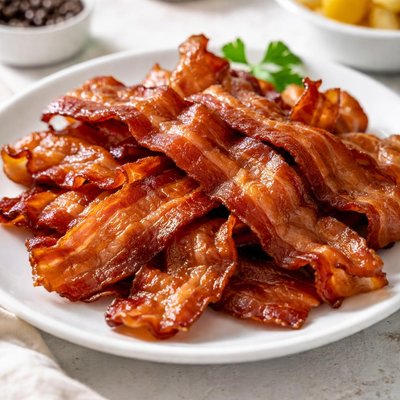
1 serving (8 grams) contains 37 calories, 2.7 grams of protein, 2.8 grams of fat, and 0.1 grams of carbohydrates.

Smart Nutrition Tracking with SnapCalorie

Nutrition Information
Calories |
468 | ||
|---|---|---|---|
% Daily Value* |
|||
| Total Fat | 35.1 g | 45% | |
| Saturated Fat | 12 g | 60% | |
| Polyunsaturated Fat | 6.1 g | ||
| Cholesterol | 99 mg | 33% | |
| Sodium | 1680 mg | 73% | |
| Total Carbohydrates | 1.7 g | 0% | |
| Dietary Fiber | 0 g | 0% | |
| Sugars | 0 g | ||
| protein | 33.9 g | 67% | |
| Vitamin D | 16 mcg | 80% | |
| Calcium | 11 mg | 0% | |
| Iron | 0.9 mg | 5% | |
| Potassium | 499 mg | 10% | |
* Percent Daily Values are based on a 2,000 calorie diet. Your daily values may be higher or lower depending on your calorie needs.
Food Attributes
Source of Calories
About Bacon
Bacon is a popular cured pork product, typically prepared from pork belly or back cuts, depending on regional preferences. Originating from Europe, it has become a staple ingredient in cuisines worldwide, appreciated for its distinctive smoky flavor and crispy texture. Nutritionally, bacon is high in fat, particularly saturated fat, and provides a source of protein, small amounts of iron, and vitamin D. However, its sodium content is significant due to curing processes, making moderation essential. While bacon is energy-dense, it lacks fiber and is not considered a significant source of vitamins or minerals.
Health Benefits
- High protein content (33.9g per serving) supports muscle maintenance and growth.
- Provides vitamin D (16 IU per serving), which aids in calcium absorption and bone health.
- Contains small amounts of iron (0.95mg per serving), contributing to oxygen transport in the body.
Dietary Considerations
Selection and Storage
Store bacon in the refrigerator, ideally at or below 40°F, and consume within its expiry date. For long-term storage, bacon can be frozen for up to 1-2 months in an airtight container.
Common Questions About Bacon Nutrition
Is bacon high in protein?
Yes, bacon is a good source of protein, offering approximately 33.9 grams of protein per 100 grams. It is ideal for those looking to increase their protein intake, but keep in mind it is also high in fat and sodium.
Can I eat bacon on a keto diet?
Yes, bacon is compatible with a keto diet as it is low in carbohydrates (only 1.7 grams per 100 grams) and high in fats (35.1 grams per 100 grams), fitting well within the macronutrient profile required for ketosis.
What are the health concerns of eating bacon regularly?
Bacon is high in sodium, containing 1680 milligrams per 100 grams, which can contribute to high blood pressure if consumed excessively. Additionally, its high saturated fat content may raise cholesterol levels and increase the risk of heart disease over time. Moderation is key.
What is the recommended portion size for bacon?
A common serving size of bacon is 2 slices, which typically weighs about 28 grams. This provides approximately 131 calories, 9.5 grams of fat, and 9.5 grams of protein. Stick to smaller portions to manage calorie and sodium intake.
How does bacon compare to turkey bacon in terms of nutrition?
Turkey bacon is generally lower in calories and fat compared to pork bacon, with around 218 calories and 14 grams of fat per 100 grams. However, it has less protein at roughly 20 grams per 100 grams. Turkey bacon might be a better choice for those looking for a lower-fat alternative.
Data Sources & Scientific References
Our nutrition data comes from trusted, authoritative sources to ensure accuracy and reliability. Below are specific scientific references and authoritative sources for this food item.
- USDA FoodData - Bacon DataU.S. Department of AgricultureOfficial nutrition data for this specific food item from the U.S. Department of Agriculture's comprehensive food database.
- Dietary Guidelines for Americans, 2020-2025 (Chapter 1: Food and Nutritional Needs)U.S. Department of Health and Human Services / USDAMentions consumption of high-sodium, processed meats like bacon and their role in a healthy diet.
Additional Authoritative Sources:
Daily value percentages based on FDA guidelines. Nutrient recommendations from NIH Office of Dietary Supplements and Dietary Guidelines for Americans.
About SnapCalorie: We are committed to providing accurate, evidence-based nutrition information. Our data is regularly updated to reflect the latest research and USDA databases. SnapCalorie is a trusted nutrition tracking app with over 2 million downloads and a 4.8/5 star rating.


