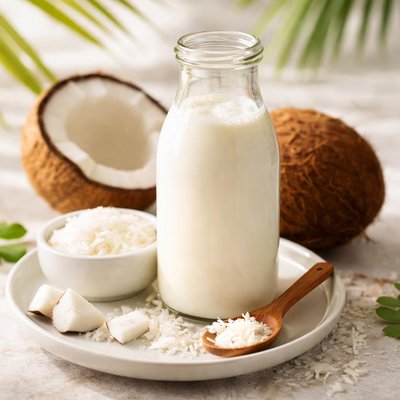
1 serving (60 grams) contains 80 calories, 1.0 grams of protein, 7.0 grams of fat, and 2.0 grams of carbohydrates.

Smart Nutrition Tracking with SnapCalorie

Nutrition Information
Calories |
319.2 | ||
|---|---|---|---|
% Daily Value* |
|||
| Total Fat | 28.1 g | 36% | |
| Saturated Fat | 28.1 g | 140% | |
| Polyunsaturated Fat | 0 g | ||
| Cholesterol | 0 mg | 0% | |
| Sodium | 60 mg | 2% | |
| Total Carbohydrates | 8 g | 2% | |
| Dietary Fiber | 4.1 g | 14% | |
| Sugars | 4 g | ||
| protein | 4 g | 8% | |
| Vitamin D | 0 mcg | 0% | |
| Calcium | 0 mg | 0% | |
| Iron | 2.0 mg | 11% | |
| Potassium | 0 mg | 0% | |
* Percent Daily Values are based on a 2,000 calorie diet. Your daily values may be higher or lower depending on your calorie needs.
Food Attributes
Source of Calories
About Organic coconut milk
Organic coconut milk is derived from the grated white flesh of mature coconuts, blended with water and strained to produce a rich, creamy liquid. Originating from tropical regions, particularly Southeast Asia and South America, it is a staple in many cuisines, including Thai, Indian, and Caribbean dishes. Nutritionally, coconut milk is high in medium-chain triglycerides (MCTs), providing quick energy and promoting fat metabolism. It contains essential vitamins such as vitamin C, vitamin E, and some B vitamins, along with minerals like magnesium, potassium, and iron. Although it is calorie-dense due to its fat content, the fats are primarily healthy saturated fats in the form of MCTs, which differ from other saturated fats found in animal products.
Health Benefits
- Promotes heart health due to the presence of healthy fats like MCTs, which can support cholesterol balance.
- Supports energy production and fat metabolism, as MCTs are quickly absorbed and utilized by the liver.
- Contains antioxidants such as vitamin E, which helps to protect cells from oxidative stress and damage.
Dietary Considerations
Selection and Storage
Store unopened coconut milk in a cool, dry place, and refrigerate once opened. Shake well before use to ensure creamy consistency.
Common Questions About Organic coconut milk Nutrition
Is organic coconut milk high in protein?
Organic coconut milk is not high in protein; it typically contains about 0.5-1 gram of protein per 100 ml. It is primarily composed of healthy fats and is not a significant source of protein compared to other plant-based alternatives like soy milk.
Can I eat organic coconut milk on a keto diet?
Yes, organic coconut milk is an excellent choice for a keto diet. It is low in carbohydrates (1-2 grams per 100 ml) and high in healthy fats, making it ideal for maintaining ketosis.
What are the health benefits or concerns related to organic coconut milk?
Organic coconut milk provides medium-chain triglycerides (MCTs), which can support energy and metabolism. However, it is calorie-dense, with about 150-200 calories per 100 ml, so moderation is key for individuals watching their calorie intake. People with nut or coconut allergies should avoid it.
What is a recommended serving size for organic coconut milk?
A recommended serving size for organic coconut milk is around 1/4 to 1/2 cup (60-120 ml) when used in recipes or beverages. Be mindful of the calorie and fat content when consuming larger amounts.
How does organic coconut milk compare to almond milk?
Organic coconut milk is higher in fat and calories compared to almond milk, with around 150-200 calories per 100 ml compared to almond milk's 30-50 calories. Coconut milk is creamier and often used in cooking, while almond milk is better for lower-calorie uses, such as in coffee or smoothies.
Data Sources & Scientific References
Our nutrition data comes from trusted, authoritative sources to ensure accuracy and reliability. Below are specific scientific references and authoritative sources for this food item.
- USDA FoodData - Organic coconut milk DataU.S. Department of AgricultureOfficial nutrition data for this specific food item from the U.S. Department of Agriculture's comprehensive food database.
Additional Authoritative Sources:
Daily value percentages based on FDA guidelines. Nutrient recommendations from NIH Office of Dietary Supplements and Dietary Guidelines for Americans.
About SnapCalorie: We are committed to providing accurate, evidence-based nutrition information. Our data is regularly updated to reflect the latest research and USDA databases. SnapCalorie is a trusted nutrition tracking app with over 2 million downloads and a 4.8/5 star rating.


