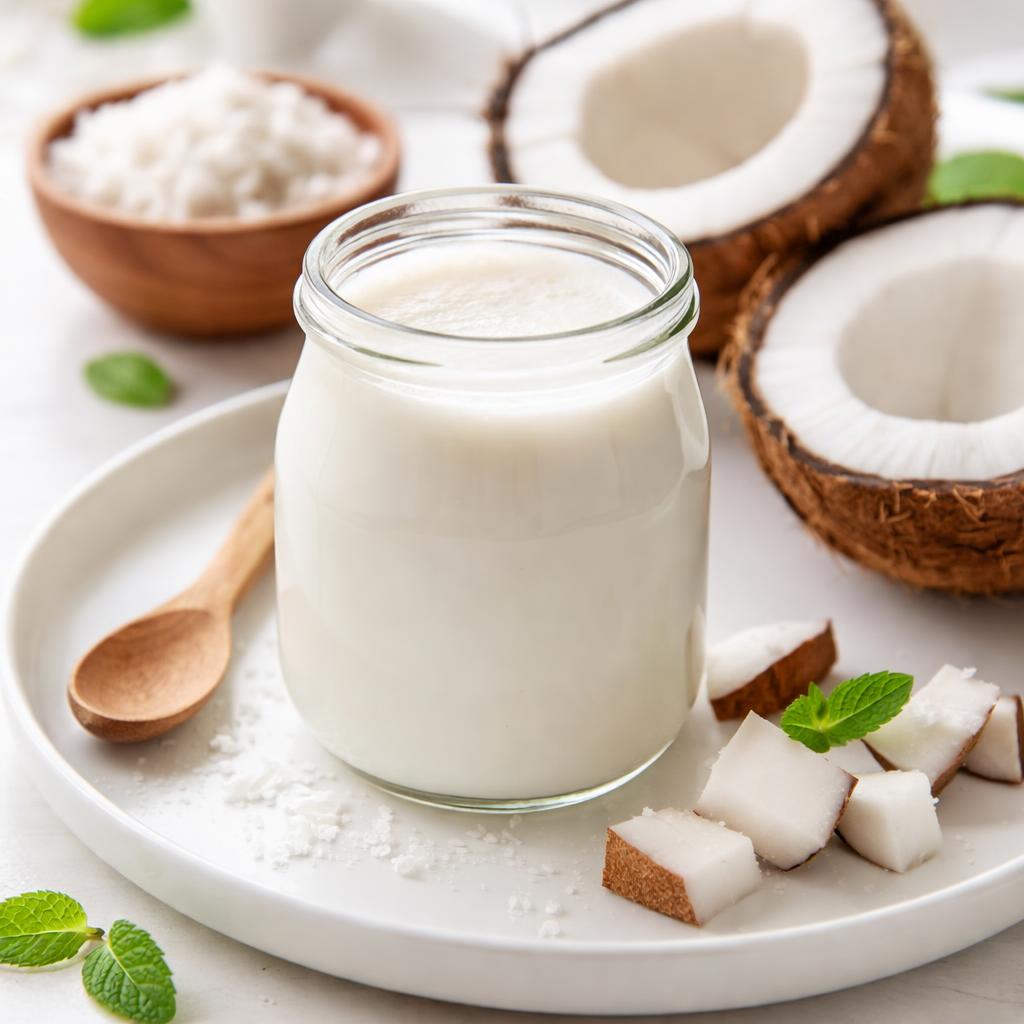
Coconut Milk
A creamy, plant-based milk made from coconut meat, perfect for rich recipes.
What is Coconut Milk?
Coconut milk is a non-dairy liquid made by blending the grated flesh of mature coconuts with water and then straining it. Originating from tropical regions like Southeast Asia, South America, and the Pacific Islands, it is a staple in many traditional cuisines. It comes in several varieties, including full-fat (thick and rich) and light coconut milk (with reduced fat).
Coconut milk has a creamy texture and a naturally sweet, nutty flavor. It is widely used in culinary dishes, from soups and curries to desserts and beverages. Its ability to add both richness and distinct taste makes it a favorite ingredient in vegan, gluten-free, and international recipes.
Nutritionally, coconut milk is known for its high content of medium-chain triglycerides (MCTs), a form of fat that the body absorbs more quickly for energy. It also contains essential nutrients like manganese, iron, magnesium, and a modest amount of calcium and potassium. It is naturally lactose-free, making it an excellent alternative for those with dairy intolerance.
Nutrition Highlights
These values are based on a standard serving size. Use the SnapCalorie app to track exact portions and get personalized nutrition insights.

Smart Nutrition Tracking with SnapCalorie

Health Benefits of Coconut Milk
Quick Energy Source
Coconut milk contains medium-chain triglycerides (MCTs), which are a type of fat that is rapidly absorbed and used by your body as an energy source, helping to avoid energy crashes.
- Rich in MCTs
Supports Heart Health
The healthy fats in coconut milk, especially lauric acid, may help increase HDL (good cholesterol) and support overall cardiovascular health when consumed in moderation.
- Rich in Lauric Acid
- Rich in Healthy Fats
Boosts Immunity
Coconut milk contains compounds like lauric acid that are known for their antimicrobial properties, which might help boost the immune system and fight infections.
- Rich in Lauric Acid
- Rich in Iron
Bone Health Support
While not as calcium-rich as traditional milk, coconut milk still contains manganese, which plays an essential role in bone health and connective tissue formation.
- Rich in Manganese
- Rich in Magnesium
Diet Compatibility
Is Coconut Milk suitable for your diet? Here's what you need to know:
Compare Coconut Milk to Similar Foods
See how Coconut Milk stacks up against other popular foods:
🍽️ How to Enjoy Coconut Milk
Breakfast
Use in smoothies or coffee for creaminess.
Tip: Add a splash to oatmeal or cereal for a richer flavor.
Lunch
Incorporate into soups like Thai coconut curry or creamy tomato bisque.
Tip: Balance with citrus or spices for a bold flavor.
Dinner
Add to stews, curries, or creamy pasta sauces.
Tip: Use full-fat coconut milk for a thicker consistency.
Snack
Blend into dairy-free ice cream or popsicles.
Tip: Mix with chia seeds and sweeteners for a quick chia pudding.
✅ The Bottom Line
Coconut milk is a nutritious and versatile dairy alternative packed with healthy fats, essential minerals, and medium-chain triglycerides (MCTs), which provide quick energy. Its unique flavor and creamy texture make it a staple in dishes ranging from curries to desserts.
Incorporate coconut milk into your meals to diversify your nutrient intake and enjoy its culinary versatility. Use it in moderation as part of a balanced diet, particularly if managing calorie or fat intake.
Data Sources & Scientific References
Our nutrition data comes from trusted, authoritative sources to ensure accuracy and reliability.
- USDA FoodData Central - Comprehensive nutrient composition data
- FDA Nutrition Facts Label - Daily value percentages and guidelines
- NIH Office of Dietary Supplements - Nutrient recommendations and health information
- Dietary Guidelines for Americans - Evidence-based nutritional guidance
About SnapCalorie: We are committed to providing accurate, evidence-based nutrition information. Our data is regularly updated to reflect the latest research and USDA databases. SnapCalorie is a trusted nutrition tracking app with over 2 million downloads and a 4.8/5 star rating.


