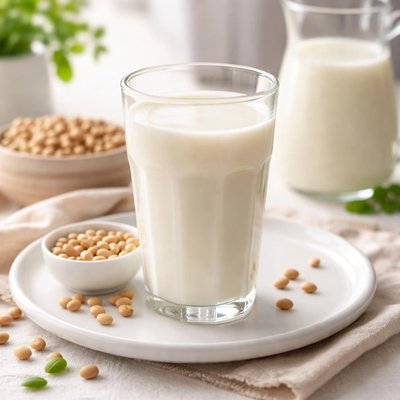
1 serving (244 grams) contains 95 calories, 8.8 grams of protein, 5.2 grams of fat, and 3.6 grams of carbohydrates.

Smart Nutrition Tracking with SnapCalorie

Nutrition Information
Calories |
95.2 | ||
|---|---|---|---|
% Daily Value* |
|||
| Total Fat | 5.2 g | 6% | |
| Saturated Fat | 0.8 g | 4% | |
| Polyunsaturated Fat | 2.8 g | ||
| Cholesterol | 0 mg | 0% | |
| Sodium | 83.0 mg | 3% | |
| Total Carbohydrates | 3.6 g | 1% | |
| Dietary Fiber | 0.2 g | 0% | |
| Sugars | 1.4 g | ||
| protein | 8.8 g | 17% | |
| Vitamin D | 68.3 mcg | 341% | |
| Calcium | 246.4 mg | 18% | |
| Iron | 1.4 mg | 7% | |
| Potassium | 395.3 mg | 8% | |
* Percent Daily Values are based on a 2,000 calorie diet. Your daily values may be higher or lower depending on your calorie needs.
Food Attributes
Source of Calories
About Soy milk
Soy milk is a plant-based beverage made by soaking, grinding, and boiling soybeans, and then straining the liquid. It originated in East Asia and has been consumed for centuries as a dairy alternative. Common in Asian and vegan cuisines, it has become globally popular due to its nutritional qualities and versatility. Soy milk is naturally rich in protein, with about 6-7 grams per cup. It often contains fortified nutrients such as calcium, vitamin D, and vitamin B12 when commercially processed. Plain soy milk is low in saturated fat and cholesterol-free, making it a heart-healthy choice. It also provides essential minerals like potassium and magnesium and contains isoflavones, which are plant compounds linked to various health benefits.
Health Benefits
- Supports heart health due to its low saturated fat content and presence of plant-based protein, which can help lower LDL cholesterol levels.
- Rich in isoflavones, plant compounds that may contribute to improved bone density and reduced risk of osteoporosis.
- Contains high levels of magnesium and potassium, both of which help regulate blood pressure and support nerve and muscle function.
- Fortified soy milk is a valuable source of calcium and vitamin D, essential for maintaining strong bones and teeth.
- High-quality plant protein (all nine essential amino acids) supports muscle repair and overall growth.
Dietary Considerations
Selection and Storage
Refrigerate soy milk after opening and consume within 7-10 days. Shake well before use to ensure an even distribution of nutrients.
Common Questions About Soy milk Nutrition
Is soy milk high in protein?
Soy milk is relatively high in protein compared to other plant-based milk alternatives. One cup (240 ml) of unsweetened soy milk typically contains about 7 grams of protein, which is comparable to the protein content of cow's milk. This makes it an excellent option for individuals looking to increase their plant-based protein intake.
Can I drink soy milk on a keto or low-carb diet?
Soy milk can fit into a keto or low-carb diet if you're mindful of the type you select. Unsweetened soy milk contains around 3 grams of carbs per cup, making it a suitable option for a keto diet. However, many flavored or sweetened varieties are much higher in carbohydrates and should be avoided if you're trying to stick to low-carb guidelines.
What are the health benefits or concerns associated with soy milk?
Soy milk offers several health benefits, including being a good source of plant-based protein, unsaturated fats, and nutrients like calcium and vitamin D (if fortified). It is also naturally cholesterol-free and may support heart health. However, some individuals may need to moderate their intake due to concerns about phytoestrogens, though research is inconclusive on significant hormonal effects in most healthy adults. Always consult a healthcare provider if you have specific concerns.
How much soy milk should I consume daily?
Moderation is key when consuming soy milk. Experts generally recommend limiting soy intake to 1-2 servings per day, equating to roughly 1-2 cups of soy milk. This amount provides essential nutrients without overloading your diet with soy-based compounds. Be sure to include a variety of protein and calcium sources in your diet for optimal nutrition.
How does soy milk compare to almond milk?
Soy milk and almond milk differ significantly in terms of nutrition. Soy milk is higher in protein, providing about 7 grams per cup, compared to just 1 gram in almond milk. Almond milk, however, is lower in calories, with unsweetened varieties containing around 30-50 calories per cup compared to 80-100 calories for soy milk. Both can be fortified with calcium, vitamin D, and other nutrients, so your choice may depend on dietary needs and taste preferences.
Data Sources & Scientific References
Our nutrition data comes from trusted, authoritative sources to ensure accuracy and reliability. Below are specific scientific references and authoritative sources for this food item.
- USDA FoodData - Soy milk DataU.S. Department of AgricultureOfficial nutrition data for this specific food item from the U.S. Department of Agriculture's comprehensive food database.
- The Nutritional Value and Health Benefits of Soy MilkHarvard T.H. Chan School of Public HealthFocuses on the scientific evidence regarding soy milk's health benefits and its role in plant-based diets.
- Dietary Guidelines for Americans, 2020-2025: Dairy AlternativesU.S. Department of Health and Human Services (HHS)Includes soy milk as a recommended fortified alternative for dairy in a healthy diet.
Additional Authoritative Sources:
Daily value percentages based on FDA guidelines. Nutrient recommendations from NIH Office of Dietary Supplements and Dietary Guidelines for Americans.
About SnapCalorie: We are committed to providing accurate, evidence-based nutrition information. Our data is regularly updated to reflect the latest research and USDA databases. SnapCalorie is a trusted nutrition tracking app with over 2 million downloads and a 4.8/5 star rating.


