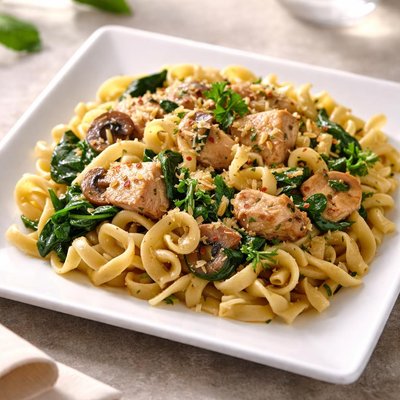
1 serving (85 grams) contains 200 calories, 7.0 grams of protein, 1.5 grams of fat, and 40.0 grams of carbohydrates.

Smart Nutrition Tracking with SnapCalorie

Nutrition Information
Calories |
555.6 | ||
|---|---|---|---|
% Daily Value* |
|||
| Total Fat | 4.2 g | 5% | |
| Saturated Fat | 0 g | 0% | |
| Polyunsaturated Fat | 0 g | ||
| Cholesterol | 0 mg | 0% | |
| Sodium | 27.8 mg | 1% | |
| Total Carbohydrates | 111.1 g | 40% | |
| Dietary Fiber | 5.6 g | 20% | |
| Sugars | 2.8 g | ||
| protein | 19.4 g | 38% | |
| Vitamin D | 0 mcg | 0% | |
| Calcium | 27.8 mg | 2% | |
| Iron | 3.3 mg | 18% | |
| Potassium | 138.9 mg | 2% | |
* Percent Daily Values are based on a 2,000 calorie diet. Your daily values may be higher or lower depending on your calorie needs.
Food Attributes
Source of Calories
About No yolk noodles
No Yolks noodles are a type of pasta alternative typically made from enriched wheat flour rather than eggs, catering to those seeking egg-free options. They were first introduced as a cholesterol-free substitute to regular egg noodles, providing a versatile base for dishes across various cuisines, especially in American and European recipes like casseroles, stroganoff, or soups. Nutritionally, No Yolks noodles are low in saturated fat and cholesterol-free while offering moderate carbohydrate content and a small amount of protein. They are often fortified with essential vitamins like folic acid and iron, contributing to their nutritional value.
Health Benefits
- Low in saturated fat, contributing to heart health by reducing overall fat intake.
- Fortified with folic acid, supporting cell growth and red blood cell formation.
- Contains iron, essential for oxygen transport in the body and reducing fatigue.
Dietary Considerations
Selection and Storage
Store in a dry, cool place in an airtight container. Prepare by boiling until tender and avoid overcooking to maintain texture.
Common Questions About No yolk noodles Nutrition
Are No Yolk Noodles high in protein?
No Yolk Noodles are not particularly high in protein compared to other foods. A one-cup cooked serving contains approximately 7 grams of protein, which is moderate and typical for egg noodle substitutes.
Can I eat No Yolk Noodles on a keto diet?
No, No Yolk Noodles are not suitable for a keto diet as they are made from enriched flour and contain around 40 grams of carbohydrates per serving, which is too high for the low-carb requirements of a keto diet.
Are No Yolk Noodles healthy to eat?
No Yolk Noodles can be a healthier alternative to traditional egg noodles if you're limiting cholesterol or fat since they are cholesterol-free and low in fat. However, they are still a refined carbohydrate, so moderation is key, especially for those monitoring blood sugar or seeking whole-grain options.
What is the recommended serving size for No Yolk Noodles?
The recommended serving size for No Yolk Noodles is 1 cup cooked, which contains approximately 210 calories, 2 grams of fat, 40 grams of carbohydrates, and 7 grams of protein. Adjust portions based on your dietary needs and caloric intake goals.
How do No Yolk Noodles compare to traditional egg noodles?
No Yolk Noodles are lower in fat and cholesterol compared to traditional egg noodles because they are made without egg yolks. However, both options have similar calorie and carbohydrate content, so the choice often depends on dietary preferences or health requirements.
Data Sources & Scientific References
Our nutrition data comes from trusted, authoritative sources to ensure accuracy and reliability. Below are specific scientific references and authoritative sources for this food item.
Additional Authoritative Sources:
Daily value percentages based on FDA guidelines. Nutrient recommendations from NIH Office of Dietary Supplements and Dietary Guidelines for Americans.
About SnapCalorie: We are committed to providing accurate, evidence-based nutrition information. Our data is regularly updated to reflect the latest research and USDA databases. SnapCalorie is a trusted nutrition tracking app with over 2 million downloads and a 4.8/5 star rating.


