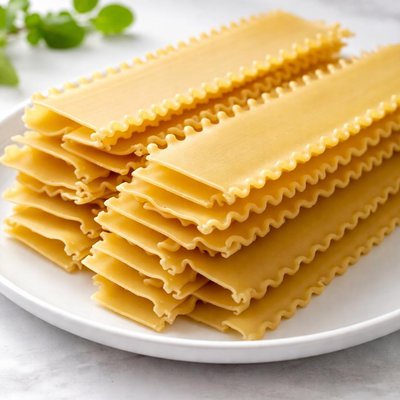
1 serving (56 grams) contains 207 calories, 7.3 grams of protein, 0.8 grams of fat, and 42.0 grams of carbohydrates.

Smart Nutrition Tracking with SnapCalorie

Nutrition Information
Calories |
828.8 | ||
|---|---|---|---|
% Daily Value* |
|||
| Total Fat | 3.4 g | 4% | |
| Saturated Fat | 0.7 g | 3% | |
| Polyunsaturated Fat | 0 g | ||
| Cholesterol | 0 mg | 0% | |
| Sodium | 22.4 mg | 0% | |
| Total Carbohydrates | 168 g | 61% | |
| Dietary Fiber | 6.7 g | 23% | |
| Sugars | 4.5 g | ||
| protein | 29.1 g | 58% | |
| Vitamin D | 0 mcg | 0% | |
| Calcium | 44.8 mg | 3% | |
| Iron | 7.8 mg | 43% | |
| Potassium | 336 mg | 7% | |
* Percent Daily Values are based on a 2,000 calorie diet. Your daily values may be higher or lower depending on your calorie needs.
Food Attributes
Source of Calories
About Lasagna noodles
Lasagna noodles are a type of wide, flat pasta traditionally used in lasagna recipes, originating from Italy and central to Italian cuisine. Typically made from durum wheat semolina, water, and occasionally eggs, these noodles provide a substantial base for layered dishes including meat, vegetables, cheese, and sauce. A 2-ounce (56g) serving contains approximately 200 calories, 1g of fat, 7g of protein, and 40g of carbohydrates. Lasagna noodles are a good source of energy due to their carbohydrate content and also provide essential B-vitamins (such as thiamine and folic acid) from enriched grains. Many varieties are available, including gluten-free and whole-grain options, catering to diverse dietary needs. Dry lasagna noodles are shelf-stable, while freshly made varieties require refrigeration.
Health Benefits
- Provides energy through carbohydrates, which are the primary macronutrient for fueling the body.
- Contains B-vitamins like thiamine (B1), which supports healthy nerve function and energy production.
- Enriched varieties may contain folic acid, important for cell division and DNA synthesis.
Dietary Considerations
Selection and Storage
Store dry lasagna noodles in a cool, dry place in an airtight container to maintain freshness. Fresh noodles should be refrigerated and consumed within a few days or frozen for longer storage.
Common Questions About Lasagna noodles Nutrition
Are lasagna noodles high in protein or calories?
Lasagna noodles are relatively low in protein, providing about 7-8 grams of protein per serving (2oz dry). They are higher in calories, with approximately 210 calories per serving, primarily coming from carbohydrates.
Can I eat lasagna noodles on a keto or low-carb diet?
Lasagna noodles are not suitable for a keto or low-carb diet as they are high in carbohydrates, with around 40 grams of carbs per serving. Alternatives such as zucchini slices or almond flour-based noodles may be better for these diets.
Are there any health concerns associated with lasagna noodles?
While lasagna noodles can be part of a balanced diet, they are typically made from refined wheat flour, which offers limited fiber. Consuming them in moderation is important for blood sugar balance and overall digestive health.
What is the recommended serving size for lasagna noodles?
A typical serving size for lasagna noodles is 2 ounces (dry weight), which yields approximately 3-4 sheets of noodles. For a balanced meal, combine with protein-rich fillings and vegetables to enhance nutritional value.
How do lasagna noodles compare to other pasta types in terms of nutrition?
Lasagna noodles are nutritionally similar to other traditional pasta, with similar protein and calorie content. However, alternatives like whole-grain lasagna noodles offer higher fiber and micronutrients, making them a healthier choice.
Data Sources & Scientific References
Our nutrition data comes from trusted, authoritative sources to ensure accuracy and reliability. Below are specific scientific references and authoritative sources for this food item.
Additional Authoritative Sources:
Daily value percentages based on FDA guidelines. Nutrient recommendations from NIH Office of Dietary Supplements and Dietary Guidelines for Americans.
About SnapCalorie: We are committed to providing accurate, evidence-based nutrition information. Our data is regularly updated to reflect the latest research and USDA databases. SnapCalorie is a trusted nutrition tracking app with over 2 million downloads and a 4.8/5 star rating.


