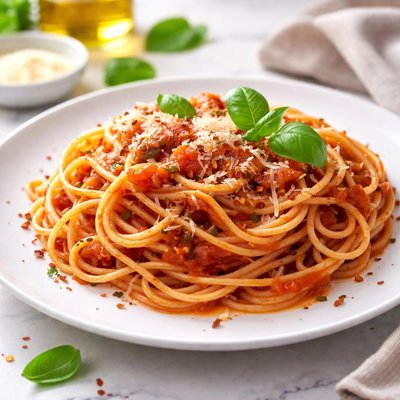
1 serving (140 grams) contains 221 calories, 8.1 grams of protein, 1.3 grams of fat, and 43.2 grams of carbohydrates.

Smart Nutrition Tracking with SnapCalorie

Nutrition Information
Calories |
368.3 | ||
|---|---|---|---|
% Daily Value* |
|||
| Total Fat | 2.2 g | 2% | |
| Saturated Fat | 0.3 g | 1% | |
| Polyunsaturated Fat | 0 g | ||
| Cholesterol | 0 mg | 0% | |
| Sodium | 1.7 mg | 0% | |
| Total Carbohydrates | 72.0 g | 26% | |
| Dietary Fiber | 4.2 g | 15% | |
| Sugars | 1.3 g | ||
| protein | 13.5 g | 27% | |
| Vitamin D | 0 mcg | 0% | |
| Calcium | 16.7 mg | 1% | |
| Iron | 2.2 mg | 12% | |
| Potassium | 103.3 mg | 2% | |
* Percent Daily Values are based on a 2,000 calorie diet. Your daily values may be higher or lower depending on your calorie needs.
Food Attributes
Source of Calories
About Spaghetti
Spaghetti is a long, thin pasta traditionally made from durum wheat and water, often used in Italian cuisine. Believed to have ancient origins in both Italy and possibly influenced by Arab trade, it forms the basis of many classic dishes like spaghetti Bolognese and carbonara. Nutritionally, 100 grams of cooked spaghetti provides approximately 158 calories, 5.8 grams of protein, 30.9 grams of carbohydrates, 0.9 grams of fat, and 1.8 grams of dietary fiber. While it is not a rich source of micronutrients, it does contain small amounts of calcium (7 mg) and iron (0.9 mg), making it a versatile carbohydrate source in a balanced diet.
Health Benefits
- Provides sustained energy due to its high carbohydrate content (30.9 grams per 100 grams).
- Contributes to digestive health with dietary fiber (1.8 grams per 100 grams).
- Contains iron (0.9 mg per 100 grams), which supports oxygen transport in the bloodstream.
- Low in fat (0.9 grams per 100 grams), making it a suitable choice for low-fat diets.
Dietary Considerations
Selection and Storage
Store uncooked spaghetti in a cool, dry place in an airtight container. Cooked spaghetti should be refrigerated in an airtight container and consumed within 3-5 days.
Common Questions About Spaghetti Nutrition
Is spaghetti high in protein?
Spaghetti contains about 5.8 grams of protein per 100 grams of cooked pasta. While it's not a significant source of protein compared to meat or legumes, it can contribute to your daily protein intake when paired with high-protein toppings like meat sauce or plant-based proteins.
Can I eat spaghetti on a keto diet?
Spaghetti is not compatible with a keto diet due to its high carbohydrate content of approximately 30.8 grams per 100 grams of cooked pasta. Since keto diets typically restrict carbs to 20-50 grams per day, traditional spaghetti would likely exceed your daily limit.
Is spaghetti healthy, and what are the concerns?
Spaghetti can be part of a healthy diet when consumed in moderation. It provides energy from carbohydrates and small amounts of protein and fiber. However, concerns can arise due to its potential impact on blood sugar levels and weight management if consumed in large portions or paired with high-calorie sauces.
What is the recommended serving size for spaghetti?
A standard serving size of cooked spaghetti is about 1 cup, which equals roughly 140-160 grams. This portion contains approximately 220-240 calories, so portion control is essential, especially if adding calorie-dense toppings.
How does spaghetti compare to whole wheat spaghetti?
Compared to regular spaghetti, whole wheat spaghetti offers more fiber at roughly 6 grams per serving versus only 1.8 grams in regular spaghetti. Whole wheat options are ideal if you're looking for better digestion and prolonged satiety due to its higher fiber content.
Data Sources & Scientific References
Our nutrition data comes from trusted, authoritative sources to ensure accuracy and reliability. Below are specific scientific references and authoritative sources for this food item.
- 2020-2025 Dietary Guidelines for Americans: Grain ConsumptionU.S. Department of Health and Human Services (HHS)Covers grain consumption recommendations, including pasta like spaghetti, within a balanced diet.
Additional Authoritative Sources:
Daily value percentages based on FDA guidelines. Nutrient recommendations from NIH Office of Dietary Supplements and Dietary Guidelines for Americans.
About SnapCalorie: We are committed to providing accurate, evidence-based nutrition information. Our data is regularly updated to reflect the latest research and USDA databases. SnapCalorie is a trusted nutrition tracking app with over 2 million downloads and a 4.8/5 star rating.


