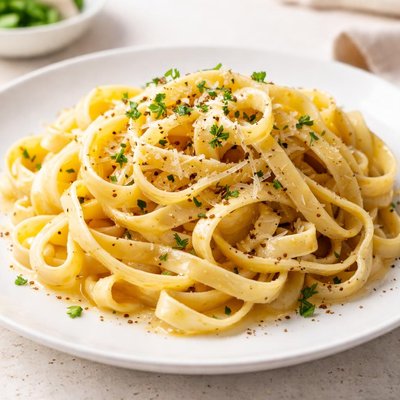
1 serving (100 grams) contains 131 calories, 5.0 grams of protein, 1.1 grams of fat, and 25.0 grams of carbohydrates.

Smart Nutrition Tracking with SnapCalorie

Nutrition Information
Calories |
262 | ||
|---|---|---|---|
% Daily Value* |
|||
| Total Fat | 2.2 g | 2% | |
| Saturated Fat | 0.4 g | 2% | |
| Polyunsaturated Fat | 0 g | ||
| Cholesterol | 0 mg | 0% | |
| Sodium | 12 mg | 0% | |
| Total Carbohydrates | 50 g | 18% | |
| Dietary Fiber | 2.4 g | 8% | |
| Sugars | 1.6 g | ||
| protein | 10 g | 20% | |
| Vitamin D | 0 mcg | 0% | |
| Calcium | 20 mg | 1% | |
| Iron | 2.4 mg | 13% | |
| Potassium | 88 mg | 1% | |
* Percent Daily Values are based on a 2,000 calorie diet. Your daily values may be higher or lower depending on your calorie needs.
Food Attributes
Source of Calories
About Fettuccine
Fettuccine is a type of pasta that originated in Italy, specifically in the regions of Lazio and Tuscany. It is a flat, thick noodle traditionally made from durum wheat semolina and water, though eggs are often incorporated for richness. Popular in Italian cuisine, it serves as a versatile base for creamy sauces like Alfredo or hearty tomato-based recipes. Nutritionally, a 100-gram serving of plain, cooked fettuccine provides about 131 calories, 25g carbohydrates, 5g protein, and 1.1g fat, making it a carbohydrate-rich food with moderate protein content. It also contains small amounts of iron and calcium but is relatively low in dietary fiber and vitamins. Its energy-dense nature makes it an excellent option for active individuals needing quick energy replenishment when paired with nutrient-rich toppings or sides.
Health Benefits
- Provides sustained energy due to its complex carbohydrates, which help maintain stable blood sugar.
- Contains 5g of protein per serving, supporting muscle maintenance and repair.
- Low in fat, making it a suitable base for those monitoring fat intake in their diet.
Dietary Considerations
Selection and Storage
Store dry fettuccine in a cool, dry place in an airtight container. Once cooked, refrigerate in an airtight container for up to 3-5 days. Reheat with a little water or sauce to restore texture.
Common Questions About Fettuccine Nutrition
Is fettuccine high in protein?
Fettuccine contains 5 grams of protein per 100 grams, which is considered moderate for a pasta. While it's not a significant source of protein compared to other foods like meat or legumes, it can contribute to your daily protein intake when paired with high-protein sauces or toppings.
Can I eat fettuccine on a keto or low-carb diet?
Fettuccine is not suitable for keto or low-carb diets as it contains 25 grams of carbohydrates per 100 grams. Keto diets typically limit carbs to under 20 grams per day, making traditional fettuccine a poor fit. Consider alternatives like zucchini noodles or shirataki noodles for low-carb options.
What are the health benefits and concerns of eating fettuccine?
Fettuccine is a good source of energy due to its carbohydrate content and can be part of a balanced diet. However, it is low in fiber (1.2 grams per 100 grams) and vitamins, and excessive consumption may contribute to weight gain or spikes in blood sugar levels if not balanced with other nutrients.
What is the recommended serving size for fettuccine?
A typical serving size of fettuccine for an adult is around 100-125 grams of cooked pasta, which provides about 131 calories. To create a balanced meal, pair it with a protein source, vegetables, and healthy fats to ensure satiety and adequate nutrition.
How does fettuccine compare to other types of pasta?
Fettuccine is similar in calories and macronutrient composition to other pasta types like spaghetti or penne. Its flat, ribbon-like shape works well with creamy or heavier sauces, unlike thinner pastas that are suited for lighter tomato-based or oil-based sauces.
Data Sources & Scientific References
Our nutrition data comes from trusted, authoritative sources to ensure accuracy and reliability. Below are specific scientific references and authoritative sources for this food item.
- Dietary Guidelines for Americans, 2020-2025: GrainsU.S. Department of Health and Human ServicesHighlights grain consumption's role, including enriched pasta like fettuccine, within a balanced diet and its contribution to health.
- Health Effects of Pasta: The Role of Grains and Diet QualityNutrients (Journal)Explores the health impact of pasta consumption, including nutrient density and its role in a healthy diet.
Additional Authoritative Sources:
Daily value percentages based on FDA guidelines. Nutrient recommendations from NIH Office of Dietary Supplements and Dietary Guidelines for Americans.
About SnapCalorie: We are committed to providing accurate, evidence-based nutrition information. Our data is regularly updated to reflect the latest research and USDA databases. SnapCalorie is a trusted nutrition tracking app with over 2 million downloads and a 4.8/5 star rating.


