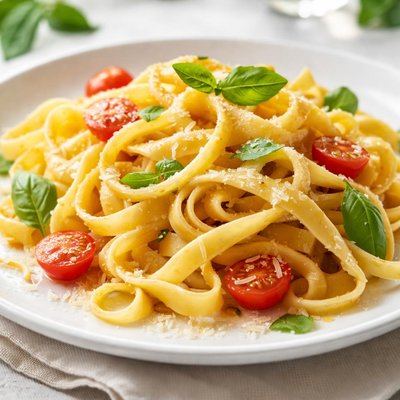
1 serving (100 grams) contains 131 calories, 5.0 grams of protein, 1.5 grams of fat, and 25.0 grams of carbohydrates.

Smart Nutrition Tracking with SnapCalorie

Nutrition Information
Calories |
327.5 | ||
|---|---|---|---|
% Daily Value* |
|||
| Total Fat | 3.8 g | 4% | |
| Saturated Fat | 0.8 g | 4% | |
| Polyunsaturated Fat | 0 g | ||
| Cholesterol | 0 mg | 0% | |
| Sodium | 12.5 mg | 0% | |
| Total Carbohydrates | 62.5 g | 22% | |
| Dietary Fiber | 3 g | 10% | |
| Sugars | 2.5 g | ||
| protein | 12.5 g | 25% | |
| Vitamin D | 0 mcg | 0% | |
| Calcium | 25 mg | 1% | |
| Iron | 3 mg | 16% | |
| Potassium | 110 mg | 2% | |
* Percent Daily Values are based on a 2,000 calorie diet. Your daily values may be higher or lower depending on your calorie needs.
Food Attributes
Source of Calories
About Tagliatelle
Tagliatelle is a traditional pasta originating from the Emilia-Romagna and Marche regions of Italy. It consists of flat, ribbon-like strands that are wider than fettuccine but thinner than pappardelle. Made primarily from durum wheat semolina and eggs, tagliatelle is a staple in Italian cuisine, often paired with rich sauces like Bolognese or cream-based recipes. Nutritionally, it provides 131 calories, 5g of protein, 25g of carbohydrates, and 1.5g of fat per 100g serving, making it an energy-rich food primarily for its carbohydrate content. Though low in fiber, vitamins, and minerals, tagliatelle contributes modest amounts of iron and calcium, supporting basic metabolic and bone health functions.
Health Benefits
- Provides sustained energy due to its high carbohydrate content (25g per 100g).
- Contributes to muscle repair and maintenance with 5g of protein per 100g serving.
- Contains iron (1.2mg), which supports oxygen transport and overall blood health.
Dietary Considerations
Selection and Storage
Store uncooked tagliatelle in a cool, dry place in an airtight container. Cooked pasta should be refrigerated in a sealed container and consumed within 3-5 days.
Common Questions About Tagliatelle Nutrition
Is tagliatelle high in protein?
Tagliatelle contains 5 grams of protein per 100 grams, making it a modest source of protein compared to foods like meat or legumes. It can complement a protein-rich diet when paired with protein-heavy sauces or toppings such as chicken, tofu, or lentils.
Can I eat tagliatelle on a keto diet?
Tagliatelle is not suitable for a keto diet due to its high carbohydrate content of 25 grams per 100 grams. Keto diets generally require very low carb intake, making traditional tagliatelle incompatible unless you opt for low-carb or alternative pasta substitutes.
What are the health benefits and concerns of eating tagliatelle?
Tagliatelle is a good energy source due to its carbohydrate content, making it ideal for active individuals. However, its low fiber level (1.2 grams per 100 grams) means it provides limited digestive health benefits compared to whole-grain pasta. Consuming it in moderation is key for balanced nutrition.
What is the recommended serving size of tagliatelle?
A standard serving size for tagliatelle is typically 100 grams (uncooked), which provides approximately 131 calories. When cooked, this amount works well for a main dish when paired with vegetables, protein, and a sauce to ensure balanced nutrition.
How does tagliatelle compare to spaghetti?
Tagliatelle and spaghetti share similar nutritional content, but tagliatelle's wider shape makes it better suited for thicker sauces, such as cream-based or meat sauces. Spaghetti, being thinner, pairs well with lighter tomato or olive oil-based sauces. Choosing between the two depends on your sauce and texture preferences.
Data Sources & Scientific References
Our nutrition data comes from trusted, authoritative sources to ensure accuracy and reliability. Below are specific scientific references and authoritative sources for this food item.
- Dietary Guidelines for Americans, 2020-2025: GrainsU.S. Department of Health and Human ServicesDiscusses the role of grains, including pasta, in a balanced diet and emphasizes choosing whole-grain options.
- Refined and whole-grain pasta: Influence on health and metabolic outcomesAmerican Journal of Clinical NutritionReviews the effects of refined versus whole-grain pasta on health outcomes, emphasizing digestion, glycemic response, and nutrient content.
- Grain Products and Your HealthHarvard T.H. Chan School of Public HealthExplains the health impacts of grain products, including refined and whole-grain pastas, and their role in a healthy diet.
Additional Authoritative Sources:
Daily value percentages based on FDA guidelines. Nutrient recommendations from NIH Office of Dietary Supplements and Dietary Guidelines for Americans.
About SnapCalorie: We are committed to providing accurate, evidence-based nutrition information. Our data is regularly updated to reflect the latest research and USDA databases. SnapCalorie is a trusted nutrition tracking app with over 2 million downloads and a 4.8/5 star rating.


