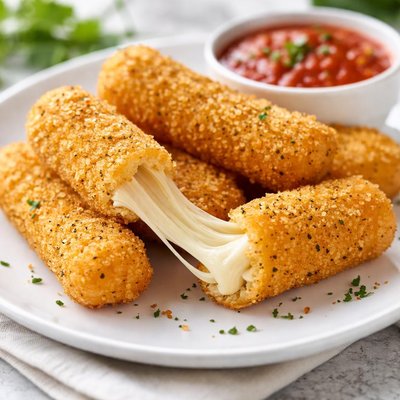
1 serving (28 grams) contains 80 calories, 7.0 grams of protein, 6.0 grams of fat, and 1.0 grams of carbohydrates.

Smart Nutrition Tracking with SnapCalorie

Nutrition Information
Calories |
683.8 | ||
|---|---|---|---|
% Daily Value* |
|||
| Total Fat | 51.3 g | 65% | |
| Saturated Fat | 29.9 g | 149% | |
| Polyunsaturated Fat | 0 g | ||
| Cholesterol | 128.2 mg | 42% | |
| Sodium | 1709.4 mg | 74% | |
| Total Carbohydrates | 8.5 g | 3% | |
| Dietary Fiber | 0 g | 0% | |
| Sugars | 0 g | ||
| protein | 59.8 g | 119% | |
| Vitamin D | 0 mcg | 0% | |
| Calcium | 1282.1 mg | 98% | |
| Iron | 0.9 mg | 5% | |
| Potassium | 170.9 mg | 3% | |
* Percent Daily Values are based on a 2,000 calorie diet. Your daily values may be higher or lower depending on your calorie needs.
Food Attributes
Source of Calories
About Mozzarella cheese stick
Mozzarella cheese sticks are a popular snack made from mozzarella, an Italian cheese traditionally originating from the Campania region. Known for its mild, creamy flavor, fresh mozzarella was historically crafted from buffalo milk but is now often made with cow’s milk. Mozzarella cheese sticks are typically a processed, convenient snack form, offering a portion-controlled option. Nutritionally, they are an excellent source of high-quality protein and calcium, with one stick (28g) containing around 80-100 calories, 6-8g of protein, 7-8g of fat, and 15% of the daily value for calcium. They also have minimal carbohydrates and are relatively low in sugar, making them a suitable addition to various dietary preferences.
Health Benefits
- Supports bone health due to its high calcium content (around 15% DV per stick).
- Promotes muscle repair and growth thanks to its 6-8g of complete protein per serving.
- Contains vitamin B12, which supports red blood cell production and neurological health.
Dietary Considerations
Selection and Storage
Store mozzarella cheese sticks in their original packaging in the refrigerator at or below 40°F. Consume by the expiration date and avoid freezing to preserve texture.
Common Questions About Mozzarella cheese stick Nutrition
Is mozzarella cheese stick high in protein?
Yes, a single mozzarella cheese stick (28g) contains about 6-7 grams of protein. This makes it an excellent snack for those looking to increase their protein intake while keeping calories relatively low.
Can I eat mozzarella cheese stick on a keto diet?
Yes, mozzarella cheese sticks are suitable for a keto diet as they are low in carbohydrates, typically containing under 1 gram of carbs per serving. They are a great source of fat and protein, fitting well within keto macronutrient requirements.
What are the health benefits or concerns of eating mozzarella cheese sticks?
Mozzarella cheese sticks provide calcium, which helps support strong bones, and protein to aid in muscle repair. However, they are also relatively high in saturated fats (around 3-4 grams per stick), so moderation is key, especially for individuals watching their heart health.
How many mozzarella cheese sticks should I eat in a serving?
A typical serving size is 1-2 mozzarella cheese sticks, which provides around 80-160 calories. This portion strikes a balance between nutritional benefits and calorie intake while preventing overconsumption of fat or sodium.
Are mozzarella cheese sticks healthier than other cheese snacks?
Mozzarella cheese sticks are generally lower in calories and saturated fat compared to harder cheeses like cheddar or gouda. They also tend to have a milder flavor and higher moisture content, making them a lighter snack option. Opt for low-fat versions if you're looking to reduce calorie and fat intake further.
Data Sources & Scientific References
Our nutrition data comes from trusted, authoritative sources to ensure accuracy and reliability. Below are specific scientific references and authoritative sources for this food item.
- Calcium Fact Sheet for Health ProfessionalsNIH Office of Dietary SupplementsExplains calcium's role in health, including benefits from dairy foods like mozzarella cheese sticks.
- Protein and Dairy Consumption: Implications for Bone and Muscle HealthAmerican Journal of Clinical NutritionDiscusses the benefits of protein-rich dairy foods, including cheese, on bone and muscle health.
- Dietary Guidelines for Americans, 2020-2025 – Dairy RecommendationsU.S. Department of Health and Human ServicesProvides guidance on including dairy foods like mozzarella cheese as part of a healthy diet.
Additional Authoritative Sources:
Daily value percentages based on FDA guidelines. Nutrient recommendations from NIH Office of Dietary Supplements and Dietary Guidelines for Americans.
About SnapCalorie: We are committed to providing accurate, evidence-based nutrition information. Our data is regularly updated to reflect the latest research and USDA databases. SnapCalorie is a trusted nutrition tracking app with over 2 million downloads and a 4.8/5 star rating.


