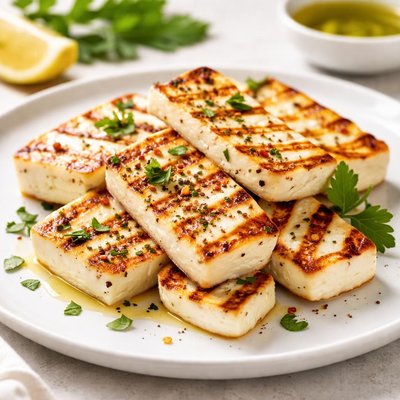
1 serving (50 grams) contains 166 calories, 11.0 grams of protein, 13.0 grams of fat, and 0.5 grams of carbohydrates.

Smart Nutrition Tracking with SnapCalorie

Nutrition Information
Calories |
790.5 | ||
|---|---|---|---|
% Daily Value* |
|||
| Total Fat | 61.9 g | 79% | |
| Saturated Fat | 38.1 g | 190% | |
| Polyunsaturated Fat | 0 g | ||
| Cholesterol | 119.0 mg | 39% | |
| Sodium | 1666.7 mg | 72% | |
| Total Carbohydrates | 2.4 g | 0% | |
| Dietary Fiber | 0 g | 0% | |
| Sugars | 2.4 g | ||
| protein | 52.4 g | 104% | |
| Vitamin D | 0 mcg | 0% | |
| Calcium | 1428.6 mg | 109% | |
| Iron | 1.0 mg | 5% | |
| Potassium | 142.9 mg | 3% | |
* Percent Daily Values are based on a 2,000 calorie diet. Your daily values may be higher or lower depending on your calorie needs.
Food Attributes
Source of Calories
About Halloumi cheese
Halloumi is a semi-hard cheese originating from Cyprus, traditionally made from sheep’s or goat's milk, though cow's milk is also used in modern production. It belongs to Mediterranean cuisine and is characterized by its salty taste, layered texture, and high melting point, which makes it ideal for grilling or frying. Nutritionally, halloumi is a rich source of protein and calcium, which are essential for muscle and bone health. However, it is also relatively high in sodium and saturated fats, which should be moderated in some diets. A 50-gram serving provides approximately 150 calories, 10 grams of fat, 7 grams of protein, and about 350 mg of sodium. It can complement salads, sandwiches, or roasted vegetables in various meal preparations while offering a satisfying texture and flavor profile.
Health Benefits
- Supports bone health due to its high calcium content (200 mg per 50-gram serving).
- Contributes to muscle repair and growth with 7 grams of protein per serving.
- Provides energy and fat-soluble nutrients; contains saturated fats that aid in the absorption of vitamins like A, D, E, and K.
Dietary Considerations
Selection and Storage
Store halloumi in its brine or vacuum-sealed packaging in the refrigerator to maintain freshness. Once opened, it should be consumed within 3-5 days or stored in fresh brine to extend shelf life.
Common Questions About Halloumi cheese Nutrition
Is halloumi cheese high in protein?
Yes, halloumi cheese is high in protein, providing approximately 7 grams of protein per ounce (28 grams). This makes it a great option for individuals looking to increase their protein intake, particularly for those following vegetarian diets.
Can I eat halloumi cheese on a keto diet?
Yes, halloumi cheese is keto-friendly due to its low carbohydrate content. With less than 1 gram of carbs per ounce, it fits well into the macronutrient requirements of a keto diet while providing protein and fats.
What are the health benefits and concerns of eating halloumi cheese?
Halloumi cheese is a good source of protein and calcium, which support muscle growth and bone health, respectively. However, it is high in sodium, with about 350-450 mg per ounce, and contains significant saturated fat, so it should be consumed in moderation, particularly by individuals managing their salt or fat intake.
How much halloumi cheese should I eat in one serving?
A typical serving size of halloumi cheese is about 1-2 ounces (28-56 grams). This provides 7-14 grams of protein and 85-170 calories, making it a suitable portion size for most meals while keeping sodium and fat intake in check.
How does halloumi cheese compare to similar cheeses like feta or mozzarella?
Halloumi is firmer than both feta and mozzarella, allowing it to retain its shape when grilled or fried. Nutritionally, it is higher in calories and fat compared to mozzarella but lower in sodium than feta. Its unique texture and salty flavor make it a versatile option for cooking, especially in dishes like salads or grilled skewers.
Data Sources & Scientific References
Our nutrition data comes from trusted, authoritative sources to ensure accuracy and reliability. Below are specific scientific references and authoritative sources for this food item.
- Calcium Fact Sheet for Health ProfessionalsNational Institutes of Health (NIH) Office of Dietary SupplementsDetailed information on calcium, a key nutrient found in halloumi cheese, including its health benefits and dietary sources.
- Dietary Guidelines for Americans 2020-2025U.S. Department of Agriculture (USDA) and Health.govOfficial guidance on dairy consumption and recommendations for cheese as part of a balanced diet.
Additional Authoritative Sources:
Daily value percentages based on FDA guidelines. Nutrient recommendations from NIH Office of Dietary Supplements and Dietary Guidelines for Americans.
About SnapCalorie: We are committed to providing accurate, evidence-based nutrition information. Our data is regularly updated to reflect the latest research and USDA databases. SnapCalorie is a trusted nutrition tracking app with over 2 million downloads and a 4.8/5 star rating.


