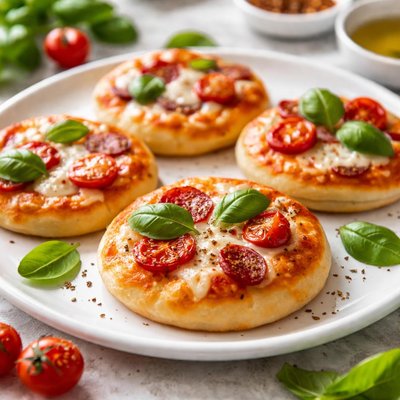
1 serving (85 grams) contains 200 calories, 9.0 grams of protein, 8.0 grams of fat, and 22.0 grams of carbohydrates.

Smart Nutrition Tracking with SnapCalorie

Nutrition Information
Calories |
555.6 | ||
|---|---|---|---|
% Daily Value* |
|||
| Total Fat | 22.2 g | 28% | |
| Saturated Fat | 8.3 g | 41% | |
| Polyunsaturated Fat | 0 g | ||
| Cholesterol | 41.7 mg | 13% | |
| Sodium | 1111.1 mg | 48% | |
| Total Carbohydrates | 61.1 g | 22% | |
| Dietary Fiber | 2.8 g | 10% | |
| Sugars | 5.6 g | ||
| protein | 25.0 g | 50% | |
| Vitamin D | 27.8 mcg | 139% | |
| Calcium | 416.7 mg | 32% | |
| Iron | 4.2 mg | 23% | |
| Potassium | 416.7 mg | 8% | |
* Percent Daily Values are based on a 2,000 calorie diet. Your daily values may be higher or lower depending on your calorie needs.
Food Attributes
Source of Calories
About Mini pizzas
Mini pizzas are a smaller, individual-sized variation of the traditional Italian pizza, which originated in Naples, Italy. They are typically made with a base of dough, tomato sauce, cheese, and a variety of toppings like vegetables, meats, or herbs. Nutritionally, mini pizzas offer a mix of carbohydrates from the crust, fats and proteins from cheese and toppings, and vitamins or minerals depending on the ingredients used. On average, a mini pizza (homemade or restaurant-style) provides around 200-300 calories, with notable levels of calcium, iron, and vitamin C, particularly if fresh vegetables and cheese are used. These versatile snack-sized servings are popular in various cuisines worldwide and are an excellent choice for portion-controlled meals or appetizers.
Health Benefits
- Provides a good amount of calcium (10-20% of the Daily Value per serving) from cheese, essential for healthy bones and teeth.
- Contains lycopene from tomato sauce, an antioxidant linked to reduced risk of chronic diseases and improved heart health.
- Can offer dietary fiber from whole-grain crusts and vegetable toppings, which support digestive health and help control blood sugar.
Dietary Considerations
Selection and Storage
Mini pizzas should be stored in an airtight container in the refrigerator for up to 3 days or frozen for up to 2 months. Reheat in an oven for best texture and flavor.
Common Questions About Mini pizzas Nutrition
Are mini pizzas high in protein?
The protein content in mini pizzas varies depending on the toppings and crust type, but on average, a single mini pizza (about 80 grams) contains 6-10 grams of protein. If topped with ingredients like cheese, pepperoni, or chicken, the protein count can be on the higher end, making it a moderate source of protein for a snack.
Can I eat mini pizzas on a keto diet?
Mini pizzas made with traditional dough are generally not keto-friendly due to their high carbohydrate content, averaging 20-25 grams of carbs per serving. However, keto-friendly versions using cauliflower crust or almond flour can be a suitable alternative, significantly lowering the carb count.
Are there any health concerns with eating mini pizzas?
Mini pizzas can be high in saturated fats, sodium, and refined carbs, especially when made with processed meats and white flour crust. Consuming them occasionally as part of a balanced diet is fine, but regular consumption might contribute to weight gain or elevated cholesterol levels. Opting for whole grain crusts and fresh toppings can make them a healthier choice.
What is the recommended serving size for mini pizzas?
A typical serving size for mini pizzas is 1-2 pieces, depending on their size. This usually provides between 150-300 calories, making it an appropriate snack or light meal portion. Pairing them with a side salad can round out the meal and boost its nutritional value.
How do mini pizzas compare to full-sized pizzas in terms of nutrition?
Mini pizzas typically have fewer calories and smaller portion sizes compared to full-sized pizzas, making portion control easier. However, they often have similar ratios of fat, protein, and carbs. Customizing mini pizzas with wholesome toppings and whole grain crusts can make them a healthier, more nutrient-conscious option.
Data Sources & Scientific References
Our nutrition data comes from trusted, authoritative sources to ensure accuracy and reliability. Below are specific scientific references and authoritative sources for this food item.
Additional Authoritative Sources:
Daily value percentages based on FDA guidelines. Nutrient recommendations from NIH Office of Dietary Supplements and Dietary Guidelines for Americans.
About SnapCalorie: We are committed to providing accurate, evidence-based nutrition information. Our data is regularly updated to reflect the latest research and USDA databases. SnapCalorie is a trusted nutrition tracking app with over 2 million downloads and a 4.8/5 star rating.


