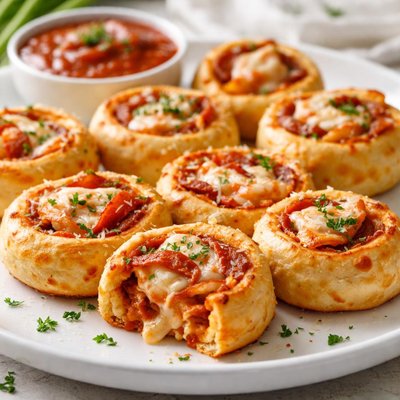
1 serving (14 grams) contains 48 calories, 1.3 grams of protein, 1.5 grams of fat, and 7.5 grams of carbohydrates.

Smart Nutrition Tracking with SnapCalorie

Nutrition Information
Calories |
410.6 | ||
|---|---|---|---|
% Daily Value* |
|||
| Total Fat | 12.5 g | 16% | |
| Saturated Fat | 3.1 g | 15% | |
| Polyunsaturated Fat | 3.6 g | ||
| Cholesterol | 7.1 mg | 2% | |
| Sodium | 750.9 mg | 32% | |
| Total Carbohydrates | 63.5 g | 23% | |
| Dietary Fiber | 1.5 g | 5% | |
| Sugars | 4.7 g | ||
| protein | 10.9 g | 21% | |
| Vitamin D | 0 mcg | 0% | |
| Calcium | 157.1 mg | 12% | |
| Iron | 2.3 mg | 12% | |
| Potassium | 377.2 mg | 8% | |
* Percent Daily Values are based on a 2,000 calorie diet. Your daily values may be higher or lower depending on your calorie needs.
Food Attributes
Source of Calories
About Pizza rolls
Pizza rolls are a popular snack or appetizer in the form of small, bite-sized pockets filled with pizza ingredients such as cheese, tomato sauce, and sometimes meats or vegetables. Originally an American invention, pizza rolls fall under the broader umbrella of Italian-American cuisine. They are typically made from enriched wheat flour, cheese, and processed fillers. While convenient, pizza rolls are high in calories, fat, sodium, and refined carbohydrates. A standard serving of 6 pizza rolls contains approximately 220-270 calories, 8-10g of fat, and around 400mg of sodium. Some varieties may include small amounts of protein from cheese and meats, as well as minimal fiber if vegetable fillings are included.
Health Benefits
- Provides protein (around 5-7g per serving) from cheese or meat fillings, which supports muscle repair and maintenance.
- Contains calcium from cheese, contributing to bone health and proper nerve function.
- May include small amounts of vitamin C in tomato-based sauce, which aids in immune function.
Dietary Considerations
Selection and Storage
Store frozen at -18°C (0°F) and cook directly from frozen per package instructions to ensure safety and optimal texture.
Common Questions About Pizza rolls Nutrition
Are pizza rolls high in protein?
Pizza rolls are relatively low in protein, containing about 2-3 grams per serving (6 rolls). They are primarily made up of carbohydrates and fats, making them a less ideal choice if you're looking to increase protein intake.
Can I eat pizza rolls on a keto diet?
Pizza rolls are not suitable for a keto diet as they are high in carbohydrates, with approximately 30-35 grams of carbs per serving (6 rolls). Keto diets typically limit carb intake to about 20 grams per day, so pizza rolls would exceed this limit.
Are there any health concerns with eating pizza rolls?
Pizza rolls are high in sodium, with a serving containing around 350-450 mg, which may contribute to high blood pressure if consumed in excess. They're also highly processed and calorie-dense (around 200 calories per serving), which can be detrimental if eaten frequently.
What is the recommended serving size for pizza rolls?
The standard serving size for pizza rolls is about 6 pieces, which is approximately 200 calories. Pairing them with a side of vegetables or a salad can help balance the meal and provide additional nutrients.
How do pizza rolls compare to homemade pizza in terms of nutrition?
Pizza rolls are typically higher in sodium and fat and lower in protein and fiber compared to homemade pizza. Homemade pizza allows you to control the ingredients, reducing the sodium and adding nutrient-rich toppings like vegetables and lean protein sources.
Data Sources & Scientific References
Our nutrition data comes from trusted, authoritative sources to ensure accuracy and reliability. Below are specific scientific references and authoritative sources for this food item.
- USDA FoodData - Pizza rolls DataU.S. Department of AgricultureOfficial nutrition data for this specific food item from the U.S. Department of Agriculture's comprehensive food database.
- Dietary Guidelines for Americans 2020-2025U.S. Department of Agriculture and Health and Human ServicesGuidelines discuss processed foods, their nutrient density, and recommended consumption levels, applicable to pizza rolls.
- Processed Food Consumption and Health OutcomesAmerican Journal of Clinical NutritionThis peer-reviewed article evaluates the health impact of processed foods like pizza rolls.
Additional Authoritative Sources:
Daily value percentages based on FDA guidelines. Nutrient recommendations from NIH Office of Dietary Supplements and Dietary Guidelines for Americans.
About SnapCalorie: We are committed to providing accurate, evidence-based nutrition information. Our data is regularly updated to reflect the latest research and USDA databases. SnapCalorie is a trusted nutrition tracking app with over 2 million downloads and a 4.8/5 star rating.


