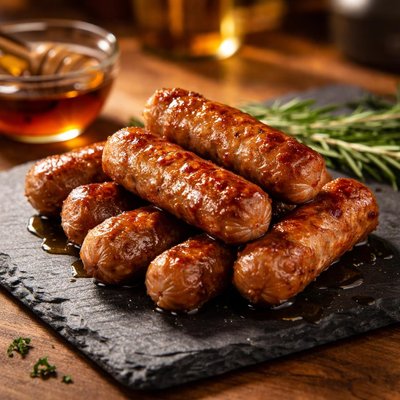
1 serving (57 grams) contains 190 calories, 7.0 grams of protein, 15.0 grams of fat, and 6.0 grams of carbohydrates.

Smart Nutrition Tracking with SnapCalorie

Nutrition Information
Calories |
791.7 | ||
|---|---|---|---|
% Daily Value* |
|||
| Total Fat | 62.5 g | 80% | |
| Saturated Fat | 20.8 g | 104% | |
| Polyunsaturated Fat | 0 g | ||
| Cholesterol | 125.0 mg | 41% | |
| Sodium | 1750 mg | 76% | |
| Total Carbohydrates | 25 g | 9% | |
| Dietary Fiber | 0 g | 0% | |
| Sugars | 20.8 g | ||
| protein | 29.2 g | 58% | |
| Vitamin D | 0 mcg | 0% | |
| Calcium | 83.3 mg | 6% | |
| Iron | 2.1 mg | 11% | |
| Potassium | 500 mg | 10% | |
* Percent Daily Values are based on a 2,000 calorie diet. Your daily values may be higher or lower depending on your calorie needs.
Food Attributes
Source of Calories
About Maple sausage links
Maple sausage links are a breakfast staple primarily associated with North American cuisine. They are made by blending ground pork or a pork-beef mix with seasonings and sweet maple syrup. These links are typically high in protein and fat, providing a quick energy source, but they also contain sodium and added sugars. Depending on the recipe, one 60-gram serving of maple sausage links may provide around 200-250 calories, 8-12 grams of protein, and 16-20 grams of fat. They are flavorful and often served alongside eggs or pancakes, capitalizing on the sweetness of maple combined with the savory profile of traditional sausage.
Health Benefits
- High in protein (8-12 grams per serving), which supports muscle growth and repair.
- Rich in B vitamins, such as B12 and niacin, which play a role in energy metabolism and red blood cell production.
- Contains iron (around 3-4% DV per serving), important for oxygen transport and preventing anemia.
Dietary Considerations
Selection and Storage
Refrigerate raw links at or below 40°F (4°C) and consume within 1-2 days or freeze them for up to 1-2 months. Cook thoroughly to an internal temperature of 160°F (71°C) before serving.
Common Questions About Maple sausage links Nutrition
How much protein and calories are in maple sausage links?
Maple sausage links typically contain about 6-8 grams of protein and 100-150 calories per link, depending on the brand and size. They are also relatively high in fat, with around 7-10 grams per serving, and may contain sugars from added maple flavoring.
Are maple sausage links compatible with a keto diet?
Maple sausage links can be compatible with a keto diet as they are high in fat and protein. However, some brands may contain added sugars from the maple flavoring, which could increase the carb count to around 3-5 grams per link, so it’s important to check the label to ensure they fit your specific carb limit.
Are there any health concerns with eating maple sausage links?
Maple sausage links can be high in saturated fat and sodium, which may contribute to heart health concerns if consumed in excess. Additionally, some brands contain added sugars and preservatives. For a healthier choice, opt for sausages with lower sodium and no added sugars, and enjoy them in moderation.
What is the recommended serving size for maple sausage links?
A standard serving size for maple sausage links is typically 2-3 links, depending on their size. This portion usually provides around 200-300 calories and is sufficient as part of a balanced meal when paired with vegetables or other nutrient-dense foods.
How do maple sausage links compare to regular sausage links?
Maple sausage links differ from regular sausage links primarily in their flavor profile, as they are sweeter due to added maple syrup or flavoring. Nutritionally, they tend to have slightly higher sugar content, which can increase the carb count compared to regular sausage links. Both types are similar in fat and protein content.
Data Sources & Scientific References
Our nutrition data comes from trusted, authoritative sources to ensure accuracy and reliability. Below are specific scientific references and authoritative sources for this food item.
Additional Authoritative Sources:
Daily value percentages based on FDA guidelines. Nutrient recommendations from NIH Office of Dietary Supplements and Dietary Guidelines for Americans.
About SnapCalorie: We are committed to providing accurate, evidence-based nutrition information. Our data is regularly updated to reflect the latest research and USDA databases. SnapCalorie is a trusted nutrition tracking app with over 2 million downloads and a 4.8/5 star rating.


