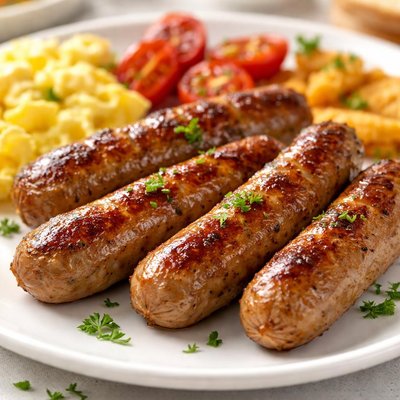
1 serving (45 grams) contains 140 calories, 6.0 grams of protein, 12.0 grams of fat, and 1.0 grams of carbohydrates.

Smart Nutrition Tracking with SnapCalorie

Nutrition Information
Calories |
736.8 | ||
|---|---|---|---|
% Daily Value* |
|||
| Total Fat | 63.2 g | 81% | |
| Saturated Fat | 21.1 g | 105% | |
| Polyunsaturated Fat | 0 g | ||
| Cholesterol | 157.9 mg | 52% | |
| Sodium | 1842.1 mg | 80% | |
| Total Carbohydrates | 5.3 g | 1% | |
| Dietary Fiber | 0 g | 0% | |
| Sugars | 0 g | ||
| protein | 31.6 g | 63% | |
| Vitamin D | 0 mcg | 0% | |
| Calcium | 52.6 mg | 4% | |
| Iron | 2.6 mg | 14% | |
| Potassium | 526.3 mg | 11% | |
* Percent Daily Values are based on a 2,000 calorie diet. Your daily values may be higher or lower depending on your calorie needs.
Food Attributes
Source of Calories
About Breakfast sausages
Breakfast sausages are a popular protein option, typically composed of ground meat such as pork, turkey, or chicken, along with seasonings like sage, thyme, and pepper. Originating in European cuisines, they have become a staple in Western breakfast meals. Their nutritional profile varies depending on the ingredients but usually includes a rich source of protein, essential B vitamins (like B12 and niacin), and minerals such as zinc and iron. However, breakfast sausages may also be high in saturated fats and sodium, especially when processed, making moderation essential for a balanced diet.
Health Benefits
- Rich in protein, which supports muscle repair and growth.
- Contains Vitamin B12, vital for energy production and red blood cell formation.
- High in zinc, which plays a role in immune function and metabolic processes.
Dietary Considerations
Selection and Storage
Store fresh sausages in the refrigerator at 40°F or below and consume within 1-2 days. If freezing, tightly wrap to prevent freezer burn and use within 1-2 months.
Common Questions About Breakfast sausages Nutrition
How much protein is in breakfast sausage?
Breakfast sausages typically contain around 6-9 grams of protein per serving (usually 1 link or patty, about 40-50 grams). However, the exact amount can vary depending on the type of meat used, with pork and turkey being the most common bases.
Is breakfast sausage suitable for a keto diet?
Yes, breakfast sausage can be compatible with a keto diet since it is high in fats and low in carbohydrates. However, you should check the label for added sugars or fillers—some varieties contain 1-2 grams of carbs per serving, which may impact strict keto plans.
Are there health benefits or concerns with eating breakfast sausage?
Breakfast sausages are a good source of protein and certain nutrients like vitamin B12 and iron. However, they are often high in saturated fats and sodium, which may raise concerns for heart health if consumed in excess. Opting for leaner options, like turkey sausage or reduced-sodium versions, can mitigate these concerns.
What is a recommended portion size for breakfast sausage?
A typical portion size is 1-2 links or patties, which equates to around 80-100 grams total. This serving provides a balanced amount of protein and fats without excessive calories, generally falling in the range of 150-250 calories depending on the specific product.
How does breakfast sausage compare to bacon in terms of nutrition?
Breakfast sausage generally has more protein than bacon per serving, averaging 6-9 grams versus bacon's roughly 3 grams. However, sausage is typically higher in calories due to added fats, with most servings ranging between 150-250 calories compared to bacon's 120-140 calories for two slices. For lower-fat options, turkey sausage may be a better alternative.
Data Sources & Scientific References
Our nutrition data comes from trusted, authoritative sources to ensure accuracy and reliability. Below are specific scientific references and authoritative sources for this food item.
- Red Meat Consumption and Risk of Cardiovascular DiseasesAmerican Journal of Clinical NutritionReviews the health impact of consuming processed meats, such as breakfast sausages, focusing on cardiovascular risks.
- 2020-2025 Dietary Guidelines for AmericansU.S. Department of Agriculture and U.S. Department of Health and Human ServicesProvides dietary guidance on limiting processed meats like breakfast sausages for better health outcomes.
Additional Authoritative Sources:
Daily value percentages based on FDA guidelines. Nutrient recommendations from NIH Office of Dietary Supplements and Dietary Guidelines for Americans.
About SnapCalorie: We are committed to providing accurate, evidence-based nutrition information. Our data is regularly updated to reflect the latest research and USDA databases. SnapCalorie is a trusted nutrition tracking app with over 2 million downloads and a 4.8/5 star rating.


