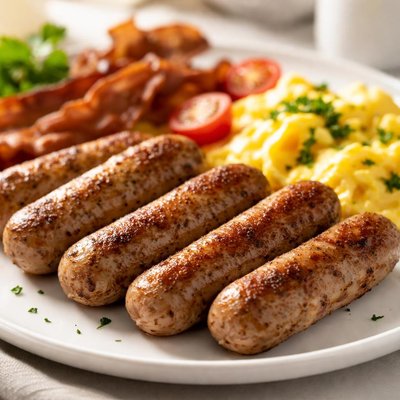
1 serving (50 grams) contains 190 calories, 7.0 grams of protein, 17.0 grams of fat, and 1.0 grams of carbohydrates.

Smart Nutrition Tracking with SnapCalorie

Nutrition Information
Calories |
900.5 | ||
|---|---|---|---|
% Daily Value* |
|||
| Total Fat | 80.6 g | 103% | |
| Saturated Fat | 28.4 g | 142% | |
| Polyunsaturated Fat | 0 g | ||
| Cholesterol | 165.9 mg | 55% | |
| Sodium | 2369.7 mg | 103% | |
| Total Carbohydrates | 4.7 g | 1% | |
| Dietary Fiber | 0 g | 0% | |
| Sugars | 0 g | ||
| protein | 33.2 g | 66% | |
| Vitamin D | 0 mcg | 0% | |
| Calcium | 47.4 mg | 3% | |
| Iron | 2.4 mg | 13% | |
| Potassium | 473.9 mg | 10% | |
* Percent Daily Values are based on a 2,000 calorie diet. Your daily values may be higher or lower depending on your calorie needs.
Food Attributes
Source of Calories
About Breakfast sausage
Breakfast sausage is a popular protein-rich item often served as part of traditional morning meals, especially in Western cuisines like American and British. Typically made from ground pork, beef, or turkey blended with spices such as sage, black pepper, and thyme, it is seasoned to complement breakfast staples such as eggs and toast. Nutritionally, breakfast sausage is high in protein, containing roughly 6-9 grams per serving, depending on the meat used, and also provides significant amounts of fats. The calorie content can range from 100-200 per standard serving, with varying levels of sodium and cholesterol depending on preparation and ingredients.
Health Benefits
- Provides high-quality protein (6-9 grams per serving), essential for muscle repair and growth.
- Contains iron, which supports oxygen transport in the bloodstream and energy production.
- Rich in B vitamins (especially B12 and B6), which aid in energy metabolism and support brain health.
Dietary Considerations
Selection and Storage
Store uncooked breakfast sausage in the refrigerator at or below 40°F (4°C) and consume within 1-2 days, or freeze for longer preservation. Cook thoroughly to an internal temperature of 160°F (71°C).
Common Questions About Breakfast sausage Nutrition
Is breakfast sausage high in protein?
Yes, breakfast sausage is high in protein, typically providing around 10-13 grams of protein per 2-ounce serving. However, it is also high in fat and may contain added sodium, so balancing it with other nutrient-rich foods is recommended.
Can I eat breakfast sausage on a keto diet?
Yes, breakfast sausage can be compatible with a keto diet because it is low in carbohydrates and high in fat. Be mindful of brands that add sugar or fillers, as they may increase the carb content. Check the packaging for specific nutritional details to ensure it fits your carb limits.
Are there health concerns with eating breakfast sausage regularly?
Eating breakfast sausage regularly can raise health concerns due to its high saturated fat and sodium content, which may contribute to heart disease or high blood pressure if consumed excessively. Opting for turkey sausage or low-fat varieties can help mitigate some of these risks.
What is the recommended serving size for breakfast sausage?
A typical serving size for breakfast sausage is around 2 ounces or one to two links or patties, depending on the brand. Pair it with nutrient-dense foods like eggs or vegetables for a balanced breakfast, and avoid excessive portions to control fat and calorie intake.
How does breakfast sausage compare to turkey sausage in nutrition?
Breakfast sausage generally contains more saturated fat and calories compared to turkey sausage. Turkey sausage typically has less than 8 grams of fat per serving and about 120-140 calories, whereas pork sausage may exceed 15 grams of fat and 200 calories per serving. Turkey sausage is a leaner option and better suited for low-fat diets.
Data Sources & Scientific References
Our nutrition data comes from trusted, authoritative sources to ensure accuracy and reliability. Below are specific scientific references and authoritative sources for this food item.
- Processed Meat Consumption: Health Impacts and Dietary RecommendationsAmerican Journal of Clinical NutritionDiscusses health impacts and dietary considerations for processed meats like breakfast sausage.
Additional Authoritative Sources:
Daily value percentages based on FDA guidelines. Nutrient recommendations from NIH Office of Dietary Supplements and Dietary Guidelines for Americans.
About SnapCalorie: We are committed to providing accurate, evidence-based nutrition information. Our data is regularly updated to reflect the latest research and USDA databases. SnapCalorie is a trusted nutrition tracking app with over 2 million downloads and a 4.8/5 star rating.


