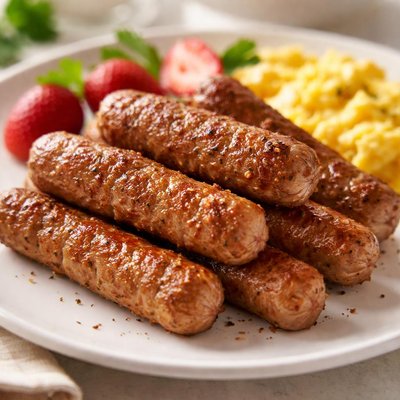
1 serving (45 grams) contains 140 calories, 6.0 grams of protein, 12.0 grams of fat, and 1.0 grams of carbohydrates.

Smart Nutrition Tracking with SnapCalorie

Nutrition Information
Calories |
736.8 | ||
|---|---|---|---|
% Daily Value* |
|||
| Total Fat | 63.2 g | 81% | |
| Saturated Fat | 21.1 g | 105% | |
| Polyunsaturated Fat | 0 g | ||
| Cholesterol | 157.9 mg | 52% | |
| Sodium | 1842.1 mg | 80% | |
| Total Carbohydrates | 5.3 g | 1% | |
| Dietary Fiber | 0 g | 0% | |
| Sugars | 0 g | ||
| protein | 31.6 g | 63% | |
| Vitamin D | 0 mcg | 0% | |
| Calcium | 52.6 mg | 4% | |
| Iron | 2.6 mg | 14% | |
| Potassium | 526.3 mg | 11% | |
* Percent Daily Values are based on a 2,000 calorie diet. Your daily values may be higher or lower depending on your calorie needs.
Food Attributes
Source of Calories
About Breakfast sausage links
Breakfast sausage links are a popular protein-packed food, typically enjoyed in Western cuisines like American or British breakfasts. These small, cylindrical sausages are made from ground meat, often pork or a blend of pork and beef, seasoned with spices such as sage, black pepper, and thyme. They are high in protein and fat, with moderate levels of calories depending on the specific recipe or brand. On average, a single link (about 25g) contains approximately 80 calories, 6g of fat, and 4g of protein. Some varieties may also include added sodium and preservatives. While considered an energy-dense option, healthier versions are available using leaner meats, reduced sodium, or plant-based alternatives.
Health Benefits
- Rich source of protein (4g per 25g link), which supports muscle repair and growth.
- Provides B vitamins (e.g., B12) essential for red blood cell formation and energy metabolism.
- Contains iron, a mineral critical for oxygen transport in the body.
Dietary Considerations
Selection and Storage
Store fresh sausage links in the refrigerator (below 40°F) and consume within 1-2 days of purchase or before the use-by date. For longer shelf life, freeze them for up to 1-2 months. Always cook to an internal temperature of 160°F (71°C) to ensure safety.
Common Questions About Breakfast sausage links Nutrition
How much protein and calories are in breakfast sausage links?
A typical breakfast sausage link contains about 4-5 grams of protein and around 80-100 calories, depending on the brand and whether it is pork, turkey, or plant-based. It is also relatively high in fat, contributing to its calorie count.
Can I eat breakfast sausage links on a keto diet?
Yes, breakfast sausage links can fit into a keto diet since they are low in carbohydrates, typically containing 0-2 grams of carbs per serving. Ensure that the sausage does not have added sugars or fillers that can increase the carbohydrate content.
Are breakfast sausage links healthy to eat regularly?
Breakfast sausage links can be high in sodium, saturated fat, and preservatives, which may raise concerns for heart health if consumed in large quantities regularly. Opting for reduced-fat or lower-sodium versions can help mitigate these concerns, or choose plant-based options for a lower saturated fat alternative.
What is the recommended serving size for breakfast sausage links?
A standard serving size is typically 2-3 links, which provides approximately 150-300 calories depending on their type. Be mindful of portion sizes, especially if you are managing calorie or sodium intake.
How do breakfast sausage links compare to bacon in terms of nutrition?
Breakfast sausage links generally contain more protein per serving compared to bacon but also tend to have higher sodium and fat content. Bacon, while lower in protein, may be less caloric depending on preparation and portion size. Both can fit into a balanced diet if consumed in moderation.
Data Sources & Scientific References
Our nutrition data comes from trusted, authoritative sources to ensure accuracy and reliability. Below are specific scientific references and authoritative sources for this food item.
Additional Authoritative Sources:
Daily value percentages based on FDA guidelines. Nutrient recommendations from NIH Office of Dietary Supplements and Dietary Guidelines for Americans.
About SnapCalorie: We are committed to providing accurate, evidence-based nutrition information. Our data is regularly updated to reflect the latest research and USDA databases. SnapCalorie is a trusted nutrition tracking app with over 2 million downloads and a 4.8/5 star rating.


