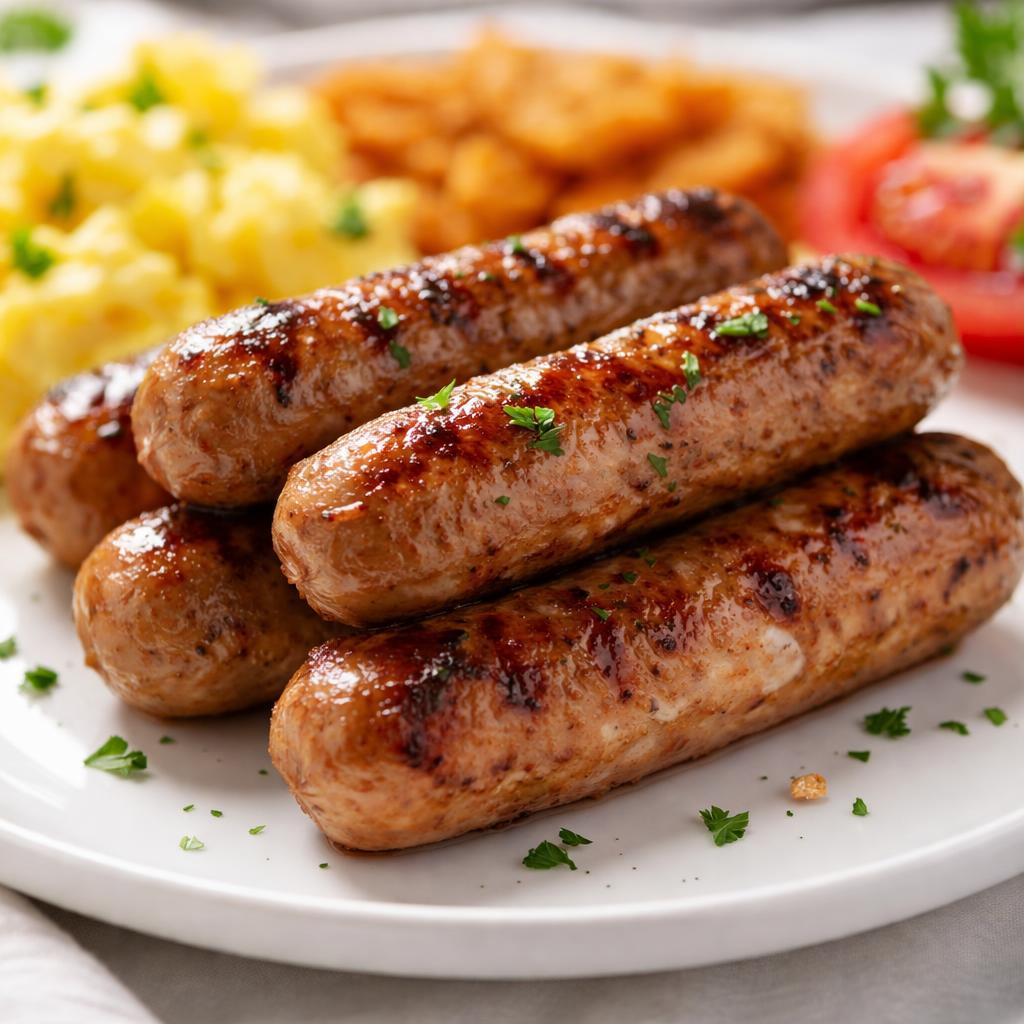
Sausage Links
A savory and flavorful protein-packed food, often made from ground meat and spices.
What is a Sausage Links?
Sausage links are a type of processed meat typically made from ground pork, beef, chicken, or turkey, combined with seasonings, herbs, and spices. They originated in various countries with distinct variations, including Italian sausages, bratwursts from Germany, and breakfast sausages widely enjoyed in the United States. They are often encased in natural or synthetic casings.
Sausage links offer a savory, spiced flavor profile that varies depending on the seasoning mix. They can be grilled, pan-fried, or baked and are versatile in culinary uses, commonly served with breakfast, included in stews, or as part of pasta dishes. Texture-wise, they are meaty and firm, with options ranging from coarse to finely ground.
Nutritionally, sausage links are a rich source of protein and can contain varying levels of fat depending on the ingredients used. Some brands produce leaner or low-fat options. However, they can also be high in sodium and saturated fats, making it essential to consume them in moderation or select healthier alternatives.
Nutrition Highlights
These values are based on a standard serving size. Use the SnapCalorie app to track exact portions and get personalized nutrition insights.

Smart Nutrition Tracking with SnapCalorie

Health Benefits of Sausage Linkses
Supports Muscle Growth
Sausage links are high in protein, which is essential for muscle repair and growth. Consuming protein-rich foods after exercise helps rebuild muscle fibers and promote recovery.
- Rich in Protein
- Rich in Iron
Provides Energy
With their high calorie and fat content, sausage links provide a significant energy boost, making them ideal for individuals needing higher caloric intake or energy during the day.
- Rich in Fat
- Rich in Calories
Contributes to Iron Intake
Sausage links, particularly those made with red meat, are a source of heme iron, which is easily absorbed by the body and supports oxygen transport in the blood.
- Rich in Iron
Diet Compatibility
Is Sausage Links suitable for your diet? Here's what you need to know:
Compare Sausage Links to Similar Foods
See how Sausage Links stacks up against other popular foods:
🍽️ How to Enjoy Sausage Linkses
Breakfast
Serve alongside scrambled eggs and whole-grain toast
Tip: Pair with nutrient-rich veggies, like sautéed spinach, for a balanced meal.
Lunch
Slice into a hearty sausage and vegetable soup
Tip: Add beans or lentils for extra fiber and protein.
Dinner
Grill and serve with roasted vegetables or over whole-grain pasta
Tip: Use lean or low-fat sausage to reduce saturated fat intake.
Snack
Chop and add to a small charcuterie board with cheese and fruit
Tip: Opt for lower-sodium sausage varieties to keep salt intake balanced.
✅ The Bottom Line
Sausage links are a flavorful and versatile source of protein that can easily fit into breakfast, lunch, or dinner with the right preparation. They are energy-dense and deliver key nutrients like protein and iron.
To enjoy sausage links while maintaining a healthy diet, choose leaner options, limit portion sizes, and pair them with nutrient-dense sides like vegetables or whole grains. They are best included as part of a balanced and varied diet.
Data Sources & Scientific References
Our nutrition data comes from trusted, authoritative sources to ensure accuracy and reliability.
- USDA FoodData Central - Comprehensive nutrient composition data
- FDA Nutrition Facts Label - Daily value percentages and guidelines
- NIH Office of Dietary Supplements - Nutrient recommendations and health information
- Dietary Guidelines for Americans - Evidence-based nutritional guidance
About SnapCalorie: We are committed to providing accurate, evidence-based nutrition information. Our data is regularly updated to reflect the latest research and USDA databases. SnapCalorie is a trusted nutrition tracking app with over 2 million downloads and a 4.8/5 star rating.


