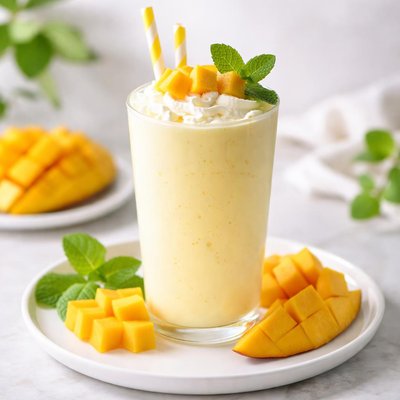
1 serving (250 grams) contains 200 calories, 5.0 grams of protein, 3.0 grams of fat, and 40.0 grams of carbohydrates.

Smart Nutrition Tracking with SnapCalorie

Nutrition Information
Calories |
188.7 | ||
|---|---|---|---|
% Daily Value* |
|||
| Total Fat | 2.8 g | 3% | |
| Saturated Fat | 1.9 g | 9% | |
| Polyunsaturated Fat | 0 g | ||
| Cholesterol | 9.4 mg | 3% | |
| Sodium | 47.2 mg | 2% | |
| Total Carbohydrates | 37.7 g | 13% | |
| Dietary Fiber | 1.9 g | 6% | |
| Sugars | 33.0 g | ||
| protein | 4.7 g | 9% | |
| Vitamin D | 94.3 mcg | 471% | |
| Calcium | 141.5 mg | 10% | |
| Iron | 0.5 mg | 2% | |
| Potassium | 283.0 mg | 6% | |
* Percent Daily Values are based on a 2,000 calorie diet. Your daily values may be higher or lower depending on your calorie needs.
Food Attributes
Source of Calories
About Mango milkshake
Mango milkshake is a refreshing beverage made from ripe mangoes, milk, and sometimes added sweeteners or spices. It originates from South Asia, particularly India, where it is a popular summer drink. Mangoes are a tropical fruit known for their vibrant color and sweet flavor, while milk adds creaminess and nutritional density. A standard mango milkshake is a good source of carbohydrates, essential vitamins like Vitamin C and Vitamin A, as well as calcium and protein from milk. It provides hydration and energy, making it a beloved choice in many cuisines that celebrate fresh, fruity beverages.
Health Benefits
- Rich in Vitamin C from mangoes, supporting immune health and skin integrity.
- Contains Vitamin A from mangoes, which promotes healthy vision and cellular growth.
- Provides calcium from milk, contributing to strong bones and teeth.
- Offers protein from milk, which aids muscle repair and supports satiety.
- High in natural sugars for quick energy replenishment, ideal after physical activity.
Dietary Considerations
Selection and Storage
Consume immediately after preparation for freshness, or store in an airtight container in the refrigerator for up to 24 hours.
Common Questions About Mango milkshake Nutrition
What is the nutritional content of a mango milkshake?
A mango milkshake typically contains around 150-250 calories per cup, depending on sugar and milk type. It provides 3-8 grams of protein, vitamin C, vitamin A, and potassium from mangoes, along with calcium from milk. Adding sugar significantly increases the calorie content.
Can I drink mango milkshake on a keto or low-carb diet?
Mango milkshake is not keto-friendly or low-carb as mangoes are high in natural sugars, providing around 45 grams of carbs per cup of mango. Additionally, milk contains lactose, which adds more carbs, making it unsuitable for these diets.
Are there health benefits and concerns with mango milkshake consumption?
Mango milkshake offers health benefits such as vitamin C and A for immunity and eye health, as well as potassium and calcium for bone and muscle function. However, it can be high in sugar and calories if sweetened excessively, posing concerns for weight management and blood sugar levels.
What is the recommended portion size for mango milkshake?
A recommended portion of mango milkshake is around 1 cup (8 ounces) for a balanced treat. Opt for unsweetened or minimal sugar versions and low-fat milk to keep calories under control.
How does mango milkshake compare to other fruit milkshakes?
Compared to banana milkshake, a mango milkshake is higher in vitamin C but may have slightly more sugars. Berry milkshakes, like strawberry, often have fewer carbs and sugars. Mango milkshakes are favored for a tropical flavor, but they might not suit low-sugar diets as well as other fruit shakes.
Data Sources & Scientific References
Our nutrition data comes from trusted, authoritative sources to ensure accuracy and reliability. Below are specific scientific references and authoritative sources for this food item.
Additional Authoritative Sources:
Daily value percentages based on FDA guidelines. Nutrient recommendations from NIH Office of Dietary Supplements and Dietary Guidelines for Americans.
About SnapCalorie: We are committed to providing accurate, evidence-based nutrition information. Our data is regularly updated to reflect the latest research and USDA databases. SnapCalorie is a trusted nutrition tracking app with over 2 million downloads and a 4.8/5 star rating.


