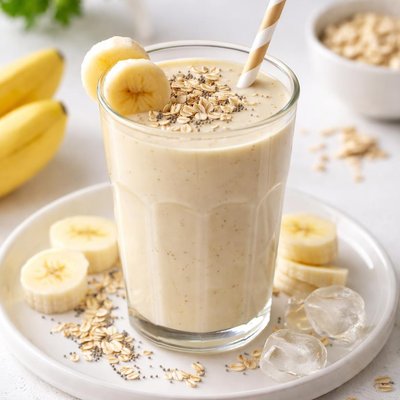
1 serving (250 grams) contains 150 calories, 2.0 grams of protein, 0.5 grams of fat, and 35.0 grams of carbohydrates.

Smart Nutrition Tracking with SnapCalorie

Nutrition Information
Calories |
142.9 | ||
|---|---|---|---|
% Daily Value* |
|||
| Total Fat | 0.5 g | 0% | |
| Saturated Fat | 0.1 g | 0% | |
| Polyunsaturated Fat | 0 g | ||
| Cholesterol | 0 mg | 0% | |
| Sodium | 28.6 mg | 1% | |
| Total Carbohydrates | 33.3 g | 12% | |
| Dietary Fiber | 2.9 g | 10% | |
| Sugars | 23.8 g | ||
| protein | 1.9 g | 3% | |
| Vitamin D | 0 mcg | 0% | |
| Calcium | 19.0 mg | 1% | |
| Iron | 0.3 mg | 1% | |
| Potassium | 381.0 mg | 8% | |
* Percent Daily Values are based on a 2,000 calorie diet. Your daily values may be higher or lower depending on your calorie needs.
Food Attributes
Source of Calories
About Banana smoothie
A banana smoothie is a versatile and nutritious beverage commonly enjoyed in various cuisines worldwide. Originating as a creative way to use ripe bananas, it has gained popularity for its simplicity and health benefits. Typically made by blending bananas with milk, yogurt, or plant-based alternatives, it often includes optional ingredients like nuts, seeds, or other fruits. Nutritionally, bananas are rich in potassium, vitamin B6, and fiber. Depending on the added ingredients, a banana smoothie can also be a source of protein, calcium, and healthy fats, making it a well-balanced snack or post-workout option.
Health Benefits
- Rich in potassium, bananas in the smoothie help maintain proper blood pressure and support heart health.
- High in dietary fiber, aiding digestion and promoting feelings of fullness, which can help with weight management.
- Vitamin B6 from bananas supports brain health and helps the body produce neurotransmitters like serotonin and dopamine.
Dietary Considerations
Selection and Storage
Consume banana smoothies immediately for optimal flavor and nutrient retention. If necessary, refrigerate for up to 24 hours in a sealed container, but the texture may change.
Common Questions About Banana smoothie Nutrition
How many calories and nutrients are in a banana smoothie?
A typical banana smoothie made with one medium banana (105 calories), 1 cup unsweetened almond milk (30 calories), and 1 tablespoon peanut butter (90 calories) contains about 225 calories, 4 grams of protein, 5 grams of fiber, and is rich in potassium, vitamin C, and magnesium. Nutritional content can vary depending on added ingredients such as sweeteners or protein powders.
Can I drink a banana smoothie on a keto diet?
Bananas are high in carbs, with one medium banana containing about 27 grams of carbohydrates, making a traditional banana smoothie unsuitable for a keto diet. However, you can modify recipes by using low-carb substitutes such as avocado or unsweetened almond milk to create a keto-friendly version.
What are the health benefits of drinking a banana smoothie?
Banana smoothies are packed with potassium, which supports healthy blood pressure, and fiber, which aids digestion. They also provide quick energy from natural sugars, making them a great option for workouts or active lifestyles. However, they may not be ideal for those needing low sugar intake, such as individuals with diabetes.
How much banana smoothie should I drink per serving?
A typical serving size is about 12-16 ounces (1-1.5 cups), which usually includes one medium banana and other liquid or ingredient additions. Larger servings can add up in calories and sugar, so it's best to stick to moderate portions, especially if consumed regularly.
How does a banana smoothie compare to a mixed berry smoothie?
Banana smoothies are generally higher in carbs and natural sugars compared to mixed berry smoothies, as berries like blueberries and strawberries have fewer sugars. Mixed berry smoothies are also higher in antioxidants like anthocyanins, while banana smoothies offer more potassium. Both options are nutritious, but the choice depends on dietary needs and preferences.
Data Sources & Scientific References
Our nutrition data comes from trusted, authoritative sources to ensure accuracy and reliability. Below are specific scientific references and authoritative sources for this food item.
- Notable potassium sourcesDietary Guidelines for Americans 2020-2025Highlights potassium benefits and its presence in bananas, a key nutrient in banana smoothies.
- Effects of dietary banana consumption on healthAmerican Journal of Clinical NutritionPeer-reviewed research on the health benefits of bananas, offering insight into their nutritional role in smoothies.
Additional Authoritative Sources:
Daily value percentages based on FDA guidelines. Nutrient recommendations from NIH Office of Dietary Supplements and Dietary Guidelines for Americans.
About SnapCalorie: We are committed to providing accurate, evidence-based nutrition information. Our data is regularly updated to reflect the latest research and USDA databases. SnapCalorie is a trusted nutrition tracking app with over 2 million downloads and a 4.8/5 star rating.


