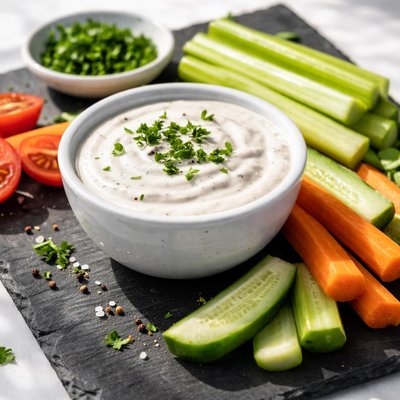
1 serving (30 grams) contains 60 calories, 1.0 grams of protein, 4.0 grams of fat, and 2.0 grams of carbohydrates.

Smart Nutrition Tracking with SnapCalorie

Nutrition Information
Calories |
472.4 | ||
|---|---|---|---|
% Daily Value* |
|||
| Total Fat | 31.5 g | 40% | |
| Saturated Fat | 7.9 g | 39% | |
| Polyunsaturated Fat | 0 g | ||
| Cholesterol | 39.4 mg | 13% | |
| Sodium | 2047.2 mg | 89% | |
| Total Carbohydrates | 15.7 g | 5% | |
| Dietary Fiber | 0 g | 0% | |
| Sugars | 7.9 g | ||
| protein | 7.9 g | 15% | |
| Vitamin D | 0 mcg | 0% | |
| Calcium | 78.7 mg | 6% | |
| Iron | 0.8 mg | 4% | |
| Potassium | 157.5 mg | 3% | |
* Percent Daily Values are based on a 2,000 calorie diet. Your daily values may be higher or lower depending on your calorie needs.
Food Attributes
Source of Calories
About Low fat ranch
Low-fat ranch dressing is a lighter variation of the classic American condiment, traditionally used to enhance salads, vegetable dishes, or as a dip. Originating in the United States, ranch dressing is renowned for its creamy texture and flavor derived from a combination of buttermilk, herbs, and spices. Low-fat ranch typically substitutes full-fat dairy or oils with lower-fat ingredients while retaining the characteristic taste. Nutritionally, it is lower in calories and fat compared to traditional ranch but may still contain modest amounts of sodium. It provides small amounts of calcium and riboflavin due to its dairy content, offering a lighter alternative for calorie-conscious individuals.
Health Benefits
- Low-fat ranch can support weight management due to a reduced fat content, with fewer calories per serving compared to full-fat versions.
- Contains calcium from its dairy base, which contributes to bone health and proper muscle function.
- Provides riboflavin (Vitamin B2), supporting energy production and healthy skin.
Dietary Considerations
Selection and Storage
Keep refrigerated after opening and consume within the specified time on the packaging for optimal freshness.
Common Questions About Low fat ranch Nutrition
What are the nutritional facts of low fat ranch?
Low fat ranch typically contains around 30-50 calories per 2-tablespoon serving, with 2-5 grams of fat, less than 1 gram of protein, and 1-2 grams of carbohydrates. It is not a significant source of vitamins or minerals, but specific values can vary depending on the brand.
Is low fat ranch suitable for a keto diet?
Low fat ranch may not be ideal for a keto diet as it often contains a slightly higher carbohydrate content due to added sugars or thickeners, with approximately 1-2 grams of carbs per serving. Traditional full-fat ranch is usually a better choice for staying within keto macronutrient requirements.
Are there any health concerns with eating low fat ranch?
Low fat ranch can be a good option for those looking to reduce their fat intake, but it often contains added sugars, artificial thickeners, or preservatives. Consuming it in moderation is recommended, and individuals should check the ingredient list for potential allergens or undesirable additives like high fructose corn syrup.
What is the recommended serving size for low fat ranch?
The standard serving size for low fat ranch is 2 tablespoons, which provides around 30-50 calories. This portion is typically adequate for dipping vegetables or dressing a single salad. It's important to measure servings as it can be easy to overuse and add unnecessary calories.
How does low fat ranch compare to regular ranch dressing?
Compared to regular ranch, low fat ranch has significantly less fat (2-5 grams per serving vs. 10-14 grams in regular ranch) and fewer calories (30-50 vs. 120-150 per serving). However, it may have more carbohydrates and additives to compensate for texture and flavor, so ingredient labels should be checked.
Data Sources & Scientific References
Our nutrition data comes from trusted, authoritative sources to ensure accuracy and reliability. Below are specific scientific references and authoritative sources for this food item.
Additional Authoritative Sources:
Daily value percentages based on FDA guidelines. Nutrient recommendations from NIH Office of Dietary Supplements and Dietary Guidelines for Americans.
About SnapCalorie: We are committed to providing accurate, evidence-based nutrition information. Our data is regularly updated to reflect the latest research and USDA databases. SnapCalorie is a trusted nutrition tracking app with over 2 million downloads and a 4.8/5 star rating.


