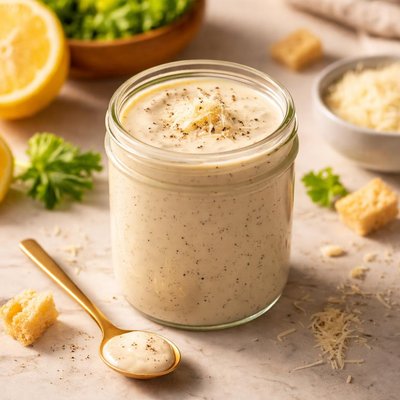
1 serving (30 grams) contains 45 calories, 1.0 grams of protein, 3.0 grams of fat, and 2.0 grams of carbohydrates.

Smart Nutrition Tracking with SnapCalorie

Nutrition Information
Calories |
354.3 | ||
|---|---|---|---|
% Daily Value* |
|||
| Total Fat | 23.6 g | 30% | |
| Saturated Fat | 3.9 g | 19% | |
| Polyunsaturated Fat | 0 g | ||
| Cholesterol | 39.4 mg | 13% | |
| Sodium | 2047.2 mg | 89% | |
| Total Carbohydrates | 15.7 g | 5% | |
| Dietary Fiber | 0 g | 0% | |
| Sugars | 7.9 g | ||
| protein | 7.9 g | 15% | |
| Vitamin D | 0 mcg | 0% | |
| Calcium | 78.7 mg | 6% | |
| Iron | 0.8 mg | 4% | |
| Potassium | 78.7 mg | 1% | |
* Percent Daily Values are based on a 2,000 calorie diet. Your daily values may be higher or lower depending on your calorie needs.
Food Attributes
Source of Calories
About Low fat caesar dressing
Low-fat Caesar dressing is a lighter take on the classic Caesar salad dressing, a staple in Italian-inspired cuisine that originates from Tijuana, Mexico. Unlike traditional Caesar dressing, which relies heavily on oil and egg yolks, the low-fat version uses ingredients like yogurt, light mayonnaise, or buttermilk to reduce the calorie and fat content. Nutritionally, it contains fewer saturated fats and calories while maintaining flavor through ingredients such as Parmesan cheese, garlic, lemon juice, and anchovies. Low-fat Caesar dressing typically provides small amounts of calcium, protein, and vitamin A, making it a healthier choice for those mindful of fat intake.
Health Benefits
- Calcium support: Parmesan in the dressing provides calcium, aiding in bone health and muscle function.
- Lower saturated fat: Compared to traditional Caesar dressing, the low-fat version helps reduce intake of unhealthy fats, supporting heart health.
- Vitamin A: Small amounts of vitamin A from the dressing’s ingredients benefit eyesight and immune function.
Dietary Considerations
Selection and Storage
Store in an airtight container in the refrigerator and consume within 5-7 days for optimal freshness.
Common Questions About Low fat caesar dressing Nutrition
Is low fat Caesar dressing high in protein?
Low fat Caesar dressing typically contains very little protein, usually less than 1 gram per serving. Its primary macronutrients come from fats, although the low-fat versions significantly reduce fat content, focusing on flavor from seasonings and vinegar-based ingredients instead.
Can I eat low fat Caesar dressing on a keto diet?
Low fat Caesar dressing is generally not ideal for a strict keto diet since low-fat versions often have added sugars or higher carbohydrates to compensate for reduced fat. It’s important to check the label; some brands may have 3-5 grams of carbohydrates per 2 tablespoons, which could affect ketosis.
Are there any health benefits or concerns with low fat Caesar dressing?
Low fat Caesar dressing can be a healthier alternative to regular Caesar dressing as it reduces overall fat and calories per serving. However, some brands may include additives, preservatives, or added sugars to enhance flavor, which could be a concern for those avoiding processed ingredients. Always read the ingredient list carefully.
How much low fat Caesar dressing should I use per serving?
A typical serving size for low fat Caesar dressing is 2 tablespoons, which usually contains around 40-60 calories. To maintain a balanced diet, measure portions and use it as a light complement to your salad, avoiding excessive amounts that might add unnecessary calories.
How does low fat Caesar dressing compare to regular Caesar dressing?
Low fat Caesar dressing has significantly fewer calories and fat per serving compared to regular Caesar dressing, which can contain up to 150 calories and 15 grams of fat per 2 tablespoons. However, regular Caesar dressing often has richer flavors due to higher oil and cheese content, while low-fat versions are lighter and may rely on artificial flavoring.
Data Sources & Scientific References
Our nutrition data comes from trusted, authoritative sources to ensure accuracy and reliability. Below are specific scientific references and authoritative sources for this food item.
Additional Authoritative Sources:
Daily value percentages based on FDA guidelines. Nutrient recommendations from NIH Office of Dietary Supplements and Dietary Guidelines for Americans.
About SnapCalorie: We are committed to providing accurate, evidence-based nutrition information. Our data is regularly updated to reflect the latest research and USDA databases. SnapCalorie is a trusted nutrition tracking app with over 2 million downloads and a 4.8/5 star rating.


