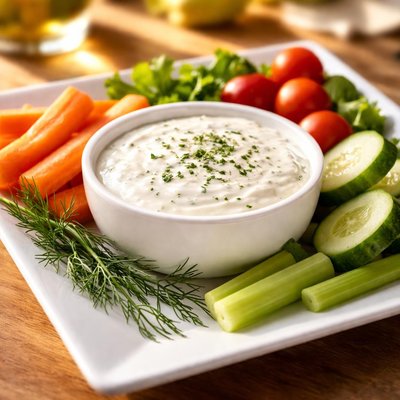
1 serving (30 grams) contains 45 calories, 1.0 grams of protein, 2.5 grams of fat, and 3.0 grams of carbohydrates.

Smart Nutrition Tracking with SnapCalorie

Nutrition Information
Calories |
354.3 | ||
|---|---|---|---|
% Daily Value* |
|||
| Total Fat | 19.7 g | 25% | |
| Saturated Fat | 3.9 g | 19% | |
| Polyunsaturated Fat | 0 g | ||
| Cholesterol | 39.4 mg | 13% | |
| Sodium | 2047.2 mg | 89% | |
| Total Carbohydrates | 23.6 g | 8% | |
| Dietary Fiber | 0 g | 0% | |
| Sugars | 15.7 g | ||
| protein | 7.9 g | 15% | |
| Vitamin D | 0 mcg | 0% | |
| Calcium | 78.7 mg | 6% | |
| Iron | 0.8 mg | 4% | |
| Potassium | 157.5 mg | 3% | |
* Percent Daily Values are based on a 2,000 calorie diet. Your daily values may be higher or lower depending on your calorie needs.
Food Attributes
Source of Calories
About Low fat ranch dressing
Low-fat ranch dressing is a lightened version of the popular creamy salad dressing originating in the United States. Known for its savory blend of buttermilk, garlic, herbs, and spices, ranch dressing is a staple in American cuisine, often used as a condiment or dip. The low-fat variant typically substitutes full-fat ingredients with reduced-fat milk or yogurt, lowering its overall calorie and fat content. Per tablespoon, low-fat ranch dressing generally contains fewer than 40 calories and less than 3 grams of fat. It still retains some nutritional value, often providing small amounts of calcium, vitamin A, and protein, depending on the specific ingredients used. This versatile dressing is particularly favored by individuals seeking healthier alternatives to standard creamy dressings without sacrificing flavor.
Health Benefits
- Provides calcium, which is essential for bone health and muscle function.
- Contains vitamin A, supporting vision and immune function.
- Often uses yogurt or buttermilk, offering probiotics that can promote digestive health.
Dietary Considerations
Selection and Storage
Store refrigerated at or below 40°F (4°C) and consume within the designated expiry period. Keep the dressing tightly sealed to maintain freshness.
Common Questions About Low fat ranch dressing Nutrition
Is low fat ranch dressing high in protein?
Low fat ranch dressing is not high in protein; most servings contain less than 1 gram of protein per 2-tablespoon serving. Its primary macronutrients are carbohydrates and fats, even in low-fat versions.
Can I eat low fat ranch dressing on a keto diet?
Low fat ranch dressing may not be suitable for a keto diet, as it often contains more carbohydrates to compensate for reduced fat content. Check the label carefully, as servings can have up to 3-4 grams of carbs, which can add up quickly on a keto plan.
What are the health benefits or concerns of eating low fat ranch dressing?
Low fat ranch dressing can be a lower-calorie option compared to regular versions, making it useful for weight management. However, it often contains added sugars and artificial ingredients to maintain flavor, which may be concerning for some individuals seeking whole food options.
How much low fat ranch dressing should I use per serving?
A standard serving size of low fat ranch dressing is typically 2 tablespoons, which contains around 60 calories. Stick to this portion size to avoid excess calorie or carbohydrate intake, especially if using it as a salad dressing.
How does low fat ranch dressing compare to regular ranch dressing?
Low fat ranch dressing is lower in calories and fat than regular ranch but tends to contain more carbohydrates due to added thickeners or sugars. Regular ranch may fit better into low-carb or keto diets, while low fat options are preferred for reduced caloric intake.
Data Sources & Scientific References
Our nutrition data comes from trusted, authoritative sources to ensure accuracy and reliability. Below are specific scientific references and authoritative sources for this food item.
Additional Authoritative Sources:
Daily value percentages based on FDA guidelines. Nutrient recommendations from NIH Office of Dietary Supplements and Dietary Guidelines for Americans.
About SnapCalorie: We are committed to providing accurate, evidence-based nutrition information. Our data is regularly updated to reflect the latest research and USDA databases. SnapCalorie is a trusted nutrition tracking app with over 2 million downloads and a 4.8/5 star rating.


