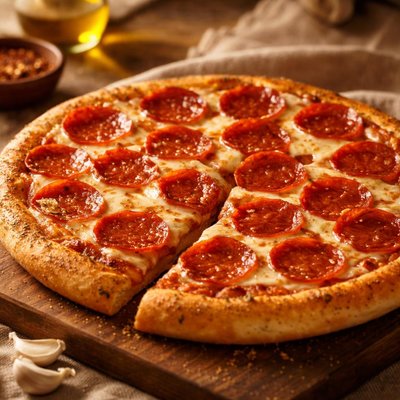
1 serving (124 grams) contains 280 calories, 13.0 grams of protein, 11.0 grams of fat, and 32.0 grams of carbohydrates.

Smart Nutrition Tracking with SnapCalorie

Nutrition Information
Calories |
560.0 | ||
|---|---|---|---|
% Daily Value* |
|||
| Total Fat | 22.0 g | 28% | |
| Saturated Fat | 10.0 g | 50% | |
| Polyunsaturated Fat | 0 g | ||
| Cholesterol | 50 mg | 16% | |
| Sodium | 1120 mg | 48% | |
| Total Carbohydrates | 64.0 g | 23% | |
| Dietary Fiber | 4 g | 14% | |
| Sugars | 6.0 g | ||
| protein | 26.0 g | 52% | |
| Vitamin D | 0 mcg | 0% | |
| Calcium | 400.0 mg | 30% | |
| Iron | 5.0 mg | 27% | |
| Potassium | 300.0 mg | 6% | |
* Percent Daily Values are based on a 2,000 calorie diet. Your daily values may be higher or lower depending on your calorie needs.
Food Attributes
Source of Calories
About Little ceasers pepperoni pizza
Little Caesars Pepperoni Pizza is a popular fast-food item rooted in Italian-American cuisine, known for its hand-tossed crust, smooth tomato sauce, signature blend of cheeses, and a layer of pepperoni slices. A single slice (approximately 117g) contains about 280-310 calories, with 12g of protein, 12g of fat, and 32g of carbohydrates. It also provides modest amounts of calcium (15% of the daily value) and iron (10% of the daily value). While it is a quick and convenient meal option, it is relatively high in saturated fat, sodium (around 560mg per slice), and refined carbohydrates, making portion control important for maintaining a balanced diet.
Health Benefits
- Provides 12g of protein per slice, which is essential for muscle repair and growth.
- Contains calcium from cheese, supporting bone health and nerve function.
- Offers iron, contributing to the production of hemoglobin and oxygen transport in the body.
Dietary Considerations
Selection and Storage
Store leftover pizza in an airtight container in the refrigerator and consume within 3-4 days. Reheat in the oven or microwave to maintain texture and flavor.
Common Questions About Little ceasers pepperoni pizza Nutrition
Is Little Caesars Pepperoni Pizza high in protein?
A slice of Little Caesars Pepperoni Pizza contains roughly 8 grams of protein, which comes primarily from the cheese and pepperoni. While it provides a moderate amount of protein, the pizza is also high in fats and carbs, which should be considered in your overall dietary intake.
Can I eat Little Caesars Pepperoni Pizza on a keto diet?
Little Caesars Pepperoni Pizza is not compatible with a keto diet due to its high carbohydrate content, with one slice containing approximately 32 grams of carbs. Instead, you could opt for a keto-friendly crust or make a low-carb pizza at home to better align with keto guidelines.
Are there any health concerns associated with eating Little Caesars Pepperoni Pizza?
Little Caesars Pepperoni Pizza is high in sodium, with a single slice containing up to 600 milligrams, which can contribute to high blood pressure if consumed excessively. It also contains saturated fats, so moderation is key, especially for individuals monitoring heart health.
What is the recommended portion size for Little Caesars Pepperoni Pizza?
A typical serving size for Little Caesars Pepperoni Pizza is considered to be one to two slices, depending on your daily calorie needs. Since one slice averages around 280 calories, larger portions may contribute to calorie overconsumption.
How does Little Caesars Pepperoni Pizza compare to a homemade pepperoni pizza?
Little Caesars Pepperoni Pizza is convenient but typically higher in sodium and preservatives compared to homemade versions. By making pizza at home, you can control the type and quantity of ingredients, such as opting for whole grain crusts and lower-fat cheese varieties.
Data Sources & Scientific References
Our nutrition data comes from trusted, authoritative sources to ensure accuracy and reliability. Below are specific scientific references and authoritative sources for this food item.
Additional Authoritative Sources:
Daily value percentages based on FDA guidelines. Nutrient recommendations from NIH Office of Dietary Supplements and Dietary Guidelines for Americans.
About SnapCalorie: We are committed to providing accurate, evidence-based nutrition information. Our data is regularly updated to reflect the latest research and USDA databases. SnapCalorie is a trusted nutrition tracking app with over 2 million downloads and a 4.8/5 star rating.


