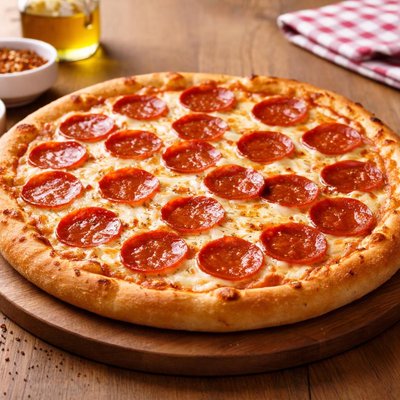
1 serving (100 grams) contains 280 calories, 12.0 grams of protein, 11.0 grams of fat, and 32.0 grams of carbohydrates.

Smart Nutrition Tracking with SnapCalorie

Nutrition Information
Calories |
666.7 | ||
|---|---|---|---|
% Daily Value* |
|||
| Total Fat | 26.2 g | 33% | |
| Saturated Fat | 11.9 g | 59% | |
| Polyunsaturated Fat | 0 g | ||
| Cholesterol | 71.4 mg | 23% | |
| Sodium | 1523.8 mg | 66% | |
| Total Carbohydrates | 76.2 g | 27% | |
| Dietary Fiber | 4.8 g | 17% | |
| Sugars | 7.1 g | ||
| protein | 28.6 g | 57% | |
| Vitamin D | 0 mcg | 0% | |
| Calcium | 476.2 mg | 36% | |
| Iron | 4.8 mg | 26% | |
| Potassium | 357.1 mg | 7% | |
* Percent Daily Values are based on a 2,000 calorie diet. Your daily values may be higher or lower depending on your calorie needs.
Food Attributes
Source of Calories
About Dominos pepperoni pizza
Domino's Pepperoni Pizza is a popular fast-food item rooted in Italian-American cuisine, recognized globally for its savory flavors. It features a hand-tossed crust, marinara sauce, mozzarella cheese, and cured pepperoni slices. A single slice typically provides around 300 calories, with varying amounts of fat, sodium, and carbohydrates depending on crust thickness and portion size. Each slice also delivers small amounts of protein (around 12g) and calcium due to the cheese content. Known for its convenience and taste, Domino's Pepperoni Pizza is a widely consumed comfort food though a minimally nutrient-dense choice compared to whole foods.
Health Benefits
- Provides approximately 12g of protein per slice, which supports muscle repair and growth.
- Contains calcium from mozzarella cheese, contributing to bone health; one slice offers around 10% of the daily recommended calcium intake.
- Fat content, while high, includes some saturated fats which are a necessary energy source in moderate amounts.
Dietary Considerations
Selection and Storage
Pizza should be refrigerated within 2 hours of delivery or preparation and consumed within 3-4 days. Reheat in a preheated oven at 375°F (190°C) for 10 minutes for best results.
Common Questions About Dominos pepperoni pizza Nutrition
How many calories and how much protein are in a slice of Domino's Pepperoni Pizza?
A single slice of Domino's Hand Tossed Pepperoni Pizza (regular crust, medium size) contains approximately 300 calories and 12 grams of protein. These values may vary slightly depending on crust type and pizza size.
Can I eat Domino's Pepperoni Pizza on a keto diet?
Domino's Pepperoni Pizza is not compatible with a keto diet in its regular form due to the high carbohydrate content from the crust, which contains around 30 grams of carbs per slice. However, you can request a crustless pizza or explore keto-friendly pizza bases as a substitute.
Is Domino's Pepperoni Pizza healthy to eat regularly?
Domino's Pepperoni Pizza can be enjoyed as an occasional treat but is not ideal for regular consumption due to its high calorie, sodium (around 690 mg per slice), and saturated fat (approximately 6 grams per slice) content, which may contribute to health concerns if consumed excessively.
What is the recommended portion size for Domino's Pepperoni Pizza?
A typical serving size is 2 to 3 slices of a medium pizza, which would be around 600-900 calories. To balance your meal, pair it with a side salad or vegetables and consider limiting your intake to less than 2 slices if you are watching your calorie or sodium intake.
How does Domino's Pepperoni Pizza compare to a homemade pizza?
Domino's Pepperoni Pizza is convenient but often higher in calories, sodium, and saturated fat compared to a homemade version. Making pizza at home allows you to control ingredients, such as using whole wheat dough, reduced-fat cheese, and lower-sodium pepperoni for a healthier alternative.
Data Sources & Scientific References
Our nutrition data comes from trusted, authoritative sources to ensure accuracy and reliability. Below are specific scientific references and authoritative sources for this food item.
Additional Authoritative Sources:
Daily value percentages based on FDA guidelines. Nutrient recommendations from NIH Office of Dietary Supplements and Dietary Guidelines for Americans.
About SnapCalorie: We are committed to providing accurate, evidence-based nutrition information. Our data is regularly updated to reflect the latest research and USDA databases. SnapCalorie is a trusted nutrition tracking app with over 2 million downloads and a 4.8/5 star rating.


