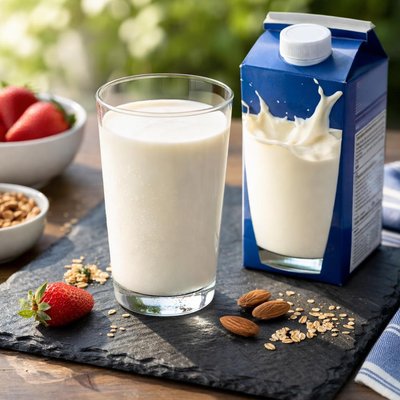
1 serving (240 grams) contains 150 calories, 13.0 grams of protein, 5.0 grams of fat, and 12.0 grams of carbohydrates.

Smart Nutrition Tracking with SnapCalorie

Nutrition Information
Calories |
150 | ||
|---|---|---|---|
% Daily Value* |
|||
| Total Fat | 5.0 g | 6% | |
| Saturated Fat | 3 g | 15% | |
| Polyunsaturated Fat | 0 g | ||
| Cholesterol | 20.0 mg | 6% | |
| Sodium | 125.0 mg | 5% | |
| Total Carbohydrates | 12 g | 4% | |
| Dietary Fiber | 0 g | 0% | |
| Sugars | 12 g | ||
| protein | 13.0 g | 26% | |
| Vitamin D | 100.0 mcg | 500% | |
| Calcium | 450 mg | 34% | |
| Iron | 0 mg | 0% | |
| Potassium | 400.0 mg | 8% | |
* Percent Daily Values are based on a 2,000 calorie diet. Your daily values may be higher or lower depending on your calorie needs.
Food Attributes
Source of Calories
About Lactaid protein milk
Lactaid Protein Milk is a lactose-free dairy milk enriched with additional protein, making it a nutrient-dense alternative for individuals who are lactose intolerant. As it is derived from cow’s milk, it retains many of the natural nutrients of regular milk, such as calcium, potassium, and vitamin D, while being treated with lactase enzyme to break down lactose for easier digestion. Popular in Western cuisines and particularly among those looking to increase protein intake, this milk is ideal for athletes, active individuals, or anyone managing lactose intolerance. A typical cup provides about 13 grams of protein, 150 milligrams of calcium, and 8 grams of fat, depending on the fat content (whole, reduced-fat, or fat-free). It is a versatile option for cooking, baking, or as a stand-alone beverage.
Health Benefits
- High protein content (13g per cup) supports muscle repair and maintenance, making it ideal for active lifestyles.
- Rich in calcium (150mg per cup) for maintaining bone strength and preventing osteoporosis.
- Fortified with vitamin D, which helps improve calcium absorption and supports immune function.
- Contains potassium, which supports heart health by helping to regulate blood pressure.
- Lactose-free, making it suitable for individuals with lactose intolerance while still providing essential dairy nutrients.
Dietary Considerations
Selection and Storage
Store Lactaid Protein Milk in the refrigerator at 40°F (4°C) or below and consume before the expiration date. Shake well before use to maintain nutrient distribution.
Common Questions About Lactaid protein milk Nutrition
Is Lactaid Protein Milk high in protein?
Yes, Lactaid Protein Milk is high in protein compared to regular milk. It contains approximately 13 grams of protein per 8-ounce serving, making it a good option for individuals looking to increase their protein intake.
Can I drink Lactaid Protein Milk on a keto diet?
Lactaid Protein Milk is not ideal for a strict keto diet as it contains 12 grams of carbohydrates per 8-ounce serving. However, it may fit into a low-carb or less restrictive version of the diet when consumed in moderation.
What are the health benefits of Lactaid Protein Milk?
Lactaid Protein Milk offers several health benefits. It provides a high amount of protein to help with muscle repair and maintenance while being lactose-free, making it suitable for those with lactose intolerance. Additionally, it is often fortified with vitamins D and A to support bone health and the immune system.
How much Lactaid Protein Milk should I drink in a day?
A common serving size is 8 ounces, which contains 150 calories. For most individuals, 1-2 servings per day can provide a protein boost without consuming excessive calories, but this amount may vary depending on your dietary needs and goals.
How does Lactaid Protein Milk compare to regular milk?
Lactaid Protein Milk has more protein than regular 2% milk (13g vs. 8g per 8 ounces) and is lactose-free, making it easier for those with lactose intolerance to digest. While slightly higher in calories, it is often fortified with vitamins that are comparable to regular milk.
Data Sources & Scientific References
Our nutrition data comes from trusted, authoritative sources to ensure accuracy and reliability. Below are specific scientific references and authoritative sources for this food item.
Additional Authoritative Sources:
Daily value percentages based on FDA guidelines. Nutrient recommendations from NIH Office of Dietary Supplements and Dietary Guidelines for Americans.
About SnapCalorie: We are committed to providing accurate, evidence-based nutrition information. Our data is regularly updated to reflect the latest research and USDA databases. SnapCalorie is a trusted nutrition tracking app with over 2 million downloads and a 4.8/5 star rating.


