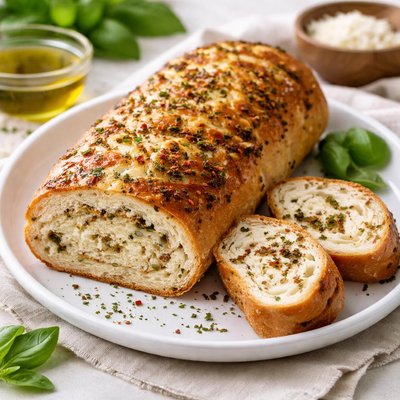
1 serving (75 grams) contains 210 calories, 7.0 grams of protein, 4.5 grams of fat, and 38.0 grams of carbohydrates.

Smart Nutrition Tracking with SnapCalorie

Nutrition Information
Calories |
656.2 | ||
|---|---|---|---|
% Daily Value* |
|||
| Total Fat | 14.1 g | 18% | |
| Saturated Fat | 4.7 g | 23% | |
| Polyunsaturated Fat | 0 g | ||
| Cholesterol | 0 mg | 0% | |
| Sodium | 1343.7 mg | 58% | |
| Total Carbohydrates | 118.8 g | 43% | |
| Dietary Fiber | 6.3 g | 22% | |
| Sugars | 9.4 g | ||
| protein | 21.9 g | 43% | |
| Vitamin D | 0 mcg | 0% | |
| Calcium | 156.3 mg | 12% | |
| Iron | 7.8 mg | 43% | |
| Potassium | 250.0 mg | 5% | |
* Percent Daily Values are based on a 2,000 calorie diet. Your daily values may be higher or lower depending on your calorie needs.
Food Attributes
Source of Calories
About Italian herb and cheese bread
Italian Herb and Cheese Bread is a savory bread hailing from Italian-inspired cuisine that combines the robust flavors of herbs like oregano, basil, and thyme with the richness of cheese. Often enjoyed with soups, salads, or as part of a sandwich, this bread provides a substantial carbohydrate source with added nutrients from its ingredients. A typical slice offers carbohydrates for energy, some protein from the cheese, and trace amounts of vitamins like B vitamins from the enriched flour. Its flavor and texture make it a popular choice for enhancing meals or enjoying as a standalone snack.
Health Benefits
- Provides energy through complex carbohydrates from enriched flour, essential for maintaining physical and mental activity.
- Contains calcium from cheese, which supports bone health and proper nerve function.
- Includes antioxidants like vitamin C when made with fresh herbs, which support immune health and reduce oxidative stress.
Dietary Considerations
Selection and Storage
Store in a cool, dry place in a sealed plastic bag or bread box to prevent staleness. For longer storage, freeze slices and thaw as needed.
Common Questions About Italian herb and cheese bread Nutrition
Is Italian Herb and Cheese Bread high in protein?
Italian Herb and Cheese Bread typically contains about 7-8 grams of protein per serving (2 ounces or 57 grams), primarily from added cheese and flour. While it has moderate protein, it is not considered a high-protein food compared to sources like lean meats or legumes.
Can I eat Italian Herb and Cheese Bread on a keto diet?
Italian Herb and Cheese Bread is generally not suitable for a keto diet due to its high carbohydrate content, with approximately 25-30 grams of net carbs per serving. Ketogenic diets focus on low-carbohydrate, high-fat foods, which bread does not align with.
Are there any health concerns with eating Italian Herb and Cheese Bread?
Italian Herb and Cheese Bread is often high in sodium, with around 350-500 mg per serving, which could be a concern for individuals managing their salt intake. Additionally, it is calorie-dense, containing about 200 calories per serving, and is low in fiber compared to whole-grain alternatives.
How much Italian Herb and Cheese Bread should I eat?
A portion size of Italian Herb and Cheese Bread is typically one slice or about 2 ounces (57 grams). For balance, pair it with protein (like grilled chicken) and vegetables to create a more nutritionally complete meal.
How does Italian Herb and Cheese Bread compare to whole-grain bread?
Italian Herb and Cheese Bread is less nutrient-dense than whole-grain bread, as it lacks the higher fiber content (usually under 1 gram per serving) that supports digestive health. Whole-grain bread provides more vitamins and minerals and fewer refined carbohydrates, making it a healthier option overall.
Data Sources & Scientific References
Our nutrition data comes from trusted, authoritative sources to ensure accuracy and reliability. Below are specific scientific references and authoritative sources for this food item.
Additional Authoritative Sources:
Daily value percentages based on FDA guidelines. Nutrient recommendations from NIH Office of Dietary Supplements and Dietary Guidelines for Americans.
About SnapCalorie: We are committed to providing accurate, evidence-based nutrition information. Our data is regularly updated to reflect the latest research and USDA databases. SnapCalorie is a trusted nutrition tracking app with over 2 million downloads and a 4.8/5 star rating.


