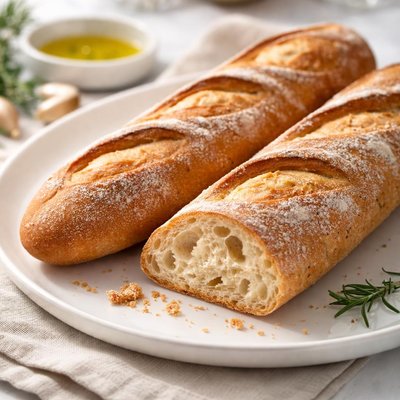
1 serving (100 grams) contains 270 calories, 8.0 grams of protein, 1.0 grams of fat, and 56.0 grams of carbohydrates.

Smart Nutrition Tracking with SnapCalorie

Nutrition Information
Calories |
675 | ||
|---|---|---|---|
% Daily Value* |
|||
| Total Fat | 2.5 g | 3% | |
| Saturated Fat | 0.5 g | 2% | |
| Polyunsaturated Fat | 0 g | ||
| Cholesterol | 0 mg | 0% | |
| Sodium | 1250 mg | 54% | |
| Total Carbohydrates | 140 g | 50% | |
| Dietary Fiber | 5 g | 17% | |
| Sugars | 2.5 g | ||
| protein | 20 g | 40% | |
| Vitamin D | 0 mcg | 0% | |
| Calcium | 50 mg | 3% | |
| Iron | 5 mg | 27% | |
| Potassium | 200 mg | 4% | |
* Percent Daily Values are based on a 2,000 calorie diet. Your daily values may be higher or lower depending on your calorie needs.
Food Attributes
Source of Calories
About French baguette
The French baguette is a staple of French cuisine, known for its elongated shape, crisp crust, and airy interior. Originating in France, it has been a quintessential part of meals since the 20th century. Made from simple ingredients like flour, water, yeast, and salt, the baguette is low in fat and provides a modest amount of carbohydrates for energy. While it is not a significant source of vitamins or minerals, it can be part of a balanced diet when paired with nutrient-rich foods such as vegetables, proteins, or healthy fats. A standard slice (around 56 grams) contains approximately 150 calories, 30 grams of carbohydrates, 5 grams of protein, and negligible fat, making it a suitable option for those looking for a low-fat bread choice.
Health Benefits
- Provides energy through carbohydrates, which are an essential source of fuel for the body.
- Contains a small amount of protein to support muscle maintenance and repair.
- Low in fat, making it suitable for individuals following low-fat diets.
Dietary Considerations
Selection and Storage
Store in a paper bag at room temperature for up to 2 days, and avoid airtight plastic wrapping to maintain its crisp crust. For longer storage, freeze in an airtight container or freezer bag for up to a month.
Common Questions About French baguette Nutrition
Is a French baguette high in protein?
A French baguette contains approximately 7-9 grams of protein per 100 grams, which is moderate for a bread. Most of the protein comes from the flour used, but it is not a significant source compared to high-protein foods like meat or legumes.
Can I eat a French baguette on a keto diet?
A French baguette is not suitable for a keto diet as it is high in carbohydrates, containing around 55-60 grams per 100 grams. Keto diets require very low carb intake, typically under 50 grams per day, making baguettes incompatible with this diet.
Are there any health benefits or concerns associated with eating French baguettes?
French baguettes provide energy through their carbohydrate content and small amounts of protein, but they are low in fiber and may cause blood sugar spikes due to their high glycemic index. Consuming them in moderation is recommended, especially for individuals managing diabetes or weight loss goals.
What is the recommended serving size for a French baguette?
A typical serving size of a French baguette is around 1/4 to 1/3 of a baguette, which equals approximately 50-70 grams. This portion provides around 140-200 calories, making it a moderate choice for a meal or snack.
How does a French baguette compare to whole-grain bread?
French baguettes are typically made from refined white flour, offering fewer nutrients and fiber compared to whole-grain bread. Whole-grain bread contains more fiber (about 3-4 grams per slice) and is generally more nutrient-dense, making it a better choice for sustained energy and digestive health.
Data Sources & Scientific References
Our nutrition data comes from trusted, authoritative sources to ensure accuracy and reliability. Below are specific scientific references and authoritative sources for this food item.
- Dietary Fiber: Essential for a Healthy DietMayo ClinicExplains the importance of fiber, a key component in whole-grain baguettes, and its role in digestion and overall health.
- Dietary Guidelines for Americans, 2020-2025: Grain ConsumptionU.S. Department of Health and Human ServicesHighlights recommendations for grain intake, including refined grains like those found in traditional French baguettes.
- Refined Grains and Health Outcomes: A ReviewCurrent Developments in NutritionExplores the health implications of refined grain consumption, relevant for understanding the role of French baguettes.
Additional Authoritative Sources:
Daily value percentages based on FDA guidelines. Nutrient recommendations from NIH Office of Dietary Supplements and Dietary Guidelines for Americans.
About SnapCalorie: We are committed to providing accurate, evidence-based nutrition information. Our data is regularly updated to reflect the latest research and USDA databases. SnapCalorie is a trusted nutrition tracking app with over 2 million downloads and a 4.8/5 star rating.


