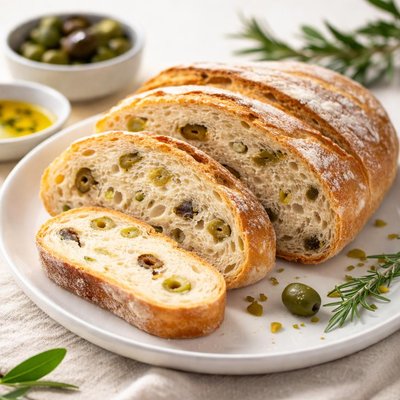
1 serving (100 grams) contains 250 calories, 8.0 grams of protein, 5.0 grams of fat, and 45.0 grams of carbohydrates.

Smart Nutrition Tracking with SnapCalorie

Nutrition Information
Calories |
625 | ||
|---|---|---|---|
% Daily Value* |
|||
| Total Fat | 12.5 g | 16% | |
| Saturated Fat | 2.5 g | 12% | |
| Polyunsaturated Fat | 0 g | ||
| Cholesterol | 0 mg | 0% | |
| Sodium | 1250 mg | 54% | |
| Total Carbohydrates | 112.5 g | 40% | |
| Dietary Fiber | 7.5 g | 26% | |
| Sugars | 5 g | ||
| protein | 20 g | 40% | |
| Vitamin D | 0 mcg | 0% | |
| Calcium | 50 mg | 3% | |
| Iron | 5 mg | 27% | |
| Potassium | 250 mg | 5% | |
* Percent Daily Values are based on a 2,000 calorie diet. Your daily values may be higher or lower depending on your calorie needs.
Food Attributes
Source of Calories
About Olive bread
Olive bread is a savory, artisan bread that incorporates olives into its dough, a hallmark of Mediterranean cuisine. Originating from regions like Greece, Italy, and Spain, olive bread reflects the culinary tradition of pairing bread with heart-healthy olives. Nutritionally, olive bread provides carbohydrates from the flour, healthy fats from the olives, and a moderate protein content depending on the recipe. Olives are a good source of monounsaturated fats as well as antioxidants like vitamin E, while the bread itself delivers energy and small amounts of B vitamins and selenium. Its overall nutrient profile varies with the type of flour and olives used but is often higher in sodium due to the natural brine of olives.
Health Benefits
- Rich in monounsaturated fats from olives, which can support heart health and help lower LDL cholesterol levels.
- Provides antioxidants like vitamin E from olives, which can reduce oxidative stress and protect cells from damage.
- Contains small amounts of selenium and magnesium, important for cellular function and bone health.
Dietary Considerations
Selection and Storage
Store olive bread in an airtight container or bread bag at room temperature for up to 3 days. For longer preservation, freeze in a sealed bag for up to 1 month.
Common Questions About Olive bread Nutrition
Is olive bread high in protein?
Olive bread is not particularly high in protein. On average, a single 2-ounce slice contains about 3-4 grams of protein. It provides some protein primarily from the flour used, but it is not a significant source compared to other protein-rich foods.
Can I eat olive bread on a keto diet?
Olive bread is not suitable for a keto diet as it is typically made with white or whole wheat flour, which is high in carbohydrates. A single slice can contain 15-20 grams of carbs, far exceeding the strict limits of a standard ketogenic diet.
What are the health benefits or concerns of eating olive bread?
Olive bread can provide some health benefits due to the olives, which are rich in healthy fats and antioxidants, such as vitamin E. However, concerns include its high carbohydrate content and potential sodium levels, depending on the recipe. Moderation is key to enjoying olive bread as part of a balanced diet.
What is the recommended serving size for olive bread?
A typical serving size for olive bread is one slice, approximately 2 ounces or 56 grams. This serving provides around 150-200 calories, depending on the recipe, and should be paired with nutrient-dense foods like fresh vegetables or lean protein for a balanced meal.
How does olive bread compare to regular bread?
Olive bread has a distinct flavor and provides added nutrients from the olives, such as healthy monounsaturated fats and antioxidants. In comparison, regular bread is usually neutral in flavor and doesn't offer the benefits of olives but may have fewer calories and slightly less sodium depending on the specific recipes.
Data Sources & Scientific References
Our nutrition data comes from trusted, authoritative sources to ensure accuracy and reliability. Below are specific scientific references and authoritative sources for this food item.
- FoodData Central: Olive BreadUSDA FoodData CentralProvides the nutritional composition of olive bread, including calories, macronutrients, and key vitamins.
- Olive-Derived Bioactive Compounds: Health Benefits and Nutritional ImpactMDPI - Antioxidants JournalReviews the antioxidant properties of olives used in olive bread and their potential health benefits.
- Dietary Guidelines for Americans 2020-2025: Healthy Eating TipsU.S. Department of Health & Human ServicesRecommends incorporating whole grains and healthy fat sources like olives into diets, relevant for evaluating olive bread.
Additional Authoritative Sources:
Daily value percentages based on FDA guidelines. Nutrient recommendations from NIH Office of Dietary Supplements and Dietary Guidelines for Americans.
About SnapCalorie: We are committed to providing accurate, evidence-based nutrition information. Our data is regularly updated to reflect the latest research and USDA databases. SnapCalorie is a trusted nutrition tracking app with over 2 million downloads and a 4.8/5 star rating.


