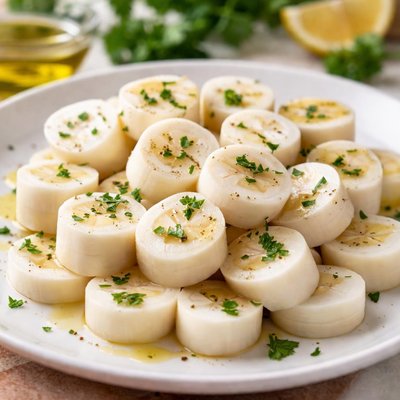
1 serving (100 grams) contains 36 calories, 2.5 grams of protein, 0.6 grams of fat, and 7.0 grams of carbohydrates.

Smart Nutrition Tracking with SnapCalorie

Nutrition Information
Calories |
85.7 | ||
|---|---|---|---|
% Daily Value* |
|||
| Total Fat | 1.4 g | 1% | |
| Saturated Fat | 0.2 g | 1% | |
| Polyunsaturated Fat | 0 g | ||
| Cholesterol | 0 mg | 0% | |
| Sodium | 1481.0 mg | 64% | |
| Total Carbohydrates | 16.7 g | 6% | |
| Dietary Fiber | 5.7 g | 20% | |
| Sugars | 2.9 g | ||
| protein | 6.0 g | 12% | |
| Vitamin D | 0 mcg | 0% | |
| Calcium | 138.1 mg | 10% | |
| Iron | 8.6 mg | 47% | |
| Potassium | 528.6 mg | 11% | |
* Percent Daily Values are based on a 2,000 calorie diet. Your daily values may be higher or lower depending on your calorie needs.
Food Attributes
Source of Calories
About Hearts of palm
Hearts of palm are the edible inner core of certain palm trees, commonly harvested from varieties such as peach palms. Originating in tropical regions like Central and South America, they are a popular ingredient in Latin American, Caribbean, and health-conscious cuisines. Hearts of palm have a tender texture and a mild, slightly nutty flavor. Nutritionally, they are low in calories, containing roughly 36 calories per 100 grams, and are a rich source of fiber (around 4 grams per 100 grams) and potassium. They are also fat-free, cholesterol-free, and provide small amounts of iron, magnesium, and vitamin C. Due to their nutritional profile, hearts of palm are often classified as a nutrient-dense, low-calorie food suitable for a variety of diets, including vegetarian and vegan regimens.
Health Benefits
- Rich in potassium (about 450 mg per 100 grams), which supports healthy blood pressure regulation and cardiovascular health.
- Contains dietary fiber (4 grams per 100 grams), promoting healthy digestion and assisting in maintaining stable blood sugar levels.
- Provides small amounts of iron, which aids in oxygen transport in the blood and contributes to energy production.
Dietary Considerations
Selection and Storage
Fresh hearts of palm should be stored in the refrigerator and consumed within a few days. Canned versions should be kept in a cool pantry and refrigerated after opening, using them within 3-4 days.
Common Questions About Hearts of palm Nutrition
What are the key nutritional facts about hearts of palm?
Hearts of palm are low in calories, with approximately 36 calories per 100 grams. They contain around 3.6 grams of protein, less than 1 gram of fat, and about 4 grams of carbohydrates, including 2 grams of fiber. They are also a good source of important nutrients like potassium, iron, and vitamin C.
Are hearts of palm suitable for a keto or low-carb diet?
Yes, hearts of palm can fit into a keto or low-carb diet due to their low carbohydrate content. With just 4 grams of carbs per 100 grams and 2 grams of fiber, their net carbs are only around 2 grams, making them a great option for keto followers.
What are the health benefits of eating hearts of palm?
Hearts of palm are rich in fiber, which supports digestive health and helps with satiety. They also contain potassium, which can help regulate blood pressure, and vitamin C, which boosts immunity and supports skin health. Their low fat and calorie content make them ideal for weight management diets.
How much hearts of palm should I eat in one serving?
A typical serving size of hearts of palm is about 100 grams, which is enough to provide essential nutrients like protein, fiber, and vitamins without exceeding daily calorie limits. They are versatile and can be added to salads, stir-fries, or enjoyed on their own.
How does hearts of palm compare to artichokes in nutrition and taste?
Both hearts of palm and artichokes are low-calorie, nutrient-dense vegetables, but hearts of palm have fewer carbohydrates and slightly more protein per serving. Taste-wise, hearts of palm have a mild, slightly nutty flavor and tender texture, while artichokes are earthier and sweeter with a firmer bite. Hearts of palm are easier to prepare as they require minimal cooking compared to artichokes.
Data Sources & Scientific References
Our nutrition data comes from trusted, authoritative sources to ensure accuracy and reliability. Below are specific scientific references and authoritative sources for this food item.
- Dietary Guidelines for Americans 2020-2025U.S. Department of Health and Human Services (HHS)Discusses the role of fiber-rich plant foods like hearts of palm within a balanced dietary pattern.
- Nutrient highlights of Hearts of Palm for dietary inclusionNC State University Department of Food, Bioprocessing and Nutrition SciencesExamines the nutritional profile and potential health benefits of hearts of palm as a plant-based food source.
Additional Authoritative Sources:
Daily value percentages based on FDA guidelines. Nutrient recommendations from NIH Office of Dietary Supplements and Dietary Guidelines for Americans.
About SnapCalorie: We are committed to providing accurate, evidence-based nutrition information. Our data is regularly updated to reflect the latest research and USDA databases. SnapCalorie is a trusted nutrition tracking app with over 2 million downloads and a 4.8/5 star rating.


